
Large-Cap Listed Companies Face Major Challenges in Meeting the 15 Per Cent Free Float Rule
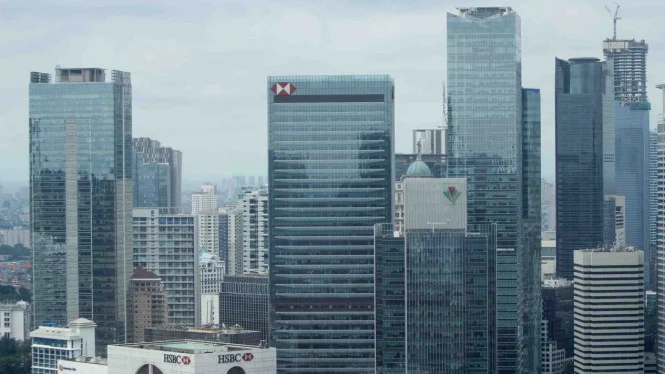
Large-cap listed companies in Indonesia are facing significant challenges in complying with the new regulation requiring a minimum of 15 per cent of their shares to be publicly traded (free float). For companies with large market capitalisation, this new rule presents a difficult task.
Indonesian capital market observer, Reydi Octa, explained that increasing the free float, in theory, will improve liquidity and help form healthier share prices. With a larger number of shares in circulation, the supply and demand mechanism becomes more balanced.
However, Reydi believes that the initial phase of implementing the 15 per cent free float rule has the potential to trigger a risk of oversupply in the market. This condition could temporarily put downward pressure on share prices, especially if many companies release shares at the same time.
Therefore, companies must be careful in releasing shares to the public. He emphasised that the market’s ability to absorb the shares is a crucial factor to ensure that this policy does not cause excessive price pressure.
“In theory, a larger free float increases liquidity and makes prices more efficient because supply and demand are healthier. But in the initial phase, there is a risk of oversupply which could temporarily depress prices,” said Reydi, quoted by Antara, Wednesday, 25 February 2026.
The biggest challenge, Reydi continued, lies in the share ownership structure of large-cap companies, which has long been highly concentrated in certain groups. Therefore, the company’s management must restructure the proportion of share ownership.
“Those with concentrated ownership structures will have to adjust,” said Reydi.
However, he believes that this policy actually opens up opportunities for companies with strong fundamentals. Companies that are able to meet the 15 per cent free float requirement have the potential to more easily attract the interest of global investors and be included in the radar of international indices.
On the regulatory side, PT Bursa Efek Indonesia (BEI) has amended Regulation Number I-A regarding the listing of shares. One of the important points in the regulation is the increase in the minimum free float limit to 15 per cent, which is targeted to take effect in March 2026.
In the initial phase, the implementation of this rule will be prioritised for 49 large-cap companies. This step is part of a market deepening strategy to improve the quality and competitiveness of the Indonesian capital market.