
Language Agency: Literacy Is More Than Just Being Able to Read
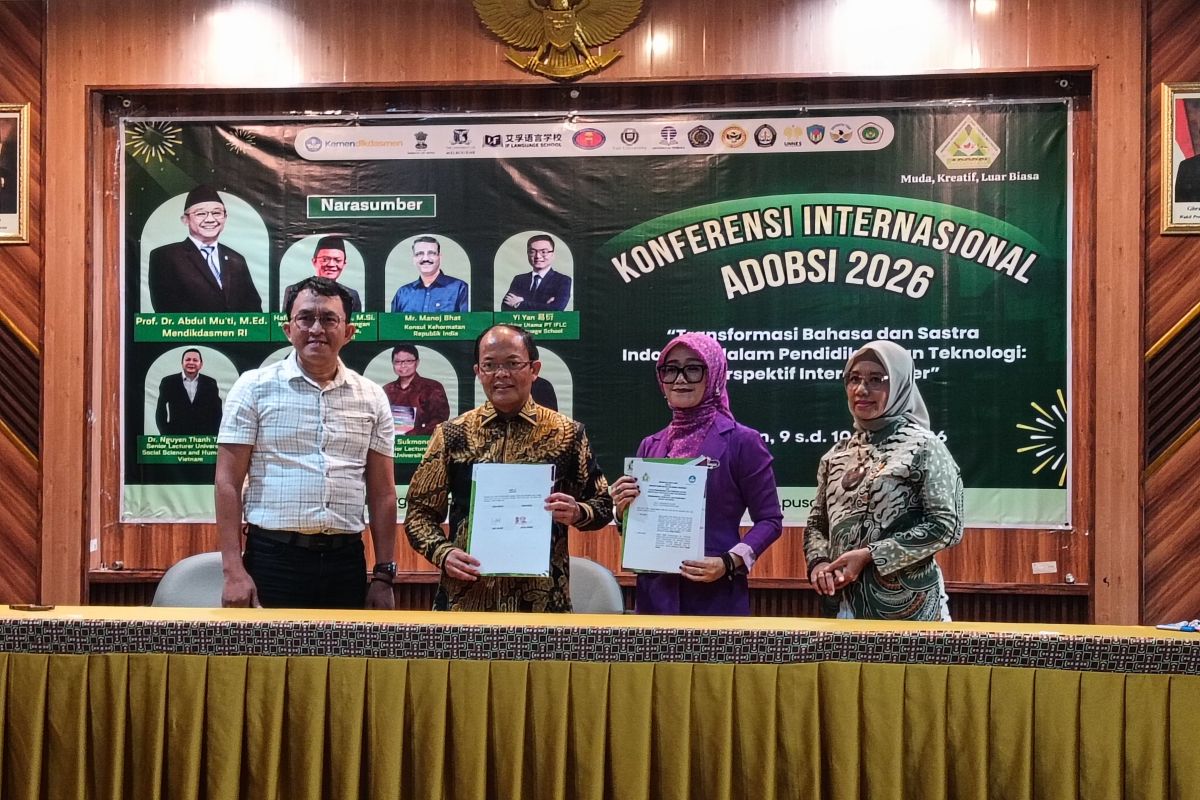
Semarang (ANTARA) - Head of the Language Development and Fostering Agency (Badan Bahasa), Hafidz Muksin, has stated that literacy does not simply mean being able to read, but also involves the capacity to understand. “How we read something, we must comprehend the meaning of what is read. It fosters our critical and creative faculties to understand and to act,” he said in Ungaran, Semarang Regency, on Wednesday. He made these remarks during the 2026 International Conference of the Association of Indonesian Language and Literature Lecturers (Adobsi), themed “The Transformation of Indonesian Language and Literature in Education and Technology: An Interdisciplinary Perspective”, held at the Central Java Language Office in Semarang Regency. He further explained that literacy also concerns the ability to critique or verify the truth of what is read, citing the example of a sign prohibiting littering. Literally, he said, people might be able to read the prohibition, but many merely read it and continue to litter in that very spot. “So there is the processing of reading, processing of thought, and processing of action. Once that is truly understood by everyone, it will definitely reflect that our society possesses a high level of literacy,” he said. To improve public literacy, Muksin said his agency requires cooperation with various parties, including Adobsi, which is responsible for educating future Indonesian language teachers. “Adobsi certainly has a very strategic role in equipping prospective teachers. Essentially, teachers who instruct at high school, junior high, and primary school levels come from universities, particularly Indonesian language teachers,” he said. Meanwhile, Adobsi Chairperson Dr. Wati Istanti explained that the conference aims to enhance the quality of education for prospective Indonesian language and literature teachers. “Our task is to educate and teach Indonesian to university students who will eventually become teachers,” she said. She added that this relates to Indonesian language proficiency across three crucial aspects: knowledge, skills, and attitudes, which will be passed on to students who are future educators. Several overseas speakers were also invited to the event, including representatives from Yale University in the US, the University of Melbourne in Australia, and the University of Social Sciences and Humanities in Vietnam. She noted that Indonesian language learning takes place at these universities, particularly in Vietnam where Indonesian has become akin to a second language. “Our hope is that we can also gain good practices in teaching Indonesian in countries where the language is no longer regarded as foreign but as a second language,” she said.