
Landfills Threatened with Full Capacity by 2028, Risks of Landslides and Methane Explosions Loom
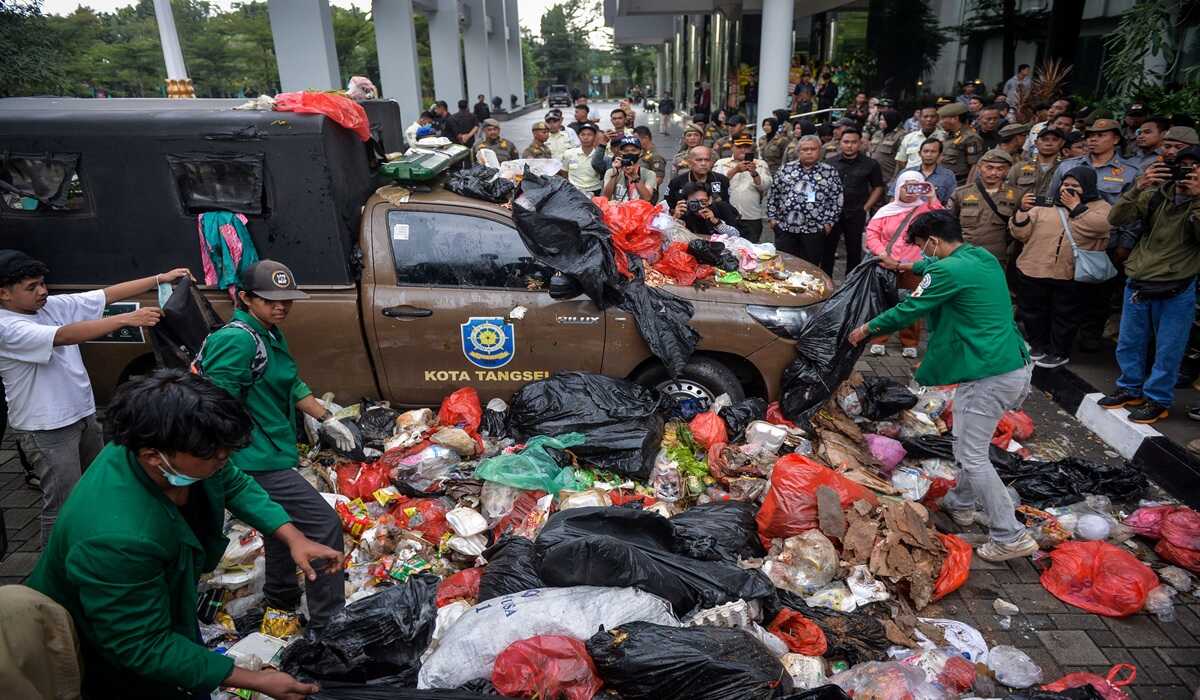
Researcher Reza Cordova from BRIN stated that most landfills in Indonesia are already over capacity and still rely on open dumping practices. He warned that this poses a risk of methane gas explosions.
“His statement is not surprising. Data shows that many of our landfills are already over capacity and still rely on open dumping. They should be processed, but in reality, they are just piled up without any processing,” Reza said when contacted on Tuesday (February 25).
According to him, forcing landfills to operate beyond their technical lifespan carries significant risks, both environmentally and for the safety of residents.
“If landfills are forced to operate beyond their technical lifespan, the risks are high. There could be landslides, leachate leakage into groundwater, and increased methane gas emissions. Many cases ultimately lead to social conflicts with residents near the landfills,” he said.
He emphasized that this issue is not just about land capacity but also about the failure of waste processing systems. Without a change in approach, landfills will continue to be a source of new crises.
Regarding the target of ending open dumping by 2026, Reza believes that this is a good policy measure. However, its implementation in the field will be very challenging if it is not accompanied by an acceleration of processing facilities and waste reduction from the source.
“The target of ending open dumping in 2026 is good as a policy measure. However, in the field, it could be very challenging if there is no acceleration of processing facilities and waste reduction from the source,” he said.
Reza emphasized that a realistic step that needs to be taken immediately is to reduce the amount of waste entering landfills. One of the keys is sorting waste at the source and managing organic waste.
He cited the example of Kamikatsu, Japan, which has successfully reduced waste generation significantly. The small town in Tokushima Prefecture has achieved a recycling rate of 80.8 percent, far above the average of other cities in Japan, which is around 19 percent.
“This started with mandatory sorting at the source. We should also emulate them by making compost from organic waste. In Indonesia, more than 55 percent of our waste is organic,” he explained.
In addition, he stated that the development of intermediate processing facilities such as refuse-derived fuel (RDF) can be a solution for residual waste, as is being implemented in Jakarta. However, according to him, the main key remains in improving governance and strengthening funding at the regional level.
“The key is that we must improve governance and regional funding. Especially since regional governments are at the forefront of waste management,” he said. (H-4)
More than 340 landfills in Indonesia still use the open dumping method, even though it is prohibited by law.
More than 340 landfills in Indonesia still use the open dumping method, even though it is prohibited by law.
Regional governments that still implement open dumping practices at landfills beyond the deadline set for 2026 will be subject to sanctions.
The government stated that there are still about 40 landfills in Indonesia that fully implement open dumping practices.
If the waste problem is not addressed immediately, a number of landfills are expected to reach their maximum capacity by 2028.
The government stated that there are still about 40 landfills in Indonesia that fully implement open dumping practices.
If the waste problem is not addressed immediately, a number of landfills are expected to reach their maximum capacity by 2028.
The daily collection rate in the city of Bandung increased from 140 to 145 trips per day over one month.
Of the 48 registered vendors, only 12 have technical recommendations.
Minister of Environment Hanif Faisol stated this based on the results of a two-month review in various regions.
Copyright @ 2026 Media Group - mediaindonesia. All Rights Reserved