
Land Use Conversion Reaches Tens of Thousands of Hectares in Central Java, Threatening Food Self-Sufficiency
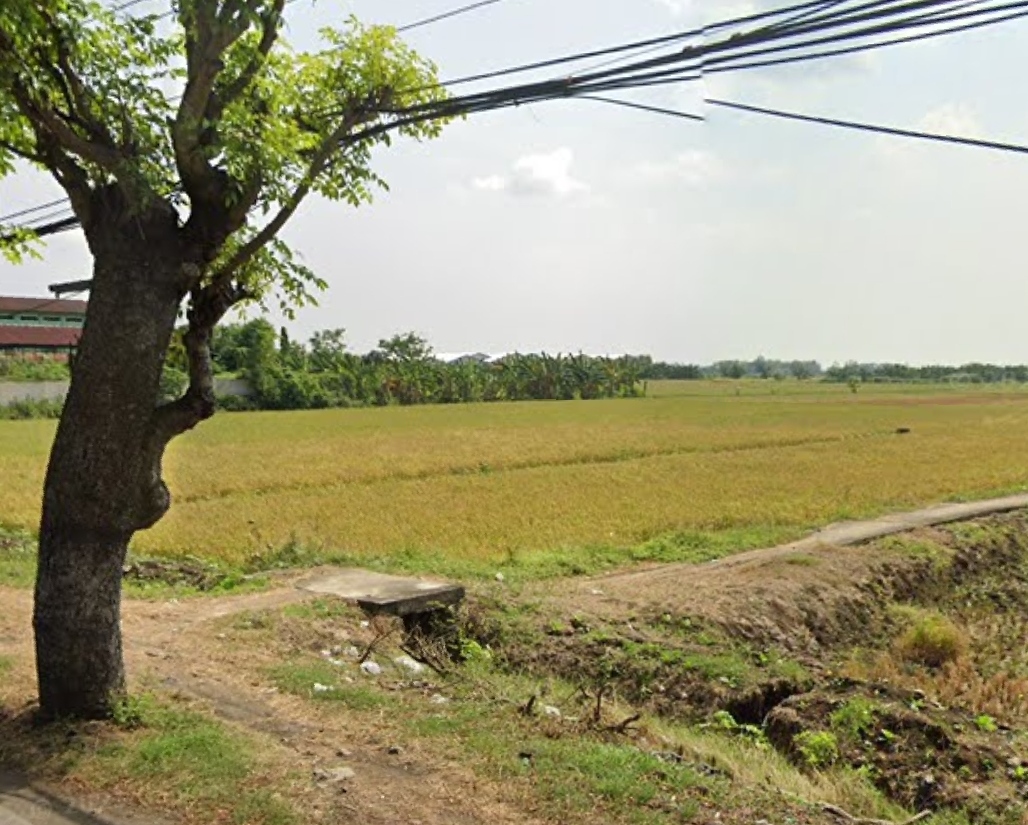
Food self-sufficiency in Central Java is increasingly under threat. Over the past five years, 79,000 hectares of agricultural land have been converted to other uses. Even throughout 2025, land conversion reached 17,000 hectares.
Agricultural land in Central Java has been eroded by the surging growth of industrial zones in the province over the last five years. As a result, tens of thousands of hectares of farmland in this province have been converted, threatening food self-sufficiency. Central Java has become one of the key national food-supporting regions.
Meanwhile, based on data from the Central Java Investment and One-Stop Integrated Services Agency (DPMPTSP), nine regions in Central Java have recently applied to develop industrial zones, namely Rembang Regency, Demak Regency, Semarang City, Kendal Regency, Batang Regency, Brebes Regency, Cilacap Regency, Banyumas Regency, and Kebumen Regency.
“I note that 79,000 hectares of agricultural land in Central Java have been converted over the past five years,” said DPD RI member Abdul Kholik.
According to Abdul Kholik, this land conversion is feared to impact food security in Central Java. He stated that stronger support from the central government is needed if Central Java is to be positioned as a national food buffer region.
The growth of industrial zones in Central Java, Abdul Kholik continued, is seen as capable of driving economic growth in the province, but on the other hand, it also has the potential to accelerate the conversion of agricultural land.
“With the addition of those nine industrial zones, one can imagine how much this will accelerate land conversion,” he added.
Head of the Central Java Provincial Agriculture and Livestock Office (Distanak), Defransisco Dasilva Tavarez, confirmed the reduction in agricultural land in Central Java due to land conversion. His office recorded that over one year (2025), 17,000 hectares of land were converted.
As a result of this agricultural land conversion, he revealed, the potential rice production in Central Java has been lost by 191,297 tonnes. To address this situation, his office is continuously coordinating with cross-sectoral agencies to ensure food self-sufficiency targets are met.
In the first quarter of 2026, Defransisco Dasilva Tavarez said, rice production in Central Java has reached 39.4% (4.16 million tonnes) of the dry milled grain (GKG) production target of 10.5 million tonnes. “We are continuing to pursue that target with seed assistance and rice production facilities programmes covering 47,200 hectares,” he added.
According to Defransisco Dasilva Tavarez, besides rice production, the Central Java Provincial Government is also boosting corn production; currently, corn production has reached 984,959 tonnes (26.6%) of the 3.7 million tonne target, red onions have reached 144,705 tonnes (23.4%) of the 617,015 tonne target, and chillies 80,892 tonnes (17.72%) of the 456,621 tonne target.
“To boost achievement of these targets, the Central Java Provincial Government is taking various measures, including assistance for corn production facilities covering 3,200 hectares, soybeans 3,000 hectares, chillies 310 hectares, and red onions 25 hectares,” said Defransisco Dasilva Tavarez.