
Land Conflicts Highlighted by Workers, DPR to Establish Command Center
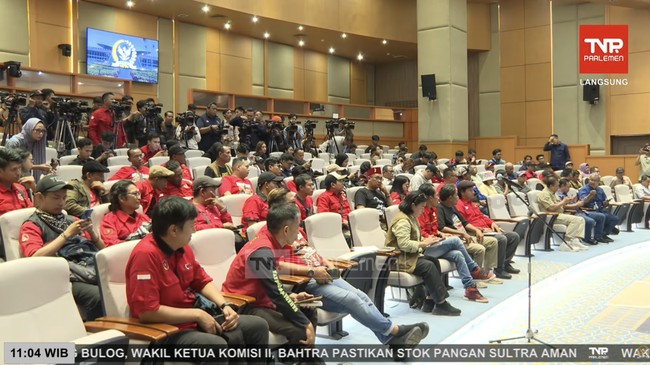
Land conflicts have become a focal point for workers, with the House of Representatives (DPR) planning to establish a command centre. Jakarta, CNBC Indonesia — The issue of agrarian reform took centre stage during a meeting between workers and DPR leadership on Labour Day, 1 May 2026. Beyond wages and layoffs, the masses also spotlighted land conflicts, deemed to have increasingly broad impacts on the lives of workers, farmers, and indigenous communities. Representatives from the agrarian movement argued that labour issues cannot be separated from land ownership disparities. When land is controlled by a handful of parties, the effects are directly felt on workers’ welfare across various sectors. This was conveyed by Dewi Kartika from the agrarian reform alliance. She emphasised the close relationship between land and labour, particularly in the plantation, mining, and forestry sectors. “When land is controlled by a small group, what occurs is inequality, poverty, and discrimination against farmers and workers,” Dewi stated in front of DPR leadership at the DPR in Jakarta on Friday (1/5/2026). Dewi also cited the recent case of forest area reclamation in North Sumatra, which affected thousands of workers. Around 6,000 daily casual workers reportedly lost their livelihoods after the concession was terminated. She opined that the reclaimed land should not only be returned to the state but also distributed to indigenous communities and workers who have depended on it for their lives. In addition, workers’ housing issues were highlighted. Many workers, especially in the industrial sector like in Jambi, still live in settlements far below decent standards. Dewi said that government programmes such as the construction of 3 million houses should be integrated with agrarian reform, not merely cheap credit schemes. She also revealed data on violence in agrarian conflicts that continues to occur. From December 2025 to April 2026, 22 farmers and indigenous people were shot, 272 individuals experienced assault, and around 450 people were arrested while defending their land. “This means that since the special committee was formed, we are still awaiting real change,” she said. In response, Deputy Speaker of the DPR Sufmi Dasco Ahmad acknowledged the many issues in the field, including conflicts between communities and companies or in forest areas. He stated that the DPR would strengthen the Special Committee (Pansus) on Agrarian Reform by forming a command centre together with Commission III of the DPR to accelerate responses to conflicts. “If we receive information faster, we can carry out mitigation,” Dasco said. Additionally, the DPR is currently inventorying villages located in forest areas, which have long caused communities to lose access to basic rights. Going forward, Dasco said, the DPR will also focus on resolving communal agrarian conflicts, such as disputes between communities and corporations or between community groups. “The DPR targets to accelerate discussions on agrarian reform in the next session, while opening space for further dialogue with workers and civil society,” Dasco stated.