
Land Certificates Still in Names of Deceased Parents: What Are the Risks?
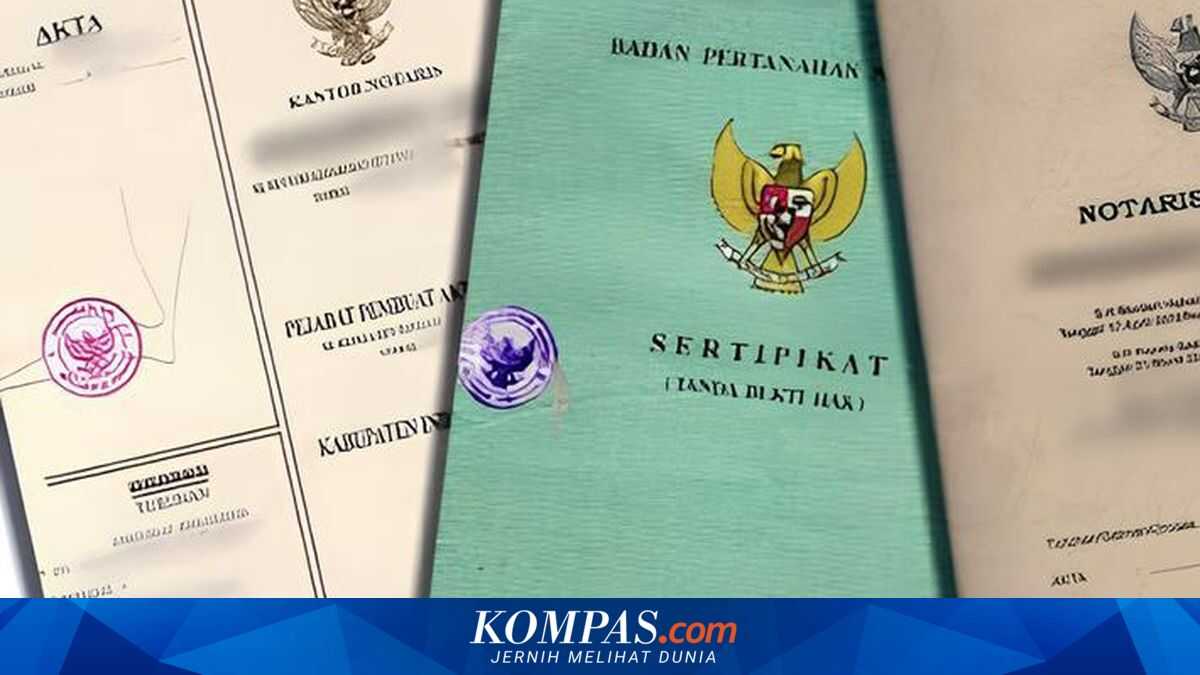
JAKARTA — Land certificates still registered in the names of deceased parents must be promptly transferred to the heirs’ names. Failure to do so can result in various legal risks, ranging from disputes to obstacles in transactions.
The obligation to register the transfer of property rights due to inheritance is regulated under Government Regulation (PP) No. 24 of 1997 on Land Registration. Article 42 of this regulation states that the transfer of rights due to inheritance must be registered at the land office to be recorded in the name of the heir.
“To facilitate the public, the Ministry of Agrarian Affairs and Spatial Planning/National Land Agency (ATR/BPN) also provides information on requirements through the Sentuh Tanahku application,” said Shamy Ardian, Head of Public Relations and Protocol at the Ministry of Agrarian Affairs and Spatial Planning/National Land Agency (ATR/BPN), as cited by Kompas.com on Friday, 27 February 2026.
Land with a certificate still registered in the name of a deceased person cannot be directly sold. The Land Deed Official (PPAT) cannot prepare a sales deed if the person named in the certificate is not present or the property has not been transferred to the heir.
The technical provisions for registering property rights transfers due to inheritance are regulated under Ministry Regulation (Permen) ATR/BPN No. 16 of 2021 on Procedures for Determining Management Rights and Land Rights. This regulation requires the title to be transferred first before any legal actions such as sales or mortgage liens can be undertaken.
Legally, heirs do acquire property rights from the moment the deceased dies, as regulated under the Civil Code Articles 830 and 832. However, without registration at the land office, the allocation of each heir’s rights lacks administrative certainty.
This situation frequently triggers conflicts, particularly if one heir physically controls the land or conducts transactions without the consent of other heirs. Banks require the certificate to be in the name of the debtor as the legitimate rights holder.