
Lamentations over an Unmarked Grave
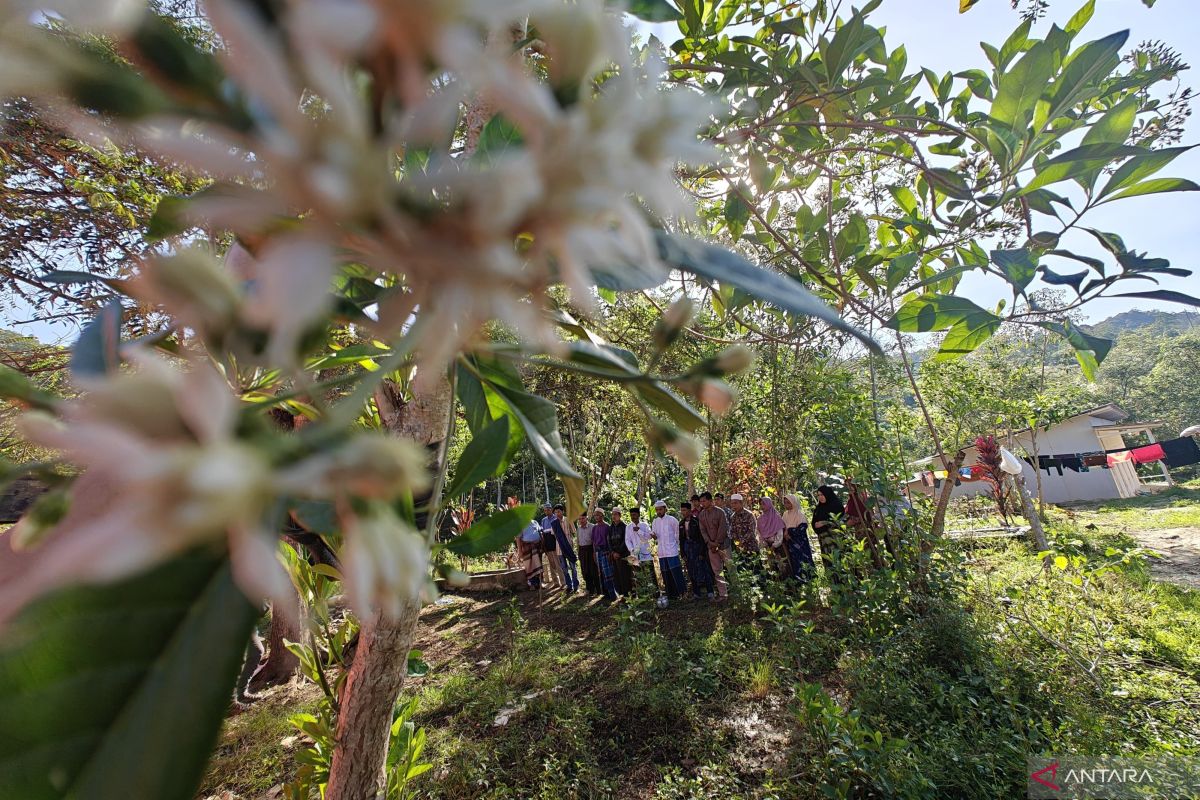
However, for residents like Seriah and Riandi, physical recovery alone is not enough. There must be real social psychological support so that they can find self-confidence to live. Aceh (ANTARA) - “Allahummaj’al qobrahum raudhotan min riyadil jinan wala taj’al qobrahum hufratan min hufarin niran.” Tengku Riandi’s (26) voice trembled intensely as he recited a segment of the visitation prayer along with other villagers on a small hill in Desa Agusen, Blangkejeren, Gayo Lues, Aceh.
That sacred phrase was not merely an ordinary recitation. It transformed into a gentle inner cry that rose slowly, on the morning of Eid al-Fitr 1447 Hijriah, when a thin mist still hung over the hillside slopes. In front of Tengku Riandi, there were no more tombstones that could be touched, no more names that could be read. What remained was only the silent red soil where hundreds of bodies now rested without markers.
Four months ago, a flash flood accompanied by a landslide devastated Desa Agusen. The floodwaters carrying mud, wood, and stones from the upstream river swept through settlements and dragged away three old cemetery complexes that had existed since the colonial era. At least 700 bodies are estimated to have been swept away, leaving an empty space that gaped not only on the riverbank but also in the collective memory of the villagers.
Since then, the tradition of visiting family graves every holiday, which in Gayo society culture is an important part of preserving lineage and memory, will feel like losing a foothold. Prayers are offered but seem directionless without a certain target.
Riandi’s recitation of the prayer that morning became the only remaining emotional anchor. The mountain wind blew gently, carrying the scent of damp soil that had not fully dried. From afar, the sounds of takbir echoed in response, but the echo of grief felt thicker than the joy at this unmarked grave.
There are no more rows of tombstones engraved with calligraphy or wooden markers that once signified family traces. That vast expanse of land now resembles a mass grave—a space where identities merge, and history is forced to stop without a proper closure.
The destruction did not only collapse residents’ houses. It also tore at the roots of Gayo society’s history in Agusen, severing the physical connection between the living generations and those who had gone before to eternity.