
Lack of Training Becomes Main Factor in Electric Taxi Accident
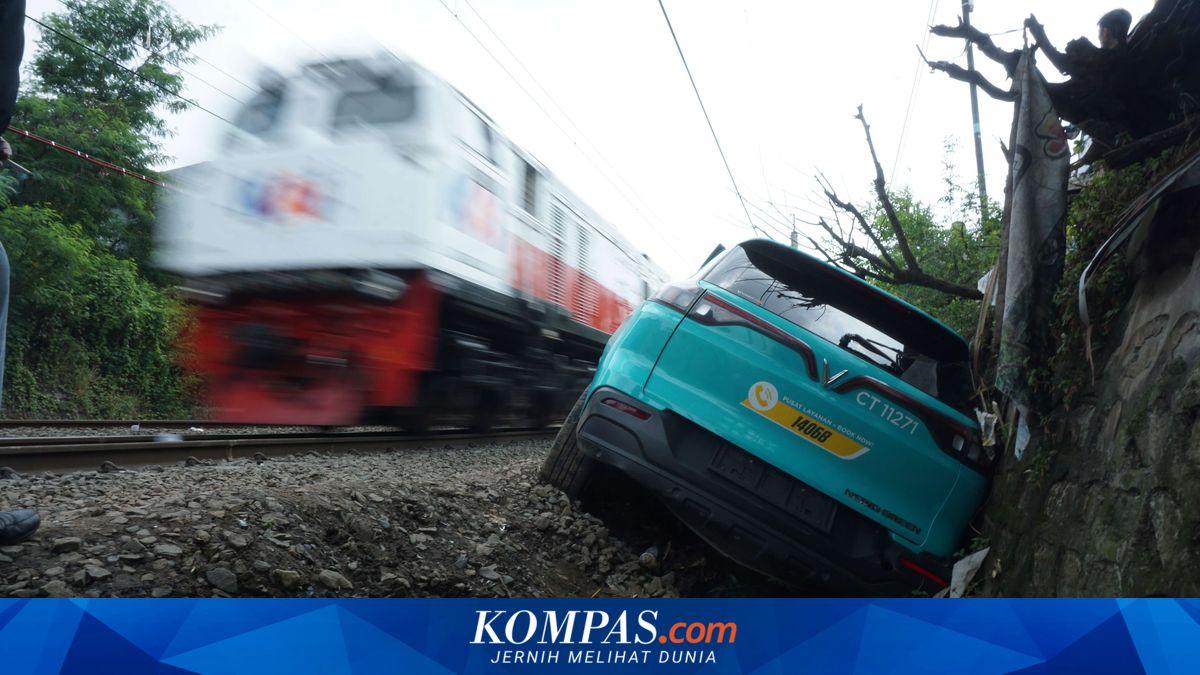
JAKARTA – The incident involving an electric taxi struck by a KRL Commuterline train at the East Bekasi crossing highlights one crucial aspect behind modern vehicle technology: driver readiness.
Amid the focus on electric vehicle (EV) systems, human error is deemed to play a significant role in the incident.
Mahaendra Gofar, Sustainability Mobility Expert and Co-Founder of EVSafe Indonesia, assessed that from the circulating video footage, the vehicle still had power when it stopped on the tracks.
According to him, this condition indicates that the car was not completely dead.
This means that, technically, the vehicle still had a chance to be moved from the crossing, one of which by utilising a special mode on the electric car.
“Electric cars can be pushed, as long as they can be put into neutral position. In EVs, there is something called towing mode or towing mode so it can be pushed,” said Gofar.
However, he suspects the driver did not understand how to operate that feature.
In emergency situations like at a railway crossing, the speed of decision-making is crucial.
“The driver probably didn’t know how to put it into neutral or towing mode. If it was still powered, it could have been put into that mode to be pushed,” he stated.
The driver’s experience is also under scrutiny.
Based on police statements, the taxi driver is known to be relatively new and with minimal training.
The Green SM taxi driver with initials RRP had only undergone a brief briefing after three days of work before being involved in the accident with the KRL Commuterline in East Bekasi on Monday (27/4/2026).
Gofar views this as an important note for operators of electric commercial vehicles.
This is because electric vehicles have different characteristics compared to conventional cars, especially in terms of operation during emergencies.
“EV users must understand operational procedures, including how to neutralise the car. If not, features that should help cannot be utilised,” he said.
He added that the more advanced the vehicle technology, the higher the need for driver literacy.
Without adequate understanding, risks in the field can still occur, even in situations that should still be anticipated.