
Labuan Bajo Tourism: 95 Percent of Tourists Crowd the Seas, Mainland Still Lags Behind
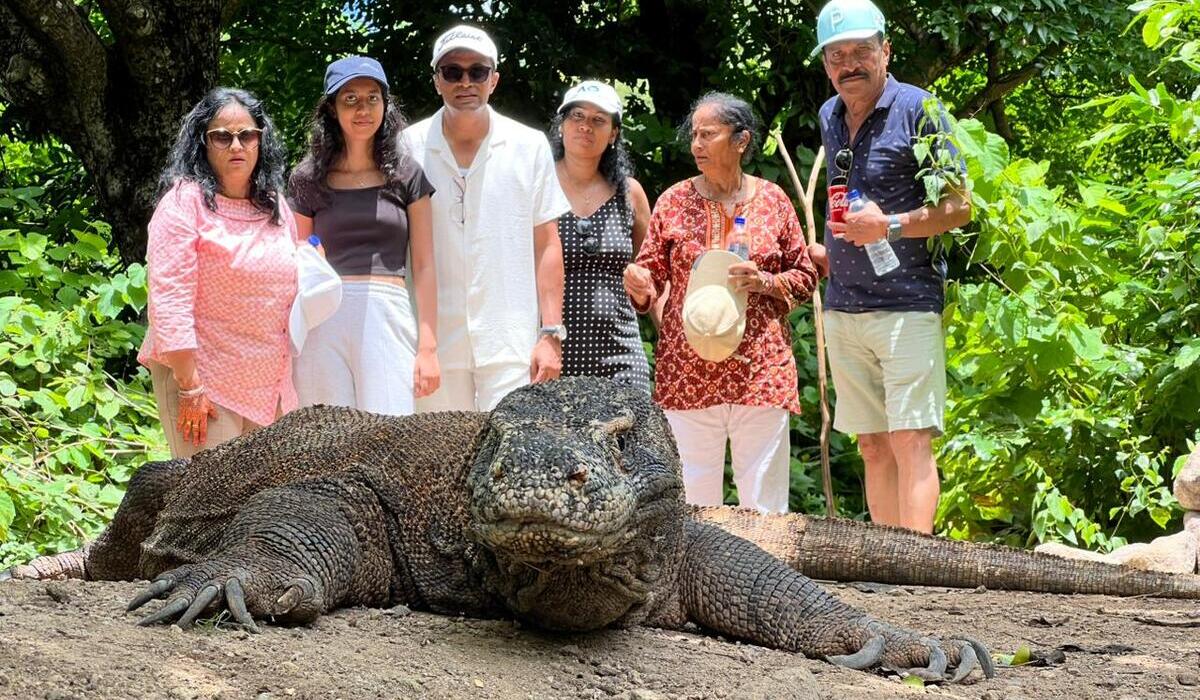
The West Manggarai Regency government in East Nusa Tenggara (NTT) has spotlighted a serious imbalance in the distribution of tourist visits to the super-priority tourism destination of Labuan Bajo. Nearly all tourism activities are currently concentrated in the marine areas, while the potential of mainland tourism remains underdeveloped to the maximum extent.
This was stated by the Secretary of West Manggarai, Fransiskus Sales Sodo, on Wednesday (1/4). Fransiskus revealed that around 95 percent of tourists arriving in Labuan Bajo focus solely on marine tourism, particularly in the Komodo National Park (TNK) area. Meanwhile, tourism destinations in the mainland areas of West Manggarai remain relatively quiet with few visitors.
“Almost 95 percent of our tourist visits are in the sea (Komodo National Park). Whereas on the mainland, there are very few,” said Fransiskus.
According to Fransiskus, this imbalance not only impacts economic distribution but also complicates tourism governance in the region. He assessed that Labuan Bajo has characteristics different from other destinations in Indonesia because it involves various areas with different authorities.
“Tourism is actually a very complex ecosystem, especially in Labuan Bajo,” he said.
He explained that this complexity arises from the combination of the TNK conservation area under central government authority, the vast marine areas, and the mainland areas under local government responsibility. This situation often gives rise to perceptions of overlapping policies in the public eye.
Nevertheless, Fransiskus assured that cross-sector coordination is being strengthened, from TNK managers and airport authorities to immigration officials. These efforts aim to create more integrated and efficient tourism governance.
As part of system improvements, the West Manggarai Regency Government is currently developing a digital-based approach. One strategic step being prepared is the launch of the Gendang Mabar application.
The application is designed to integrate with the Siora reservation system owned by the Komodo National Park Authority. This integration is expected to create a more transparent and accountable reservation system involving various stakeholders, including tourism associations.
“In our Tourism Office, we are also preparing an application called Gendang Mabar. This application will be connected to Siora,” he explained.
Meanwhile, the Chairman of the Indonesian Tour Guides Association (HPI) West Manggarai, Aloysius Suhartim Karya, assessed that the imbalance needs to be viewed from the perspective of the market and tourist behaviour.
According to him, as hosts, tourism actors have provided a variety of travel service products, both at sea and on land. However, ultimately, the choice remains in the hands of the tourists.
“As hosts, we provide various travel service products. Their choice (tourists) determines it,” he said.
He cited the success of a land destination like Cunca Lolos, which has recorded high visit numbers, even surpassing some spots in the Komodo National Park area.
“Cunca Lolos is the best precedent. The visit numbers beat several tourism spots in TNK. That means our tourism attractions have a high market share; we just need to direct and promote them to tourists,” he said.
Aloysius also emphasised that developing land tourism will not disrupt marine tourism activities. On the contrary, both can run in tandem if managed with the right strategy.
“I see it differently. Developing tourism attractions on the mainland of Mabar does not negatively impact marine tourism activities,” he stressed.
He emphasised the importance of strategies to “capture” tourists who have so far only followed liveaboard or sailing tour packages using phinisi boats, so that they also visit mainland destinations in West Manggarai.
“Tourists who come and only adventure on liveaboard or sailing tours using phinisi boats must be captured and
Threats to Carrying Capacity
2024 tourist visit data shows that Labuan Bajo is still dominated by foreign tourists at 78 percent, while domestic tourists account for only 22 percent. This condition underscores the need for tourism product diversification to avoid dependence on one segment or one area.
The concentration of tourists in marine areas also raises serious concerns about environmental sustainability. Fransiskus emphasised that marine ecosystems have a high level of vulnerability to human activity pressures.
“The sea has very high vulnerability. This is about sustainability issues. That’s why we strongly support the carrying capacity policy,” he stressed.
The implementation of the carrying capacity concept is seen as an important step to maintain a balance between tourism activities and environmental preservation, especially in the Komodo National Park area.
According to him, this step is crucial for creating more even economic distribution. So far, tourist spending has tended to be concentrated on boat business operators, while village communities have not yet enjoyed significant impacts.
“So that it does not dominate marine activities, tourists’ money is not only captured by boat entrepreneurs but circulates in the villages for progress and economic improvement of the community,” he added.
The imbalance between sea and land tourism has now become the main challenge in tourism development in West Manggarai. The local government together with industry players is expected to build an integrated strategy to promote land tourism, without reducing the appeal of marine tourism that has long been world-renowned.
With strengthened promotion, digital system integration, and more even visit distribution, Labuan Bajo is hoped not to be limited