
Labuan Bajo: Building "Longing" Behind the Grandeur of Physical Investment
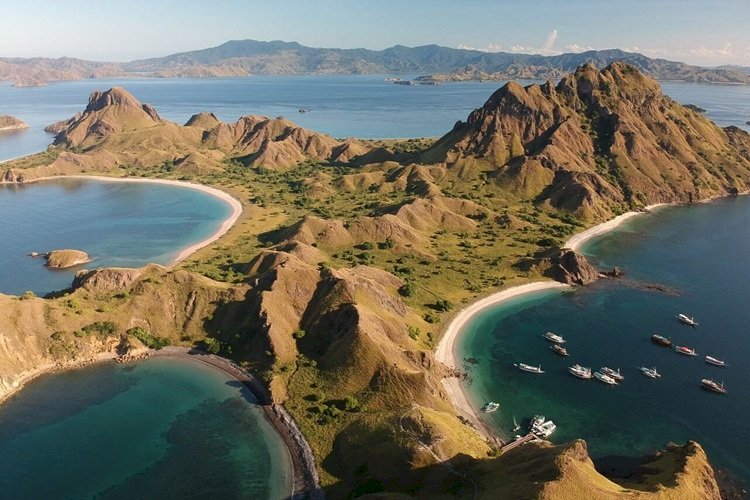
Labuan Bajo today is a grand stage polished with national ambition. It stands as a symbol of Indonesia’s tourism development success in the eyes of the world: a beautified port, an expanded airport, well-maintained roads, and a row of star-rated hotels facing the nearly perfect blue waters of Flores Sea.
In the official narrative, Labuan Bajo is a “Super Priority Destination,” a showcase of progress ready to compete with global destinations.
However, behind this visual grandeur lies a paradox that is beginning to feel real. In closed rooms, amid financial reports and business projections, major investors are voicing the same unease: market reality is not as beautiful as initial expectations.
Fluctuating occupancy, high operational costs, and short tourist stays signal that something is amiss in the grand design of this destination’s development.
Labuan Bajo, with all its potential, is facing a classic issue often overlooked in the euphoria of development: how to turn awe into longing.
The One-Time Visit Phenomenon: When Awe Does Not Lead to Return
Labuan Bajo’s main problem is not a lack of attractions. On the contrary, it has one of the world’s strongest tourism icons: the Komodo dragon. Yet this strength is also a structural weakness.
Tourists come with one primary goal: to see the Komodo dragons in Komodo National Park. After that, travel patterns become almost uniform: island hopping, snorkelling, enjoying sunsets, then returning to the hotel.
In two to three days, the experience is considered complete. There is no urgency to stay longer, let alone return soon.
This phenomenon is known as the one-time visit, a condition where a destination is visited only once because the offerings do not create enough diversity to foster long-term emotional attachment.
Here lies the fundamental issue: Labuan Bajo has succeeded in creating awe, but has not yet managed to nurture longing.
The Trap of a Single Narrative and the Risk of Early Stagnation
Over-reliance on one main magnet, Komodo National Park, has created a single narrative in the tourism experience. This is a trap that tourism studies have long warned about theoretically.
In the Destination Lifecycle framework introduced by Richard Butler, an ideal destination develops through stages of exploration, involvement, development, consolidation, and finally maturity. However, if physical growth is too rapid without being matched by product and experience diversification, the destination can enter a stagnation phase earlier.
Labuan Bajo shows symptoms of this. Physical investments have surged dramatically in a short time, but tourism product innovations have not grown at the same pace. As a result, the market reaches saturation faster than expected.
For investors, this is not just theory. It is business reality. Projections that once promised much now face unstable occupancy rates and high cost pressures, from logistics and energy to human resources.
In such conditions, a wait-and-see strategy becomes a rational choice, but also dangerous for the destination’s growth momentum.
If not anticipated, the luxury hotels that now stand grandly risk becoming unproductive assets—“monuments of silence” that are only busy during short holiday seasons.
Absence of “Soul”: When a Destination Loses Its Pulse
Modern tourism is no longer just about scenery. It is about a complete experience of how a place is “felt,” not just “seen.”
Looking at Bali, particularly Seminyak or Canggu, or even Gili Trawangan in Lombok, the main appeal is not solely the beaches or natural landscapes. What keeps tourists staying is a lifestyle ecosystem: a combination of culture, entertainment, community, and lively social spaces.
In Labuan Bajo, this pulse has not yet formed organically.
After sea activities end and the sun sets, the town tends to lose its rhythm. There are not many activity options that make tourists want to go out, interact, or explore at night. Nightlife is still limited, truly iconic beach clubs have yet to arrive, and creative spaces combining art, music, local cuisine, and culture are still scarce.
Yet, today’s tourists—especially the premium and millennial segments—seek layered experiences. They want adventure during the day, but also to “live” at night. They want to feel like part of a place, not just temporary visitors.
Without these elements, Labuan Bajo will always be a transit destination, not a stay destination.
Structural Issues: An Ecosystem Not Yet Connected
Beyond the tourism experience aspect, there are more structural problems: a support ecosystem that is not yet fully mature.
High logistics costs make prices for goods and services uncompetitive. Energy and water availability remain challenges in some areas. The quality and readiness of local labour need continuous improvement to meet international service standards.
On the other hand, regulations are often not adaptive enough to industry needs. Innovations in entertainment, events, and lifestyle sectors still face various administrative and permitting hurdles.
For investors, this creates uncertainty. They need not only physical infrastructure but also ecosystem certainty that their investments are supported by conducive policies and a healthy business environment.
Strategic Reorientation: From Destination to Longing Ecosystem
Labuan Bajo needs more than just continued construction. It requires a shift in perspective.
Development must move from an infrastructure-based approach to an experience-based one. From merely “a place to visit” to “a place