
LabSosio UI: 77 per cent of DKI Jakarta's public spaces used regularly by residents
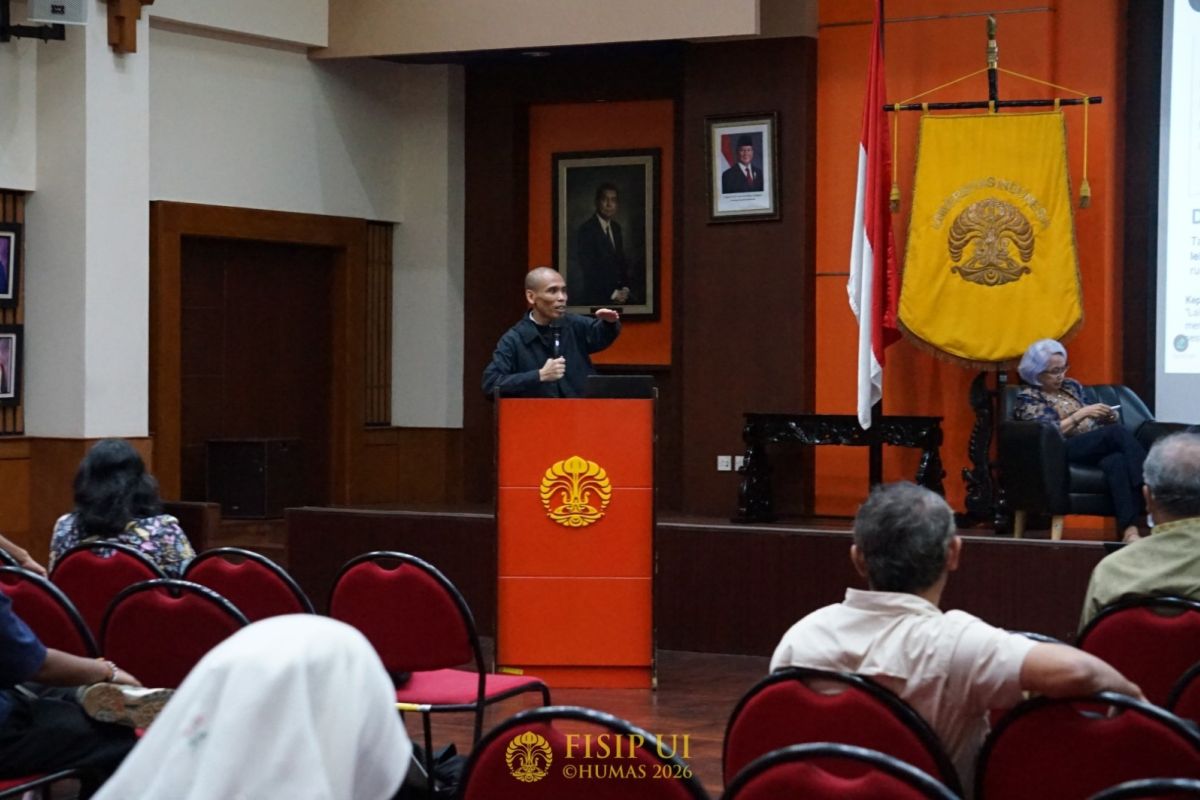
More than 77 per cent of public spaces in Jakarta are recorded as being used regularly by residents. East Jakarta recorded the highest usage rate at 84 per cent, followed by North Jakarta at 82 per cent.
The Faculty of Social and Political Sciences at the University of Indonesia (FISIP UI) through LabSosio has conducted a social mapping of public spaces across 267 Jakarta neighbourhoods to identify their conditions and assess their potential as community gathering points.
Dr Sakti Wira Yudha, a sociology lecturer at UI, explained at the Depok campus that Jakarta’s public spaces reflect the diversity of the city’s character, ranging from urban parks to Child-Friendly Integrated Public Spaces (RPTRA), though they face challenges regarding access and quality disparities.
“Beyond land size, the usage rate of public spaces also serves as an important indicator in this research. More than 77 per cent of Jakarta’s public spaces are recorded as being used regularly by residents. East Jakarta recorded the highest usage rate at 84 per cent, followed by North Jakarta at 82 per cent,” Sakti explained.
Meanwhile, West Jakarta faces challenges with occasional usage reaching 32 per cent, indicating a need for revitalisation.
The Thousand Islands stand out with distinctive assets including public piers and beaches. Inclusivity was also a focus of the study. East Jakarta was recorded as the most inclusive at 87 per cent. In this region, activity zoning allows various age groups—from children to adults and elderly residents—to engage in activities within a single public space.
Conversely, public spaces in areas such as North Jakarta tend to be more exclusive. South Jakarta experiences access barriers, particularly in elite residential areas, whilst Central Jakarta faces challenges in densely built-up areas with many high-rise buildings.
The research also identified that approximately 70 per cent of public spaces require only minor improvements such as painting, benches, or portable shelters.
Based on these findings, Sakti recommended several strategic measures, including prioritising areas with quick-win potential such as East Jakarta and the Thousand Islands, implementing a placemaking approach through activity zoning to enhance public space inclusivity, and improving accessibility through pedestrian pathway improvements, lighting, and facilities for disabled persons.
Sakti also emphasised that public space management requires cross-sector collaboration involving local government, communities, and the private sector to strengthen continuous public space management and build community social capital.
Through these concrete steps, Jakarta is expected to realise its vision of becoming a modern, humane, and culturally vibrant global city, whilst preparing to commemorate its 500-year milestone in 2027.