
Labour Minister states 10,000 participants join National Vocational Training
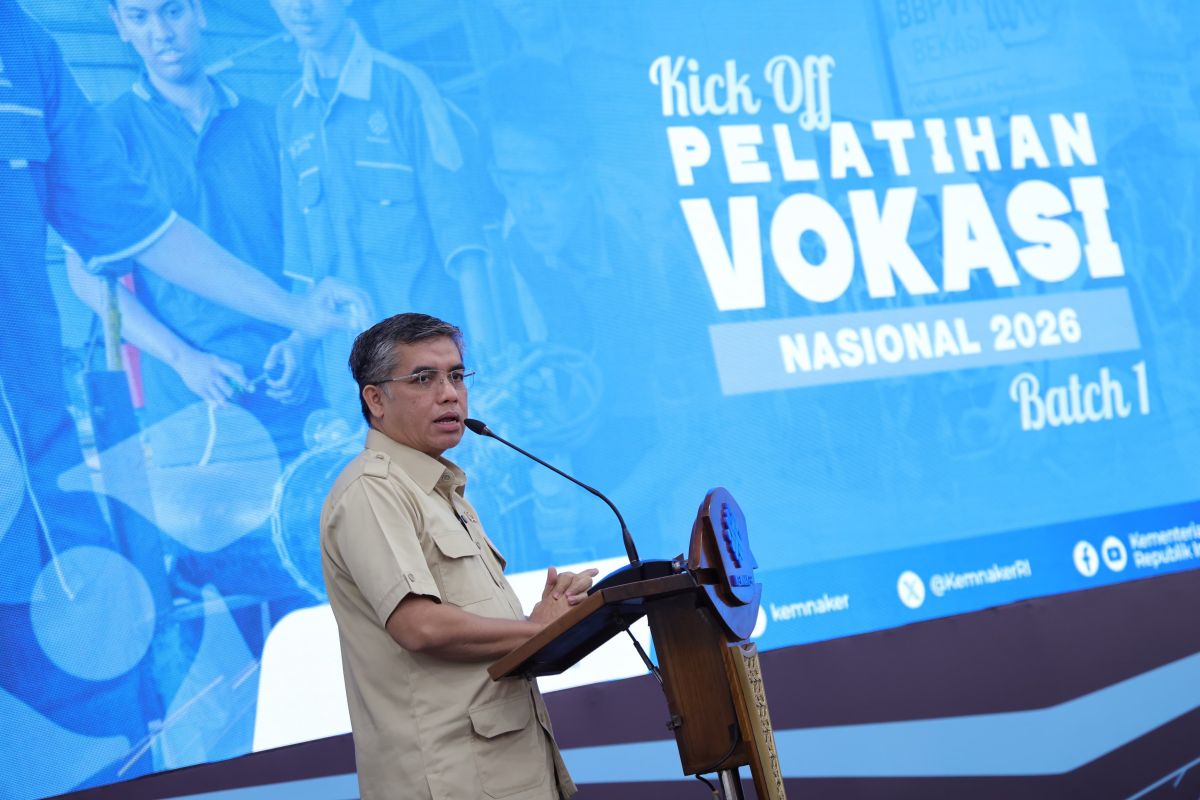
Labour Minister Yassierli stated that more than 10,000 participants from high school and vocational high school graduates have officially started the first phase of the 2026 National Vocational Training Programme. “Batch I commenced simultaneously from 1 April 2026. Public enthusiasm for this programme is also quite high, with a total of 29,850 registrants through the Skillhub platform in the first phase,” the Minister said in his statement in Jakarta on Thursday. From that number, 10,405 participants were declared successful, consisting of 5,833 people through the selection pathway and 4,572 people through affirmative cooperation pathways with industry partners and communities. The participants are spread across 21 Training Centres (BLK), 13 training units under the Directorate General of Vocational Training and Productivity Development, and 46 BLK UPTD. Furthermore, Yassierli emphasised that vocational training is one of the government’s priority programmes in improving the quality of human resources while accelerating workforce absorption. Throughout 2026, the programme targets 70,000 participants funded through the state budget (APBN). Labour Minister Yassierli stressed that the simultaneous implementation of the training aims to provide more equitable and widespread access for all job seekers in Indonesia. “With this simultaneous system, we want to ensure that every job seeker has an equal opportunity to enhance their competencies,” Yassierli said. The programme is also designed inclusively, including providing equal opportunities for people with disabilities to participate in the training. Beyond just the number of participants, the Minister said the programme demonstrates concrete results. Around 50 percent of participants in this first batch already have job placement commitments after completing the training, reflecting the strong linkage between vocational training and industry needs. The Labour Minister also emphasised that the benefits of this programme are designed to be truly felt by the participants. They receive free training, lunch during the training, transport assistance, work accident insurance and death benefits, training certificates, competency certificates from the National Professional Certification Agency (BNSP), and dormitory facilities for certain trainings. “This support is important so that participants can follow the training more focused without being burdened by basic costs during the learning process,” he said.