
Labour Minister Issues Circular on WFH for Private Sector, Here Are the Guidelines
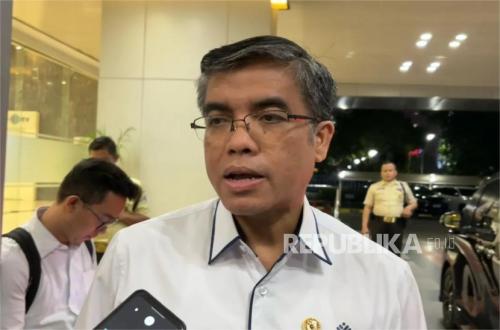
JAKARTA — The Minister of Manpower (Menaker), Yassierli, has issued a Circular Letter (SE) regarding the implementation of Work From Home (WFH) and the energy optimisation programme in the workplace. This policy follows instructions from the President conveyed through the Coordinating Minister for the Economy and takes effect from Wednesday (1/4/2026). Yassierli stated that SE Number M/6/HK.04/III/2024 aims to strengthen national energy resilience while promoting productive, adaptive, and sustainable work patterns.
The government encourages private company leaders, SOEs, and regional public companies to implement WFH for one working day per week, adjusted to each company’s conditions. He emphasised that WFH implementation must not disadvantage workers.
“Wages or salaries and other rights must still be paid in accordance with regulations, and WFH implementation does not reduce annual leave,” he said during a press conference on Wednesday (1/4/2026).
His side stated that workers carrying out WFH must still perform their duties, while companies must ensure productivity and service quality remain maintained.
However, this policy excludes sectors that require physical presence, such as healthcare services, energy, infrastructure, transportation and logistics, production industries, up to retail and food and beverage sectors.
In addition, the government is also promoting the optimisation of energy use in the workplace. These steps include the use of energy-saving technology, strengthening energy-saving culture, and controlling electricity and fuel consumption through measured operational policies.
The Ministry of Manpower also encourages the involvement of workers and trade unions in planning and implementing energy efficiency programmes. This participation is expected to increase collective awareness while encouraging innovation in creating more efficient and sustainable work systems.
“Thus, this Circular Letter is for guidance and implementation. Thank you,” he said.
The Ministry of Manpower emphasised that the Work From Home (WFH) policy is advisory and not mandatory, especially for private companies. This policy is intended as an effort for businesses to adapt to new work patterns while encouraging energy efficiency in the workplace.
“Although WFH is encouraged, this policy does not impact economic growth,” said Yassierli.
He stressed that the technical implementation of WFH is entirely left to each company according to their characteristics and operational needs.
“Each company certainly has its own uniqueness, so the technical aspects related to Work From Home, for example, are left to the companies. However, the spirit is how to make the current conditions a momentum to adaptively implement new ways of working, wise energy use, and so on,” he said.
His side explained that the issued Circular Letter (SE) is titled “Work From Home and Energy Utilisation Optimisation Programme”. The Menaker emphasised that the main spirit of this policy is to encourage adaptive work methods and wise energy use. In addition to reducing office electricity consumption, this programme is also expected to provide benefits for companies and employee welfare.
“We are confident that this momentum will be used by the private sector to design various programmes in collaboration with trade unions or worker unions to become more frugal and wise in energy use at the workplace. This will also provide benefits for companies and workers,” he said.