
Labour Day 2026: Accelerating Worker-Friendly Policies
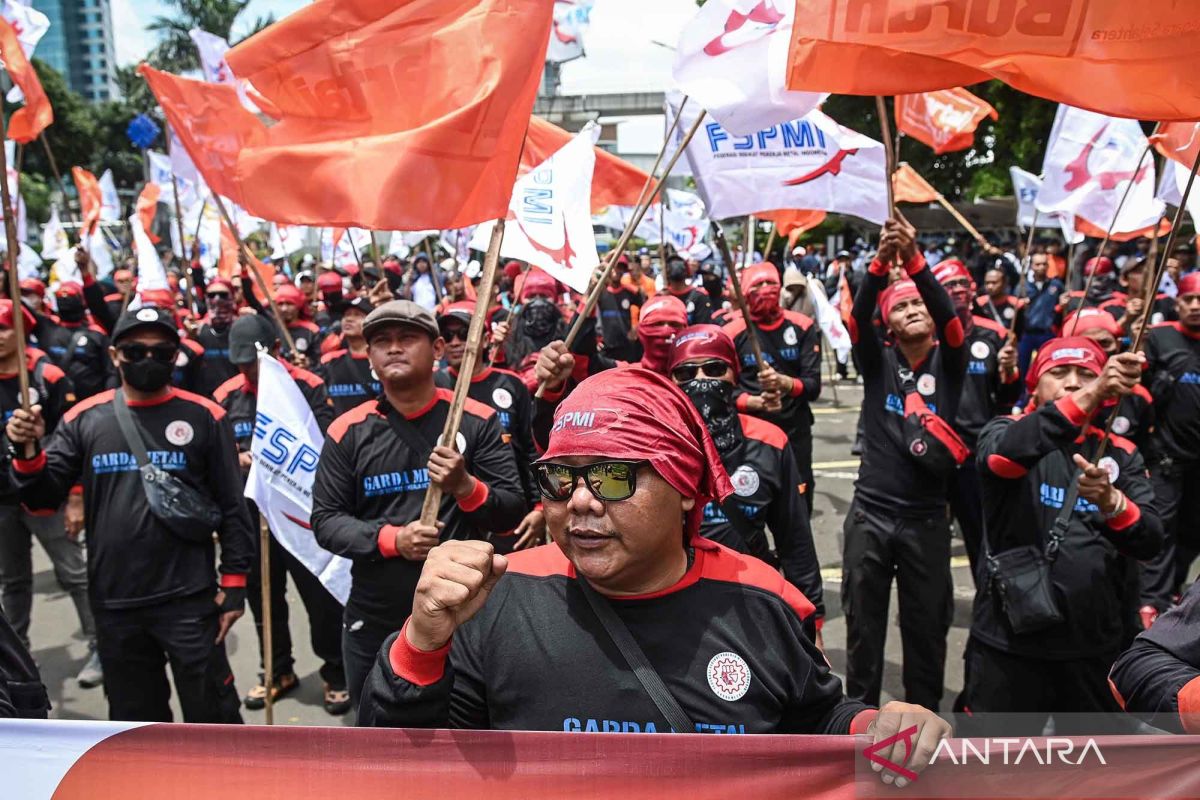
The state must not only avoid violations but also take concrete steps to improve work quality and worker welfare.
Jakarta (ANTARA) - The commemoration of Labour Day on 1 May 2026 once again serves as a crucial moment to assess the direction of Indonesia’s labour policies. This year, hundreds of thousands of workers will take to the streets, voicing aspirations that are fundamentally similar to those of previous years: job certainty, decent wages, and fair protection.
On one hand, the state demonstrates an open space for dialogue. On the other, the reality on the ground shows that the homework in the labour sector has not been fully resolved.
Referring to Satudata Kemnaker, from January to March 2026, at least 8,389 workers experienced termination of employment (PHK), with the highest concentration in West Java.
This figure indeed shows a downward trend from month to month, but it still reflects vulnerability in the national job market. In fact, there is potential for thousands more workers to be at risk of losing their jobs in certain industrial sectors, particularly those affected by production cost pressures and global economic dynamics.
In the midst of this situation, the workers’ demands that are resurfacing, from the need for more comprehensive labour legislation, restrictions on outsourcing practices, to protection against PHK threats, cannot be understood merely as political pressure, but as a reflection of the real needs of workers amid increasingly complex changes in the world of work.
These aspirations also indicate that workers are not only demanding protection, but also certainty in policy direction that can ensure the sustainability of their lives.
However, May Day 2026 does not only present a list of demands, but also opens opportunities. The existence of dialogue space between the government and worker unions, as well as commitment to reviewing various strategic policies, signals that the state has the opportunity to move more progressively.
This momentum is important for accelerating labour policy reforms that are not only reactive to pressures, but proactive in building a fair, inclusive, and sustainable work system.