
Laboratory Test Confirms Expired Imported Mutton Seized by National Police Unfit for Consumption
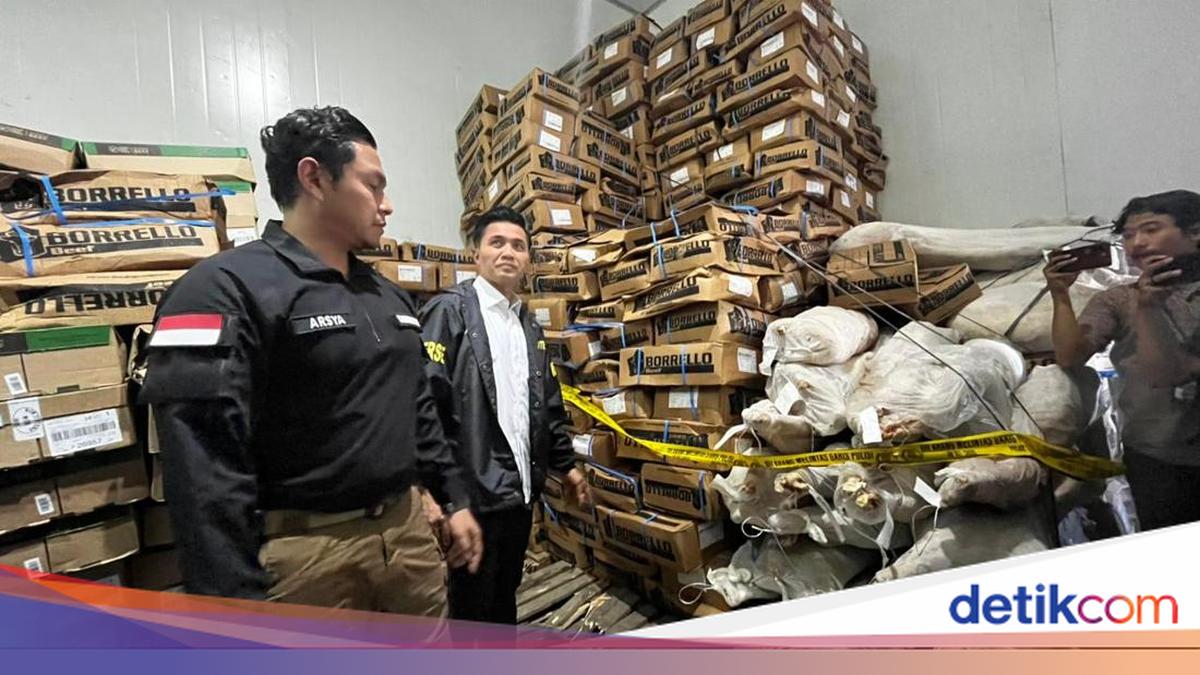
The Criminal Investigation Directorate of the Indonesian National Police (Bareskrim Polri) conducted laboratory testing on expired imported mutton that was previously seized from multiple locations in Tangerang. The test results demonstrated that the meat was unfit for consumption due to physical and quality deterioration.
Kombes Setyo K Heriyatno, Head of Subdivision I of the Special Crimes Directorate at Bareskrim Polri, stated that testing was performed on samples of meat seized during the investigation. The examination was conducted in collaboration with the Directorate General of Livestock and Animal Health at the Ministry of Agriculture and the Animal Product Quality Testing and Certification Centre (BPMSPH) under the Ministry of Agriculture.
“Organoleptic testing showed that the meat colour was no longer normal, had an off or rancid odour rather than typical meat aroma, and possessed a pH acidity level above normal,” Setyo said during a press conference in Cikupa, Tangerang, Banten, on Monday, 16 March 2026.
The testing adhered to Indonesian National Standard (SNI) 9226:2023 regarding carcass and meat quality testing. Based on these results, the meat was declared unfit for distribution or public consumption.
According to Setyo, the deterioration in meat quality was believed to have been caused by excessively prolonged storage that exceeded the expiration date. “The cause is that the meat’s storage period was far too long, which is why it cannot be distributed and is unfit for public consumption,” Setyo explained.
In this case, Bareskrim Polri investigators seized a total of 12,913.04 kilograms, approximately 12.9 tonnes, of expired imported mutton from Australia. The evidence was discovered in three box trucks and two storage warehouses in the Batuceper and Cikupa areas of Tangerang.
Based on investigation findings, a portion of the meat had already been sold to consumers. Investigators discovered evidence of expired meat sales, including sales at Kebayoran Lama Market in Jakarta.
“So this 14 tonnes was divided into three stages. First, 1.6 tonnes were sold to Kebayoran Lama Market. Then 9 tonnes more were seized by the Mobile Patrol Unit yesterday, and the remainder is still in the warehouse, which we are securing,” Setyo explained.
In this case, police have named four suspects: IY as the seller, T and AR as intermediaries, and SS as the buyer who subsequently resold the meat at the market.
“The suspects obtained the imported Australian mutton around 2022 by purchasing approximately 24,000 or 24 tonnes from a meat importing company,” Setyo stated.
“From that purchase, the suspects sold the meat, and 14,000 kilograms or 14 tonnes of meat had exceeded its final expiration date of April 2024,” he continued.
Investigators found that the suspects continued selling the meat despite knowing that the product had exceeded its expiration date. They profited from this fraudulent practice.
“Investigators from the Mobile Patrol Unit and the Special Crimes Directorate of Bareskrim Polri are committed to continuing law enforcement and investigating the involvement of other parties in the trafficking of expired frozen imported meat,” Setyo emphasised.
On the same occasion, Ira Firgorita, Head of the Livestock Product Safety Oversight Substance Group at the Ministry of Agriculture, explained that food products that have exceeded their expiration date are classified as contaminated food and are strictly prohibited from being traded.
“The expiration date is intended to protect consumers to ensure they receive quality and safe food. When a product expires, this falls within one of the criteria for contaminated food. Contaminated food must not be distributed or traded,” Ira stated, representing the Director of Veterinary Public Health at the Bareskrim Polri press conference.
Furthermore, Ira explained that contaminated food status can be proven scientifically through laboratory testing. There are three primary physical criteria that prove the meat has been contaminated.
“First, the meat colour is no longer normal. Second, the aroma is no longer typical of meat—it has become off and rancid. Third, the acidity level or pH is elevated above normal,” Ira detailed.
Ira added that the elevated pH level in the meat resulted from enzyme activity and other factors triggered by excessively prolonged storage. She stressed that every imported meat product must include production codes and expiration dates determined on the basis of risk analysis to ensure public food safety.
The suspects face charges under Article 8 (3) read together with Article 62 (1) of Law Number 8 of 1999 on Consumer Protection, as well as several articles under Law Number 18 of 2012 on Food and Law Number 7 of 2014 on Trade. They face a maximum prison sentence of five years or a fine of up to Rp 2 billion.