
Kurdish Armed Groups Prepare at Iran Border
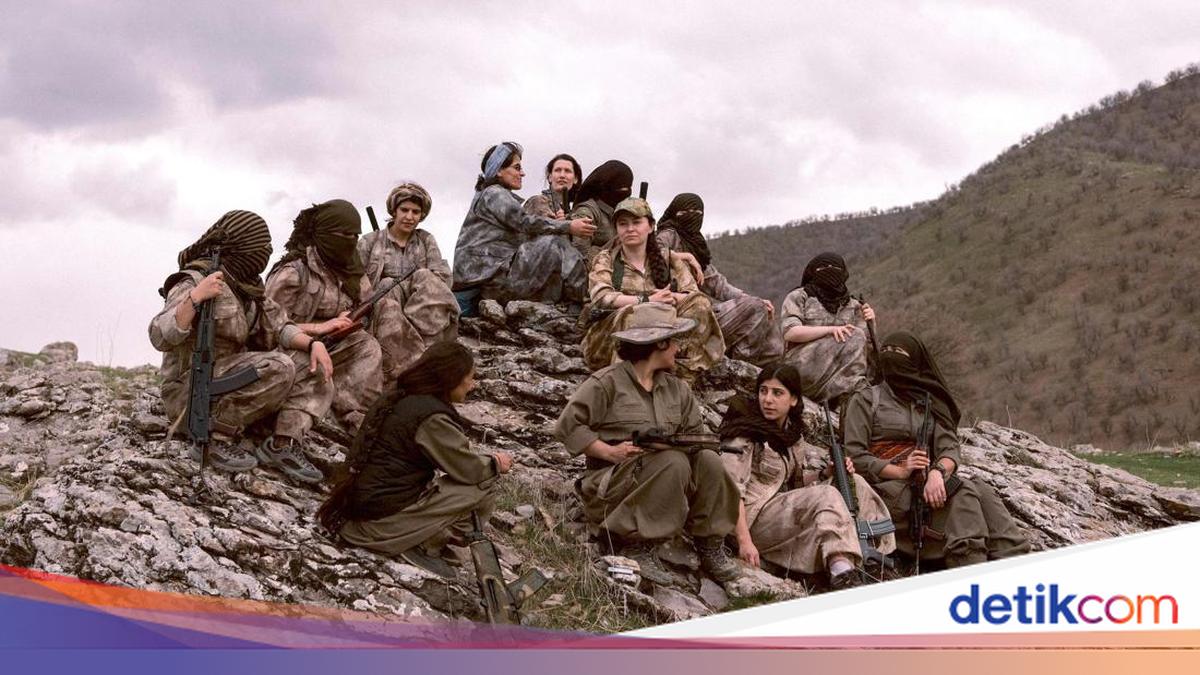
Continued US and Israeli airstrikes have sparked speculation that Iran-based Kurdish armed groups headquartered in Iraq will soon cross the border and join military operations against the Islamic Republic of Iran. In response, Iran has launched attacks against several Kurdish groups, including firing ballistic missiles that killed a fighter.
Meanwhile, US President Donald Trump on 7 March emphasised that he does not wish to involve Kurdish forces in fighting within Iran.
Amid these tensions, the BBC obtained rare access to one Kurdish military group—a battalion composed entirely of women fighters.
It took days of waiting and negotiation to gain entry to the caves and underground tunnels serving as the headquarters of Iranian Kurdish forces in northern Iraq. They operate a secret communications network, live outside conventional civilian practices, and hide from detection by the Iranian government and Turkish forces in the semi-autonomous Kurdistan region.
Only a female photographer was permitted to enter the complex and remain with the Kurdish fighters for ten days.
Over recent decades, several Kurdish rebel groups from Iran have migrated to the mountains in Iraq. They hide from Iranian intelligence, Iraq-based Shia militias, and Turkish forces.
Recently, large Kurdish groups from Iran in northern Iraq have formed a coalition.
Speculation has developed that US President Donald Trump made direct contact with Kurdish leaders and requested they join the war.
In a telephone interview with Reuters news agency on 5 March, Trump stated he supported Kurdish forces attacking Iran, saying: “I think it would be great if they want to do it.”
However, two days later, on Saturday (7 March), Trump told journalists that he does not want Kurdish forces to set foot on Iranian soil.
“We don’t want to make this war more complicated,” he said.
Continuing US and Israeli airstrikes have prompted Iran to launch attacks against several Kurdish groups. One ballistic missile strike killed a fighter.
One of the most organised groups is the Free Life Party of Kurdistan (PJAK), which claims to have spent years preparing to attack Iran.
“I fight for my family and the Kurdish people who have long been oppressed,” said Aryen, a 21-year-old fighter. She is a member of the Women’s Defence Forces unit at PJAK.
As a Kurd, Aryen claimed to have experienced injustice and discrimination in Iran, leaving her with no choice but to take up arms.
Two years ago, she decided to join PJAK.
Inside the secret military headquarters
The tunnel serves as a safe shelter, complete with food supplies, cash, and ammunition stores.
PJAK keeps its troop numbers secret, but approximately 60 fighters—mostly women—have trained at this headquarters before the US and Israel attacked Iran.
Fighters undergo military training, ideological sessions, and various skills ranging from sniper tactics to drone operation. They also undergo medical examinations in preparation for deployment at the border, as tensions between the US and Iran escalate.
“This war has long been anticipated,” said Gelawej Ewrin, 40, to the BBC.
At age 20, he left his geography studies in the city of Urmia, Iran, and joined PJAK as a soldier. He now serves as a spokesman.
Fighters from PJAK follow developments outside the secret tunnel by watching television.
Speaking from one of the secret caves, Ewrin revealed that he has spent half his life in the mountains and has not seen his family since leaving home.
He suggested that, even if Iran’s Supreme Leader Ali Khamenei were killed in a US-Israeli strike, the women-led protest wave that began in 2022 had already weakened the Islamic Republic.
He referred to the unrest triggered by the death of Mahsa Amini, a 22-year-old Kurdish woman arrested by Iran’s morality police for allegedly failing to comply with mandatory hijab regulations.
The only option
The Iranian government responded to the expanding protests, which evolved into the “Woman, Life, Freedom” movement, with violent repression. However, the movement has inspired some new PJAK recruits.
Before joining PJAK, 18-year-old Bigen participated in mass demonstrations and refused to wear a hijab at school as an act of civil disobedience.
“Women don’t have many options,” she said whilst slowly braiding a fellow fighter’s hair.
“We must choose: either suffer from domestic violence and social restrictions, or protect ourselves through revolution.”
Kurdish rebel groups are often accused of recruiting children as soldiers. Bigen herself was still a student in Iran when she joined the group three years ago. Many fighters at this base claim that armed resistance is the only way out.
“My struggle is to ensure a free future for the next generation of Kurdish people,” said Delal, a dentist who became a guerrilla fighter at age 23.
“For the Kurdish people, the last 200 years have been marked by oppression and violence,” she added.
PJAK was formed in 2004.