
Kurban and Real Value Transfer: Driving Economic Redistribution to Remote Areas
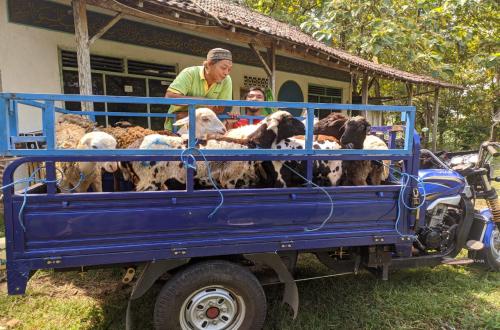
Eid al-Adha is no longer merely an annual religious ritual but has evolved into a massive socio-economic phenomenon. With funds circulating in the tens of trillions of rupiah, the kurban practice holds immense potential as a tangible instrument for economic equalisation, driving welfare redistribution even to remote areas.
The economic scale of kurban is no mere speculation. According to projections by the Institute for Demographic and Economic Strategic Studies (IDEAS), national kurban economic activity in 2023 is estimated to reach Rp24.5 trillion, requiring over 1.8 million livestock. This seasonal demand surge channels significant capital from urban to rural areas, serving as the lifeline for local breeders and sustaining downstream economic ecosystems—from feed suppliers and logistics to employment.
Nutritional Gaps and Distribution Paradoxes
From an Islamic economics perspective, kurban serves as a direct in-kind wealth transfer mechanism to vulnerable communities. This period plays a vital role in improving nutrition, as access to animal protein remains a luxury. Data from the Central Statistics Agency (BPS) shows Indonesia’s per capita beef consumption at 0.52 kilograms annually—far below the standards of developed nations.
However, despite this potential, kurban management remains inefficient. A recurring issue is the surplus of meat in urban areas during the tasyrik days, while poor communities in remote, border, and outermost regions (3T) struggle to access it due to high logistics costs and poor infrastructure. The absence of a cold chain exacerbates the problem, leading to significant food spoilage.
Hilirisation and Philanthropy Transformation
To address geographical disparities and logistical inefficiencies, national-level managerial interventions are needed. Hilirisation through processed product innovation offers a strategic solution. Converting kurban meat into packaged goods, such as corned beef and canned rendang under the Superqurban programme, extends shelf life up to three years (Rumah Zakat, 2024). This innovation enables geographical distribution without time or distance constraints, transforming it into an effective emergency food reserve for disaster-affected areas.
Furthermore, the kurban paradigm must shift from a seasonal consumption activity to a sustainable productive empowerment programme. Local breeding and fattening initiatives integrated into village development projects can provide year-round income stability for small-scale farmers. With financial literacy support and guaranteed market absorption, farmers transition from passive recipients to active drivers of rural economic circulation.
Accountability in the Digital Age
The kurban ecosystem transformation cannot be complete without digital technology adoption. Digital ecosystems enable communities to perform kurban with ease, precisely select distribution points, and receive real-time reports. Strict transparency and accountability in reporting are crucial for maintaining public trust. Digitalisation ensures each sacrificed and distributed animal meets Service Level Agreements (SLAs) with guaranteed quality standards.
Kurban is fundamentally a powerful instrument of social justice. Through the synergy of individual piety, processing technology innovation, accurate poverty mapping, and professional Islamic philanthropy management, the kurban ritual will not merely dissipate as a fleeting phenomenon. Instead, it will metamorphose into a pillar of national food security and a robust engine for economic growth, from cities to remote villages.