
Kudus Regency Receives WBTB Certificate for "Guyang Cekathak"
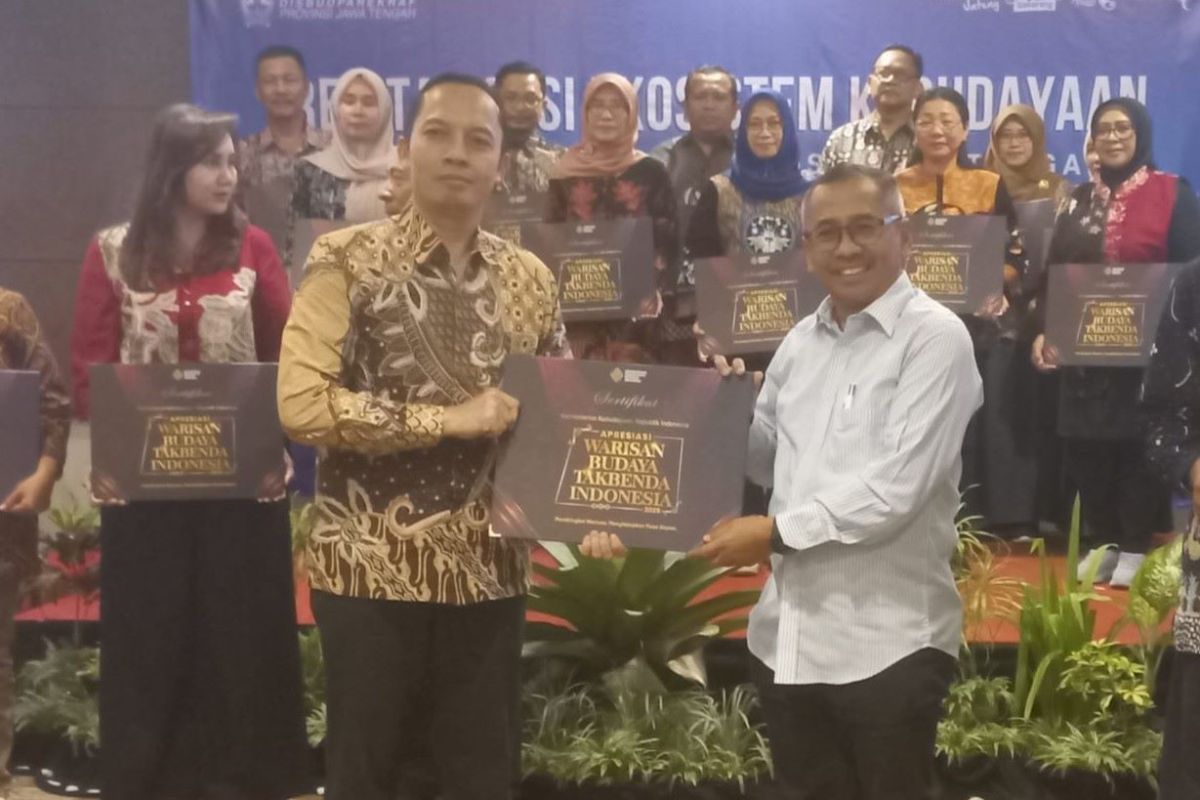
Kudus (ANTARA) - The Kudus Regency Government, Central Java, through the Culture and Tourism Office (Disbudpar), has received a certificate for Intangible Cultural Heritage (WBTB) as national recognition of the “Guyang Cekathak” tradition as an effort to preserve the local Kudus tradition.
“We received the certificate on Tuesday (21/4) in Semarang and it was handed over directly by the Head of the Culture, Tourism, and Creative Economy Office (Disbudparekraf) of Central Java Province, Hanung Triyono,” said Acting Head of Disbudpar Kudus, Teguh Riyanto, in Kudus on Friday.
The receipt of the WBTB certificate for “Guyang Cekathak”, he said, is one of the efforts to support and protect cultural works and intangible heritage so that they do not become extinct.
The “Guyang Cekathak” tradition has a close connection with Sunan Muria. This tradition has existed since the lifetime of one of the Wali Songo, when the community asked for rain during the dry season through his intercession.
Etymologically, “guyang” means to bathe, while “cekathak” refers to the saddle or horse’s hoofprint left by Sunan Muria. This tradition is still carried out by the people of Colo Village as an effort to pray for rain to the Almighty God.
The “Guyang Cekathak” procession begins with retrieving the cekathak from its storage place at night after Maghrib prayers. After that, the reading of manaqib and tahlil is led by the administrators of the Sunan Muria Mosque and Tomb Foundation.
The next day, residents along with pilgrims follow prayers and tahlil in the Sunan Muria Mosque hall, then the cekathak is paraded to Sendang Rejoso accompanied by selawat and the beating of terbang papat. Upon arrival at the location, the cekathak is bathed using water from the Rejenu spring with a coconut shell dipper. The water from the bathing is then sprinkled on the participants as a symbol of hope for rain.
Teguh added that this WBTB recognition is part of the Kudus Regency Government’s commitment to maintaining and preserving local culture, while strengthening the noble values of ancestral heritage.
“It is hoped that this recognition can provide benefits, especially in educating the younger generation to better recognise and love local culture,” he said.
In addition, Disbudpar Kudus is also proposing 13 cultural works as Indonesian Intangible Cultural Heritage for 2026. Currently, they are preparing academic studies and supporting data documentation.
Some of the cultural works proposed include the ampyang maulid tradition, icik embroidery, caping kalo, gusjigang, jenang tebokan, kretek, lentog Kudus, sate kebo, sega jangkrik, sega pindang Kudus, soto kebo Kudus, sedekah sewu sempol tradition, and wayang klithik Wonosoco.