
Kuala Tanjung Residents Turn 2 Tonnes of Waste into Income Source
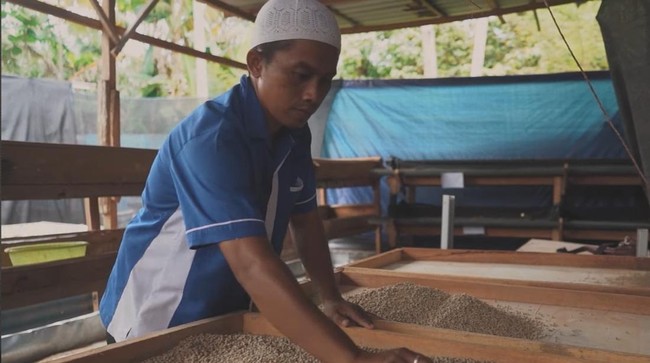
The issue of waste remains a major challenge in Indonesia. Much of the waste generated daily is not managed properly, triggering various environmental and health problems. Amid this situation, an initiative by residents in Kuala Tanjung Village, North Sumatra, demonstrates that waste can also become a source of economic benefit.
Didi Saputra (41), familiarly known as Untung, has become the driving force behind waste management in his village. Since 2021, he and the villagers have begun processing organic waste using maggots or larvae of the Black Soldier Fly. From this effort, the Sari Larva Berdaya (SLB) group was formed, which later developed into Bank Sampah Berseri in 2024.
“Initially, we learned to manage waste with maggots. Over time, we realised this is not just about cleanliness, but can also become a source of income,” said Didi in an official statement on Wednesday (29/4/2026).
Currently, the group is capable of processing around 1 to 2 tonnes of waste every day. The waste is collected from company catering waste and nearby households. The results of the processing are diverse. Maggots are used as animal feed for chickens, ducks, and fish.
In addition, wooden pallet waste is processed into tables and chairs, while paper waste and banana fronds are turned into recycled paper and paper bags that have market value. Not only does this impact the environment, but the activity also opens up new job opportunities for residents.
As many as 17 people are now actively involved in the waste management. Didi specifically involves vulnerable groups, such as people with disabilities and school dropouts.
“There are those who are blind, and others with other limitations, but they can still work, such as sorting waste or making recycled products,” he said.
In addition, the group also helps school dropouts to take the Paket B and C exams so they can obtain diplomas. Economic benefits are also felt through the Bank Sampah Berseri savings system. Residents can exchange inorganic waste like plastic and paper for savings balance.
Interestingly, ahead of major holidays like Eid, the balance can be cashed out in the form of essential goods packages at around 30 percent cheaper than market prices. This effort is also supported by PT Indonesia Asahan Aluminium (INALUM) as part of MIND ID.
Support is provided in the form of training and facilities, enabling the community to develop independent waste management. This programme is part of social innovation that contributes to the company’s achievement of the PROPER Gold award.
Nevertheless, Didi assesses that their journey is still long. In the future, he hopes to have a waste transport fleet so that the service reach can be expanded to more households.
“We continue to learn and move forward. From waste, we can be independent and help each other,” he concluded.