
KUA-based economic empowerment programme reaches 236 locations
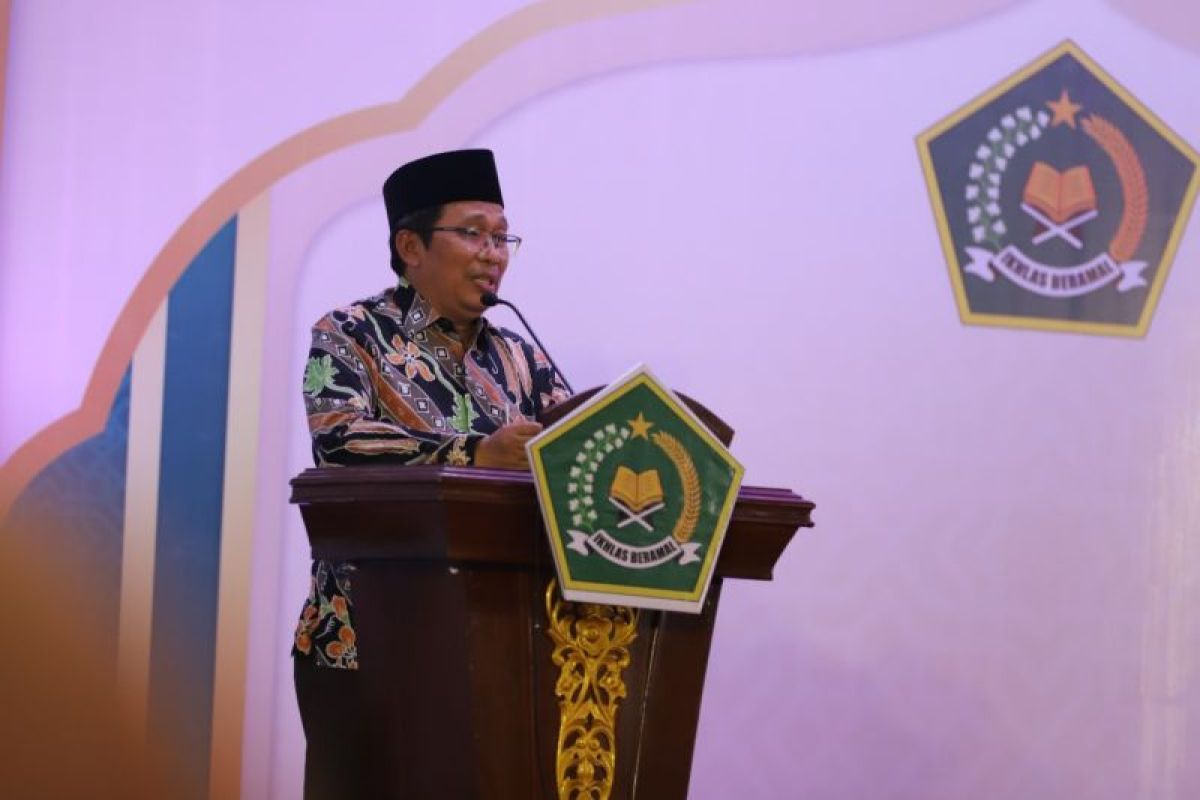
The Ministry of Religious Affairs has reported that the community economic empowerment programme, based at Religious Affairs Offices (KUA), has reached 236 locations in Indonesia as of 2026, supported by 96 collaborators to expand public access to economic empowerment.
“Through proper collaboration and management, the potential of zakat and waqf can be developed into a force for economic, educational, social, and environmental sustainability,” stated the Director of Zakat and Waqf Empowerment, Waryono Abdul Ghafur, in a statement in Jakarta on Friday.
Waryono explained that the KUA-based economic empowerment programme utilises the strategic role of the KUA at the sub-district level as part of an effort to broaden community access to economic empowerment.
The KUA does not only serve as a centre for religious services but can also function as a hub for community economic empowerment.
According to him, strengthening family economies through the KUA can contribute to improving the quality of family life while simultaneously addressing various social issues.
He noted that cross-sector collaboration is also a vital component in developing the national zakat and waqf ecosystem. During the 2026 National Zakat and Waqf Empowerment Impact & Collaboration Forum, the Ministry of Religious Affairs brought together various stakeholders to strengthen coordination and open new opportunities for cooperation.
Parties involved include Baznas, Zakat Amil Institutions, the Indonesian Waqf Board, nazirs, Islamic Financial Institutions receiving cash waqf, local governments, ministries and agencies, the business world, universities, and communities.
“The development of empowerment programmes requires strengthened mentoring, increased capacity for managers, the development of productive assets, expanded access to financing, and monitoring systems,” he said.
Consequently, KUA-based economic empowerment is positioned as part of a broader ecosystem to expand the benefits of zakat while strengthening community self-reliance.