
KSSK Warns of Increasing Global Turbulence, Purbaya: We Continue to Monitor
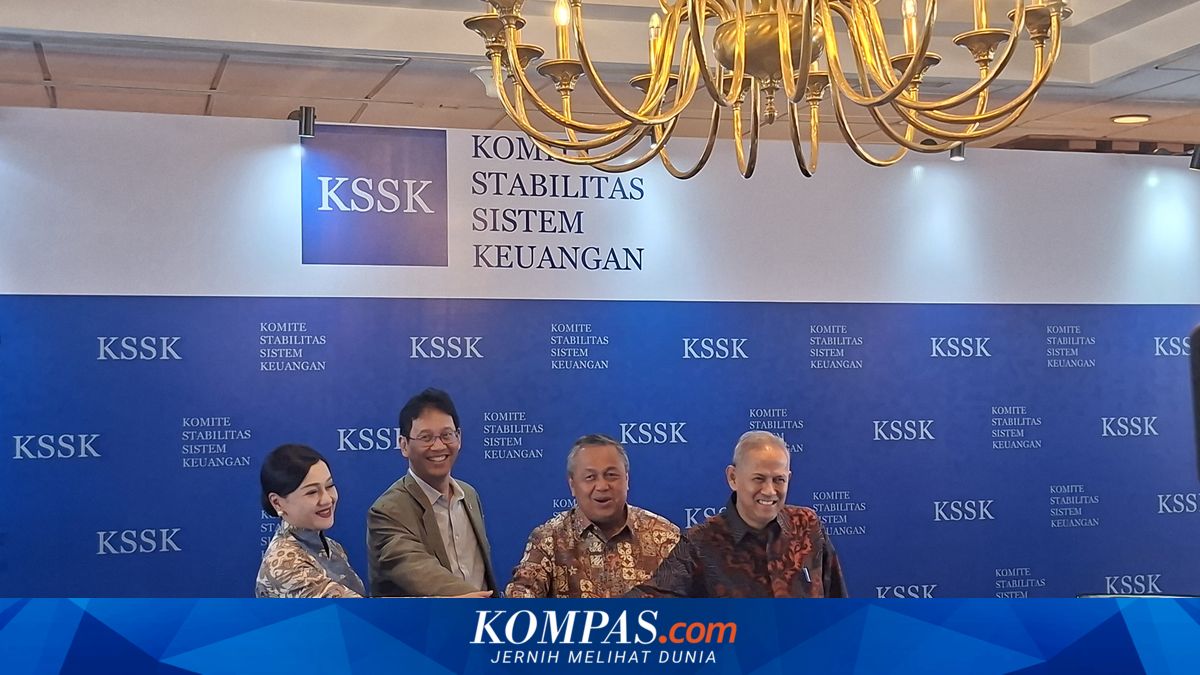
Jakarta - The Chairman of the Financial System Stability Committee (KSSK) and Finance Minister Purbaya Yudhi Sadewa stated that Indonesia’s economic conditions in early 2026 remain relatively stable amid global financial market volatility and the escalation of geopolitical conflicts in the Middle East.
According to Purbaya, global uncertainty is still influenced by regional conflicts that impact world financial markets, particularly the movement of energy prices.
“Global conditions remain full of uncertainty; we will continue to be vigilant about that,” said Purbaya during the Financial System Stability Committee (KSSK) press conference in Jakarta on Thursday (7/5/2026).
The results of the KSSK’s periodic meeting II of 2026, held on 27 April 2026, assessed that coordination among institutions is key to addressing increasing global pressures.
“Based on these developments, the KSSK will continue to monitor and conduct forward-looking assessments of the performance of the economy and the current financial sector, while undertaking coordinated mitigation efforts,” said Purbaya.
Nevertheless, domestic conditions are deemed sufficiently good in the first quarter of 2026.
Public consumption and several economic indicators are said to still demonstrate resilience amid global pressures.
Purbaya also revealed that the government is improving the investment climate through the establishment of the Task Force for Accelerating Government Programmes to Support Economic Growth (P3-MPPE).
The task force was formed by President Prabowo Subianto to accelerate national strategic programmes, strengthen investment, and promote job creation.
Up to May 2026, the task force has held eight sessions to resolve various cross-sectoral issues.
Discussions covered the Abadi Masela Block, special economic zones (SEZs), certification, investment barriers, and business licensing.
State expenditure realisation is said to have supported the economy through the disbursement of holiday allowances (THR) for civil servants (ASN), TNI, Police, and pensioners.
Goods expenditure for the nutritious food programme and the distribution of social assistance are also said to bolster economic activity.
These assistance programmes include the staple goods card, recipients of National Health Insurance (JKN) premium assistance, and various other social aids.
Capital expenditure is also directed to support economic growth through the construction and rehabilitation of roads, irrigation, networks, as well as the procurement of equipment and machinery.
The KSSK will continue to maintain public purchasing power and ensure that state expenditure programmes run smoothly to support national economic growth throughout 2026.