
KSPSI President Rejects New Labour Regulation on Outsourcing, Calls for Revision
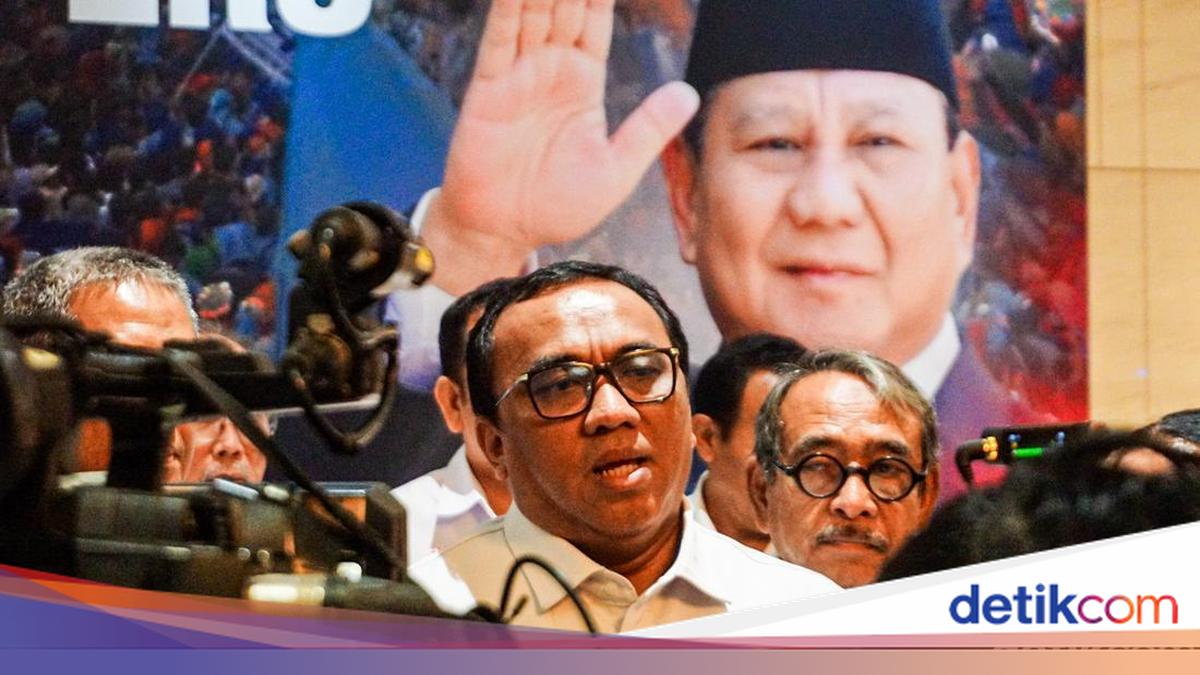
KSPSI AGN rejects Ministerial Regulation No. 7 of 2026 because its substance severely disadvantages workers,” said Andi Gani in his statement on Monday (11/5/2026).
KSPSI, he said, is urging Minister of Manpower Yassierli to completely revise the regulation. According to him, the new rules open up new legal loopholes and create multiple interpretations between trade unions and companies.
“This regulation actually eliminates the boundaries that have previously protected workers from uncontrolled outsourcing practices,” he explained.
Andi Gani is encouraging the government to return to the outsourcing provisions in Law No. 13 of 2003, which explicitly limit outsourcing to only five types of work.
“Where it is clearly stipulated that outsourcing is only permitted for five types of work: security (security personnel), catering, driver services, mining support services, cleaning services, and with clear time limits,” he emphasised.
Andi Gani explained that in Ministerial Regulation No. 7 of 2026, the provisions prohibiting the outsourcing of core work have been removed. There is even an addition of the category ‘operational services’, which is considered to lack a clear definition.
“The phrase ‘operational services’ is highly open to interpretation. This has the potential to be exploited to expand outsourcing to core company jobs. As a result, protection for workers becomes even weaker,” he clarified.
Manpower Minister Issues New Outsourcing Regulation
Previously reported, Minister of Manpower Yassierli issued regulations to provide legal certainty and protection for outsourced workers through Ministerial Regulation No. 7 of 2026 on Outsourced Work.
This regulation was issued to coincide with International Labour Day (May Day) on 1 May 2026.
Yassierli stated that this regulation is a concrete step by the government to ensure that outsourcing practices operate more fairly and provide clear protection for workers.
“This Ministerial Regulation is a follow-up to the Constitutional Court Decision No. 168/PUU-XXI/2023, which mandates restrictions on outsourced work. The policy aims to provide legal certainty, strengthen the protection of workers’ rights, and maintain business continuity,” Yassierli said in his statement on Thursday (30/4/2026).
Under this regulation, the types of work in outsourcing are limited to specific fields, namely cleaning services, food and beverage provision, security, driver and worker transport provision, operational support services, and support work in the mining, oil and gas, and electricity sectors.
In addition, the employing company that delegates part of its work to an outsourcing company must have a written agreement. This agreement must at least include the type of work being outsourced, the duration, work location, number of workers, work protection, as well as the rights and obligations of the parties.
On the other hand, outsourcing companies are also required to fulfil all workers’ rights in accordance with applicable laws and regulations, including wages, overtime pay, working hours and rest, annual leave, occupational safety and health (K3), social security for health and employment, religious holiday allowances, and rights regarding termination of employment (PHK).
Yassierli explained that this Ministerial Regulation also regulates sanctions for employing companies or outsourcing companies that do not comply with the established provisions.
“Through this Ministerial Regulation, the Government reaffirms its commitment to continue promoting the implementation of harmonious, transformative, and just industrial relations with the spirit of advancing industry and prosperous workers,” he added.