
KSPI Storms Ministry of Manpower Office, Demands Ban on Outsourcing
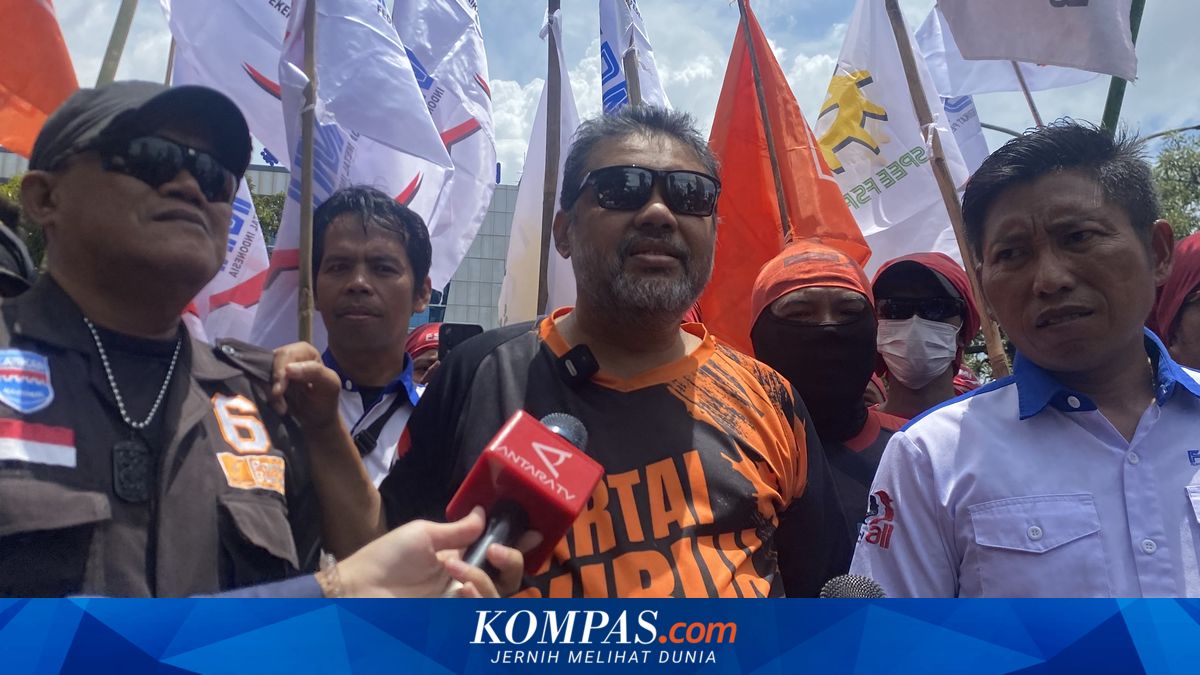
JAKARTA, KOMPAS.com - Hundreds of workers under the Indonesian Confederation of Trade Unions (KSPI) stormed the Ministry of Manpower (Kemenaker) office in South Jakarta on Thursday (7/5/2026).
KSPI President Said Iqbal stated that they demanded Minister of Manpower Yassierli revise Ministerial Regulation on Employment (Permenaker) No. 7 of 2026 on Outsourced Workers or outsourcing. They objected to the regulation only limiting the use of outsourced workers to certain fields, instead of banning it altogether.
“Ministerial Regulation No. 7 of 2026 legalises outsourcing or outsourced workers. However, what workers demand, represented by KSPI along with the Labour Party, is a ban,” Said said when met at the location on Thursday.
In fact, Said said, President Prabowo Subianto, during the International Labour Day event at Monas, in his view approved the ban on outsourcing.
According to him, the current field conditions show many companies using outsourced labour massively in direct production processes in the manufacturing industry as well as goods and services.
“For example, welders in car factories, screwers in electronics factories—that’s outsourcing. Or bank tellers—that’s outsourcing,” Said explained.
KSPI regrets that Kemenaker did not include the ban explicitly in the articles of Ministerial Regulation No. 7 of 2026.
“So actually, the minister wants to legalise the existence of outsourcing. The prohibited articles were not included,” Said said.
In addition, they also highlighted the absence of explicit articles stating the rights of outsourced workers to have permanent employee status if the employer violates the rules.
That provision would prevent companies from arbitrarily dismissing workers.
“This regulation does not include it. This is the minister’s trick to legalise outsourcing and outsourced workers,” Said said.
On the other hand, the existence of the regulation instead does not provide legal certainty, thus contradicting the Constitutional Court’s (MK) order.