
KSPI: New Labour Regulation Fails to Protect Workers, Instead Legalises Outsourcing
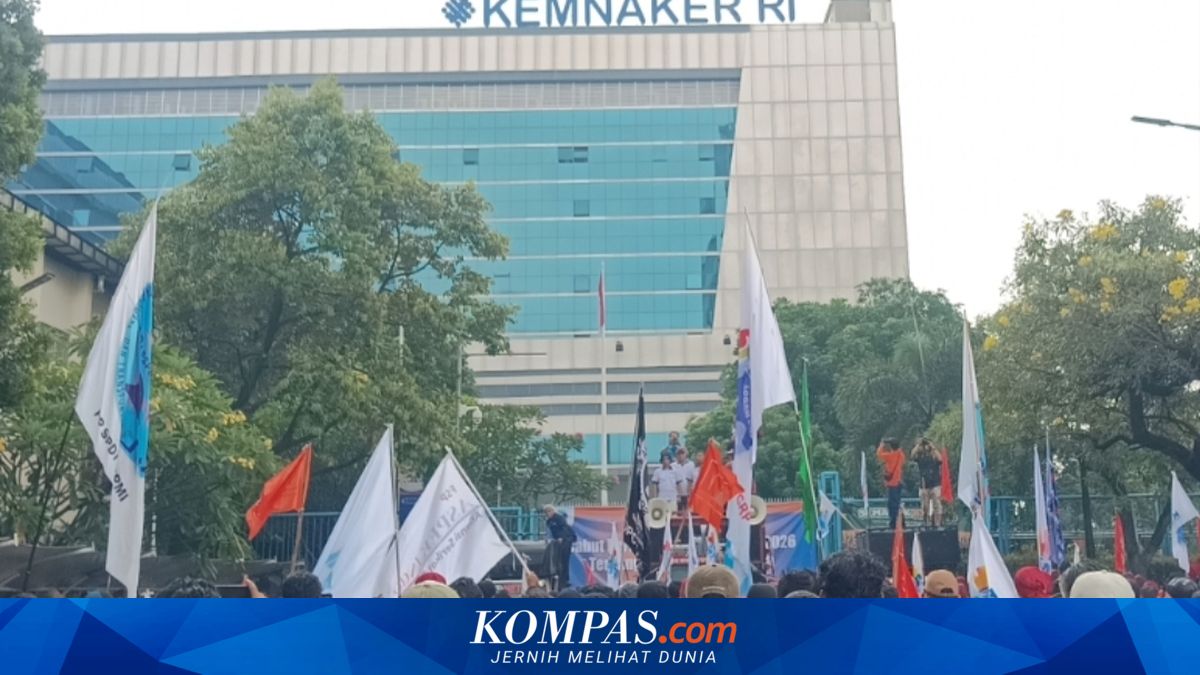
JAKARTA, KOMPAS.com - A crowd of protesting workers gathered in front of the Ministry of Manpower office in South Jakarta on Thursday (7/5/2026), demanding revisions to Ministerial Regulation No. 7 of 2026 regarding outsourcing workers.
Said Iqbal, President of the Labour Party and also President of the Indonesian Confederation of Trade Unions (KSPI), stated that the new regulation instead gives the green light to companies to legalise outsourcing practices. He argued that this contradicts workers’ demands to prohibit the widespread application of the outsourcing system in the workforce.
“Ministerial Regulation No. 7 of 2026 legalises outsourcing or temporary workers. However, what workers, represented by KSPI along with the Labour Party, have requested is a ban,” Iqbal said during a break in the demonstration on Thursday.
Iqbal noted that President Prabowo Subianto, in his speech at the May Day commemoration on 1 May 2026 at Monas, had agreed to the prohibition of outsourcing.
Iqbal then outlined four reasons why workers are demanding revisions to Regulation 7/2026.
First, the regulation does not include a clause prohibiting the use of outsourcing workers in direct production processes for the manufacturing industry or core activities in goods and services industries. Currently, outsourcing is widely used in direct production processes.
“For example, welders in car factories, screw assemblers in electronics factories—that’s outsourcing. Or tellers in banks, that’s outsourcing. Core activities in the banking industry,” Iqbal explained.
The second reason is that Regulation 7/2026 does not include criminal consequences for implementing outsourcing that violates the rules. Previously, under Law No. 13 of 2003 and Ministerial Regulation No. 19 of 2012, there were legal consequences outlined.
The third reason is that Regulation 7/2026 does not align with the Constitutional Court’s ruling on legal certainty for labour protection. “What is to be protected? Nothing is protected. What about wages, whether the minimum wage increases annually, whether there are promotions, the layoff process, and so on,” he clarified.