
KSP: Free Health Check (CKG) reaches 10.5 million participants in early 2026
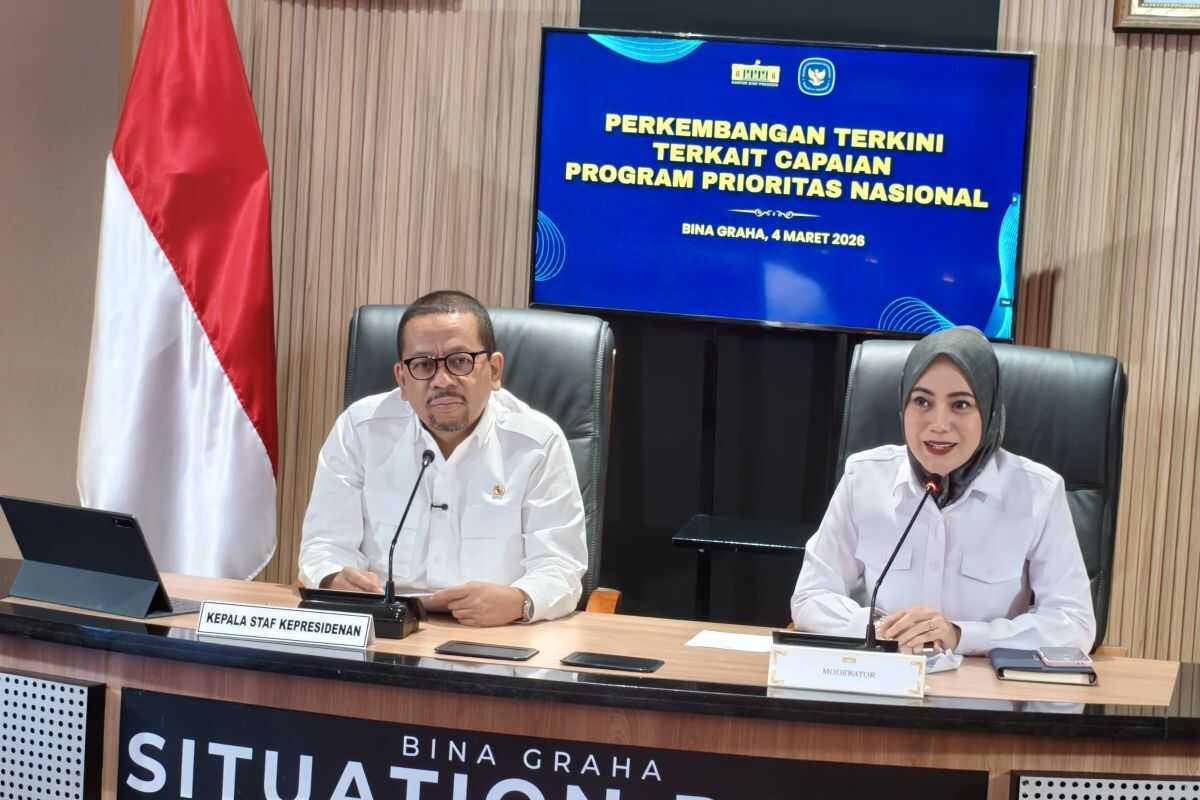
Jakarta (ANTARA) - The Head of the Presidential Staff Office M. Qodari reported that the Free Health Check (CKG) programme from January to February 2026 has served 10,563,593 participants at 9,543 puskesmas across 514 regencies/cities. ‘Of these, 714,808 participants have received treatment, while 7,577,364 others are still in the follow-up stage,’ Qodari said at a press conference at the KSP office in Jakarta, on Wednesday. He said the programme is implemented in an integrated cross-ministerial and institutional manner, with a target to reach 130 million people in 2026 through expanding services to 10,300 puskesmas with the support of 66 ministries and agencies. According to him, the reporting system integration is also being improved to ensure the programme’s implementation is more accountable and transparent, while ensuring early detection becomes a new culture in the national health service. In the religious education sector, he explained that CKG in madrasah environments is part of a strategy to strengthen early detection of health conditions among students and educational staff. The programme coordinated with the Ministry of Religious Affairs targets 87,644 madrasah institutions, ranging from Raudhatul Athfal to Madrasah Aliyah, with a total of 10,495,012 students and 936,359 teachers and educational staff as service targets. ‘Based on the Islamic Education Management Information System data for the 2025–2026 academic year, up to January 2026, 10,751 madrasah institutions have implemented the CKG programme with 1,914,615 students having received health examinations, or around 12.28 percent of the number of madrasah institutions and 18.11 percent of the number of students as the programme targets,’ he said. He assessed that the achievement demonstrates significant initial progress in building health check awareness from school age. The programme is implemented through collaboration between the Ministry of Religious Affairs, the Ministry of Health, and local governments. He acknowledged that on-the-ground implementation still faces several challenges, ranging from uneven local government support, the distribution of madrasahs in frontier, outermost, and left-behind areas, budget constraints, to the need for harmonisation of institutional data so that implementation is more evenly distributed across Indonesia. ‘Overall, the CKG is not merely a health service programme but a long-term investment to strengthen basic health services and prevent disease from an early age, especially among the younger generation,’ he said.