
KSOP Batam Clarifies Ship Dismantling Activities at Seloko Batam Shipyard
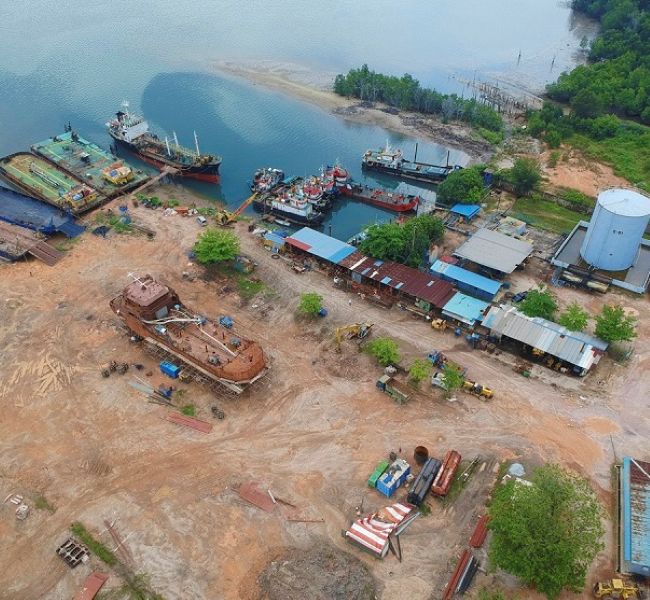
The Port Authority and Harbourmaster’s Office (KSOP) Batam has provided clarification regarding circulating information about ship dismantling activities at the PT Seloko Batam Shipyard facility located in Tanjung Riau, Sekupang District, Batam City.
Andi Rivai, Head of the Law Enforcement Division at KSOP Batam, affirmed that the ship dismantling operations conducted at the shipyard are being carried out in accordance with proper procedures and have obtained all necessary permits. “It is correct that the ship dismantling activity is conducted according to procedures and does not violate any regulations. All documents, including permits, are complete. Before undertaking this activity, the company coordinated with KSOP Batam,” he stated on Friday, 13 March.
He explained that every ship dismantling activity within the port authority’s jurisdiction must meet licensing requirements and occupational health and safety standards established by the relevant authorities.
The management of PT Seloko Batam Shipyard also provided an explanation that all ship dismantling operations conducted by the company operate within legal boundaries and under the supervision of competent authorities.
Rahmat Sidikhi, Legal Manager of PT Seloko Batam Shipyard, stated that the company holds authorisation for ship dismantling facilities valid until 2029. “We do not operate facilities in a legal vacuum. Every vessel entering the work area has undergone pre-cleaning and hazardous waste management document verification,” he said.
According to him, company operations are also equipped with Environmental Impact Assessment (AMDAL) documentation and comply with Occupational Health and Safety (K3) standards. All workers are provided with Personal Protective Equipment (PPE) in accordance with industry standards, including certified respirators and welding equipment.
Additionally, the work area is equipped with a containment system to prevent potential oil spills and fuel residue from leaking into surrounding waters. “Each stage of ship dismantling is supervised by an internal Health, Safety, and Environment (HSE) team and periodically audited by third parties,” he said.
He also ensured that hazardous and toxic waste (B3) such as sludge, used oil, and anti-fouling paint are handled by licensed vendors in compliance with applicable regulations.
YT Hananto, Manager of PT Seloko Batam Shipyard, added that the company is open to oversight and prepared to provide access to licensing documents to authorities and stakeholders in accordance with legal provisions. “We appreciate public concern regarding the environment. However, information circulating in the public domain should be based on data and verification from competent authorities,” he said.