
Krakatau Steel COO: Steel Industry Strategic for Indonesia's Resilience
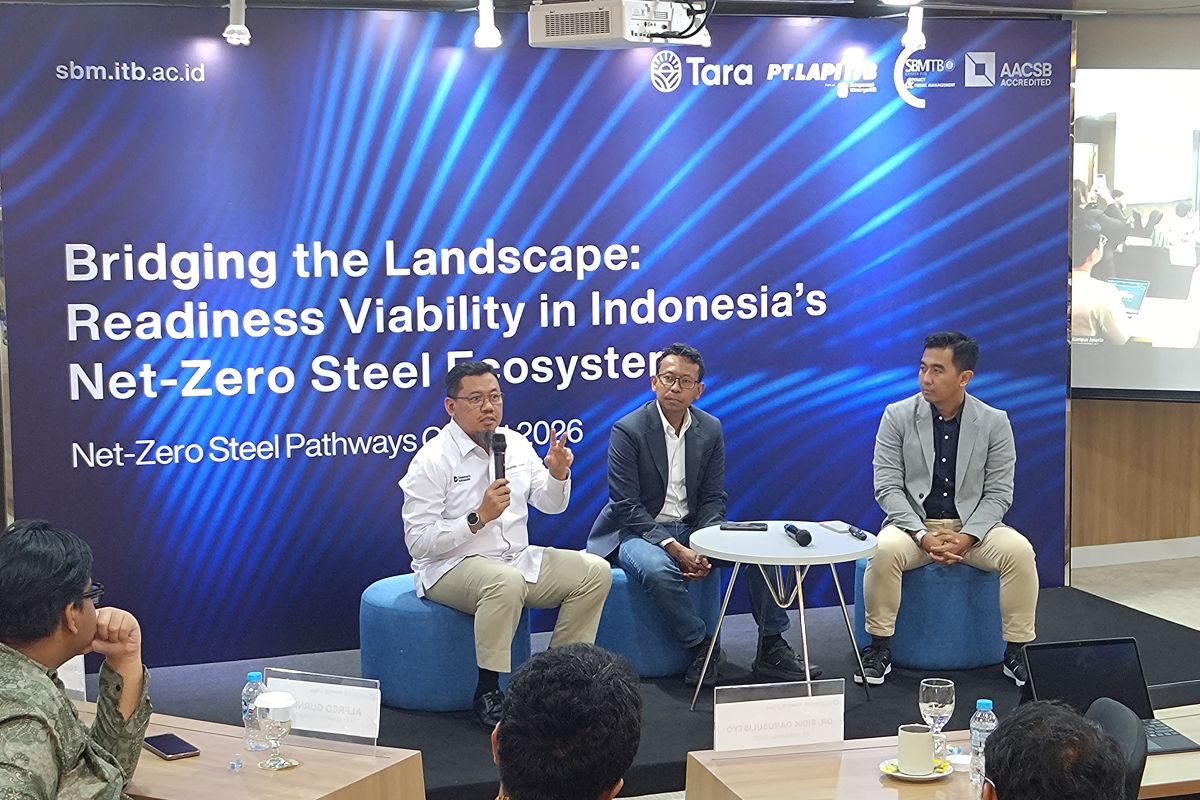
Jakarta (ANTARA) - COO of PT Krakatau Steel Tbk, Sidik Darusulistyo, has affirmed that the steel industry is a strategic sector that plays a vital role in maintaining national resilience and supporting various Indonesian development programmes.
“Steel is a strategic industry. The mother of industry—everything needs steel. And this is very strategic for us as a nation,” said Sidik during a discussion forum at the School of Business and Management of Institut Teknologi Bandung (ITB) Jakarta Campus on Thursday.
Sidik stated that the national steel industry is facing significant challenges due to relatively thin profit margins compared to other sectors, while the need for working capital and operational efficiency is very high.
According to him, the EBITDA margin in the steel industry is around 5-7 per cent, with net profit ranging from 3-5 per cent, so companies must maintain production process efficiency and accelerate working capital turnover.
He explained that Krakatau Steel is currently focusing on accelerating the cash conversion cycle, reducing inventory, and streamlining all operational lines to strengthen the company’s profitability.
“Our cash conversion cycle is currently still at five months, whereas the target is 3.5 months. So now we are streamlining processes, reducing inventory, and reducing work in progress,” he said.
In addition to internal efficiency, Sidik believes the national steel industry also requires support from all stakeholders, including the government on policy aspects and educational institutions related to research and technology, to compete with imported products, especially from China.
He noted that global steel consumption reaches around 1.8 billion tonnes per year, with approximately 1 billion tonnes coming from China, while Indonesia’s consumption is about 10 million tonnes with domestic industry utilisation at around 42 per cent.
However, around 25 per cent of national steel consumption is still met by imports.
“If Chinese steel leaks into Indonesia, one can imagine the impact. Almost all countries protect their steel industries because this is a strategic industry,” he revealed.
According to Sidik, the cost structure of the steel industry is heavily influenced by raw material and energy prices, while natural gas costs in Indonesia are still higher compared to several competing countries.
He exemplified that natural gas prices in China are said to be below 2 US dollars per MMBTU, whereas in Indonesia it can reach around 6.5 US dollars and even higher when using LNG.
Therefore, Krakatau Steel is currently actively coordinating with the government, including the Ministry of Industry, the Ministry of Trade, and Commission VI of the House of Representatives, regarding strengthening protection for the national steel industry.
He added that the steel industry also has direct linkages with the defence sector and national strategic projects, so import dependency is seen to affect national resilience.
“Everyone has a role. Protecting the domestic steel market is a strategy adopted by many countries around the world. If we depend on imports, if we depend on others, then this also endangers our national resilience,” he stated.
Furthermore, Sidik explained that Krakatau Steel is currently strengthening collaborations with several strategic state-owned enterprises such as PT PAL Indonesia, PT Pindad, and PT INKA to support national industry development.
In addition, Krakatau Steel is also working with the Ministry of Marine Affairs and Fisheries in developing steel-material fishing vessels.
Industry Minister Agus Gumiwang Kartasasmita in early April 2024 emphasised the importance of strengthening the national steel industry’s structure.
The Ministry of Industry is also preparing various measures to strengthen the industry, including import controls, mandatory SNI implementation, and certain domestic gas price policies (HGBT) to enhance the competitiveness of the domestic industry.