
Krakatau Osaka Steel to Close, Ministry of Industry Responds
Jakarta, CNBC Indonesia - The domestic steel industry is under heavy pressure due to increasingly complex geopolitical factors. From global oversupply, an influx of cheap imported products, to sluggish domestic demand, these combined elements are squeezing the performance of national business players.
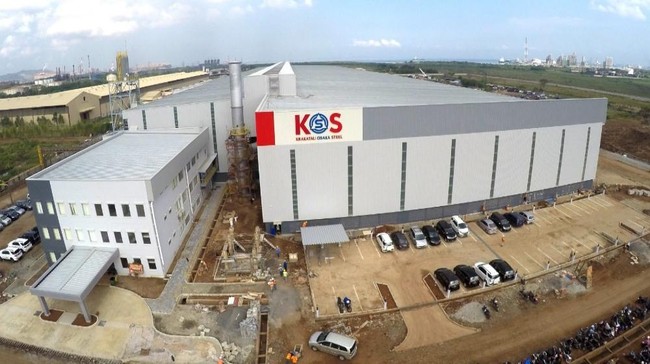
Latest developments see PT Krakatau Osaka Steel (KOS) stopping production at the end of April 2026, with full closure of operations scheduled for June 2026.
The Ministry of Industry has spoken out on the impacts, particularly on workers. Ministry spokesperson Febri Hendri Antoni Arief stated that the government understands the social and economic consequences of the decision.
“We are saddened by the situation faced by PT Krakatau Osaka Steel workers. The government recognises that this decision carries significant social and economic impacts. Therefore, we urge the company to fulfil the rights of affected workers in accordance with applicable laws and regulations,” he said in his statement on Tuesday (5/5/2026).
The decision to halt operations was actually set at the beginning of the year. Company management, through a board meeting on 23 January 2026, decided on this step after ongoing financial pressures. The company has also recorded losses since 2022, in line with deteriorating market conditions.
A decline in domestic construction steel demand is one of the main triggers. At the same time, cheaper imported products are increasingly dominating the market. Global producers, especially from China, are considered superior in terms of production scale and cost efficiency, allowing them to offer lower prices.
This pressure puts local producers in a difficult position. They must maintain product quality but face uneven price competition.
“This situation places the national steel industry in a challenging position. On one hand, domestic producers are committed to maintaining product quality, but on the other, they face price pressures from lower-cost imports. This is further exacerbated by weakening domestic demand, particularly from the construction sector,” Febri explained.
Furthermore, the government views the problems faced by KOS as not solely internal to the company. External factors are seen to play a major role in weakening industry competitiveness.
“Besides limited product diversification, declining demand and pressure from cheap steel imports, global oversupply conditions also affect the company’s competitiveness,” he revealed.
To mitigate this pressure, the government has issued several policies, including import controls through bans and restrictions, mandatory Indonesian National Standards for certain steel products, and incentives such as fixed natural gas prices and exemptions from import duties on billet raw materials.
However, reflecting on the KOS case, the Ministry of Industry assesses that these steps are not yet strong enough to support the industry as a whole. The government plans a thorough evaluation to formulate more effective strategies.
“We will conduct a comprehensive study to formulate more effective strategies in maintaining the sustainability of the domestic steel industry,” he emphasised.
At the global level, the steel industry is indeed facing structural issues in the form of oversupply and low-price trading practices. Many countries respond with protectionist policies such as import tariffs and trade remedy instruments, while others promote efficiency and innovation.
“Strengthening the national steel industry requires support from all stakeholders, including the government, industry players, and society. Moreover, global geopolitical dynamics, production cost structures, and domestic demand levels will greatly influence the effectiveness of implemented policies,” he concluded.