
KPPU Backs Kopdes Merah Putih, Ready to Safeguard a Healthy Business Climate in Rural Areas
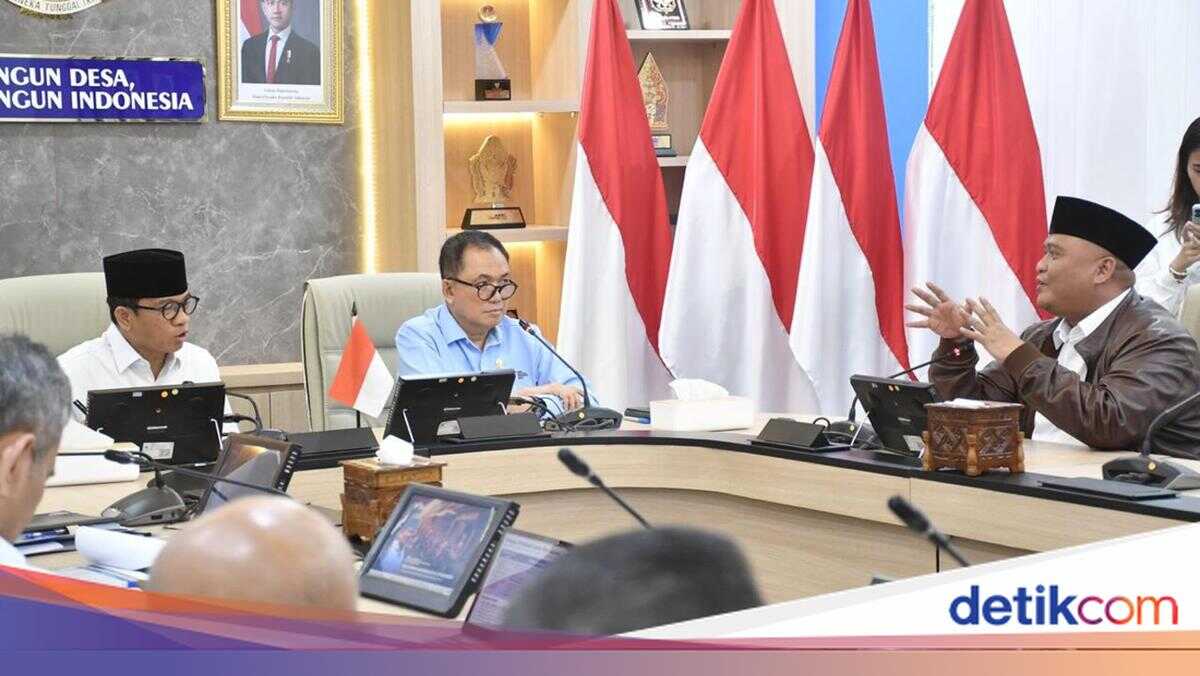
The Indonesian Competition Commission (KPPU) said it supports the government’s effort to strengthen the Village Cooperatives (Kopdes) Merah Putih, formed under the Ministry of Villages, Development of Disadvantaged Regions (Kemendes PDT).
The Minister of Villages and PDT, Yandri Susanto, outlined progress in the village empowerment programme, including a policy proposal to temporarily halt the expansion of minimarkets in rural areas once Kopdes is established.
The policy is intended to give breathing space for Village Cooperatives as drivers of the local economy and to strengthen the role of cooperatives in the village economy’s structure.
“So it is not intended to close all minimarkets,” said Yandri, in a written statement, Wednesday (4/3/2026).
That was stated by Yandri at a meeting with KPPU Chairman M. Fanshurullah Asa, together with the Minister of Villages and PDT, on Monday (2/3) at the Kemendes PDT office, Jakarta.
The meeting aimed to ensure that the village economic empowerment programme remains aligned with the principles of healthy competition.
Meanwhile, Fanshurullah Asa emphasised that from the competition perspective, the national retail sector already has an adequate regulatory framework.
In 25 years of its mandate, KPPU has provided advice and considerations to the government 13 times and conducted three enforcement actions related to the modern retail sector.
“Those recommendations include promoting zoning regulations, hours of operation, trading terms, and partnerships. The government’s follow-up on these recommendations has included, among others, the issuance of Presidential Regulation No. 112 of 2007 and Minister of Trade Regulation No. 53/M-DAG/PER/12/2008,” said the man known as Ifan.
The latest regulation on the arrangement of modern markets is the Minister of Trade Regulation No. 23 of 2021, a derivative of Law No. 11 of 2020 on Job Creation, which regulates location permits and business licenses by regional governments.
However, in implementation, the regulation has been deemed ineffective because it has not been fully accompanied by local government regulation and lacks enforcement mechanisms and sanctions adequate.
KPPU stressed its readiness to engage actively to ensure the Kopdes strengthening policy proceeds in line with healthy competition principles.
Fanshurullah Asa emphasised that support for Kopdes Merah Putih remains within the remit of KPPU as the competition watchdog.
Normatively, KPPU refers to Article 50 of Law No. 5 of 1999, which provides certain exemptions for cooperatives as long as they operate in accordance with the principles and aims of their formation, namely to serve their members.
Therefore, KPPU recommendations include ensuring that in the establishment of Village Cooperatives there is representation from the local village community to ensure the cooperative is truly owned and managed by village residents.
KPPU member, Hilman Pujana, who was present, added that it should be clarified whether the cooperative would be a direct competitor or a partner within the business ecosystem.
If Kopdes is used as a distributor or off-taker to strengthen the local product supply chain, it could play a complementary role within the existing business ecosystem and might not compete directly with modern retailers.
Cross-sector coordination is considered essential to ensure policy harmonisation and the effectiveness of on-the-ground implementation.
The KPPU-Kemendes PDT meeting underscored a joint commitment to promote a fair and sustainable rural economy, while also preserving a healthy business climate. KPPU said it will continue to provide support through studies, policy advocacy, and oversight to create a market structure conducive to the growth of rural enterprises.