
KPPPA Urges Greater Economic Empowerment of Women to Prevent TPPO
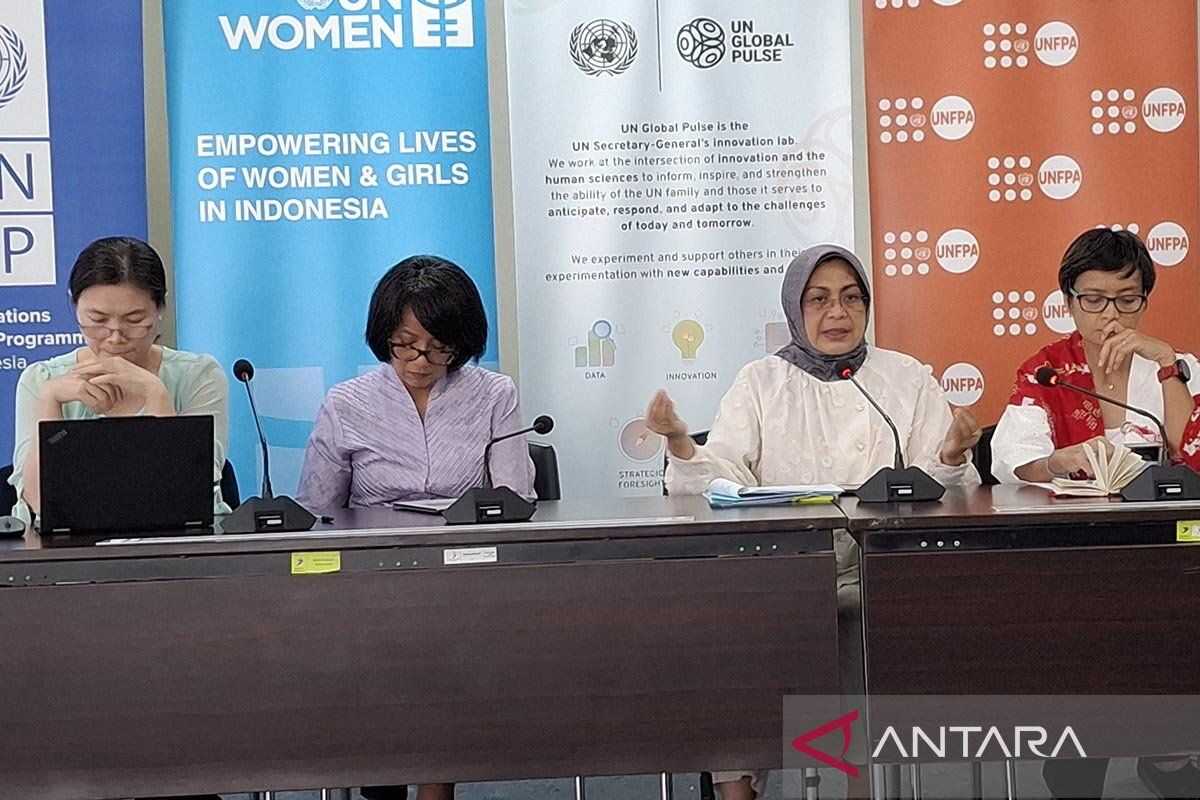
Kementerian Pemberdayaan Perempuan dan Perlindungan Anak (KPPPA) mendorong peningkatan ekonomi bagi perempuan guna mencegah kemungkinan perempuan menjadi korban Tindak Pidana Perdagangan Orang (TPPO). “To prevent TPPO and related issues, we have conducted identifications. We are increasing economic care,” said Amurwani Dwi Lestariningsih, Deputy for Gender Equality at KPPPA, in Jakarta on Wednesday. She spoke at the International Women’s Day event held at UN Global Pulse in Jakarta.
Amurwani said women are often victims of TPPO because they are coerced by agents who send them abroad. “Selama ini, PMI (pekerja migran Indonesia) tersandera oleh agen yang membiayai dia untuk pelatihannya dan sebagainya. Mereka bisa dalam dua tahun tidak menerima upah karena upah yang harus dia terima dibayarkan dulu ke agen yang sudah mengutangi dia selama pendidikan dan pelatihan sebelum berangkat menjadi PMI,” she said.
Therefore, KPPPA, in cooperation with related ministries, including the Ministry for Protection of Indonesian Migrant Workers (KP2MI) and the Ministry of Manpower (Kemnaker), has identified jobs related to caregiving so that not many women have to become PMIs. “If she must become a PMI, she must have skills. And currently KPPPA, along with Kemnaker and KP2MI, is compiling and identifying which jobs can be remunerated,” she said.
Moreover, through this collaboration, KPPPA is also developing standardisation related to caregiving work. “If she has a skill that we rate on a scale from 0 to 9, and if she reaches level 9, she will at least have a wage comparable to other migrant workers. This is what we are doing,” Amurwani added.
Through standardisation of the skills possessed by PMIs, the government hopes that care-related work will offer new opportunities for them. “Because in the future every worker, including those in Indonesia as well, will be given this standardisation. This is already underway this year,” she said.
Through this collaboration, KPPPA and KP2MI have sent 200 people to work in Singapore under this standardisation scheme. Amurwani also stressed that the three ministries have provided training for prospective PMIs, including female migrant workers, so that they have the skills required when working overseas.
Through more coordinated training and deployment of CPMI (Calon Pekerja Migran Indonesia), the government hopes these PMIs will earn higher wages and be less at risk of being drawn into TPPO. “So, after we provided training, what used to be SGD 500 (about IDR 6.6 million) is now negotiated up to SGD 1,000 (about IDR 13.2 million). In other words, this shows that skill enhancement is needed,” she said.