
KPPPA highlights the importance of legal equality at International Women's Day 2026 celebrations
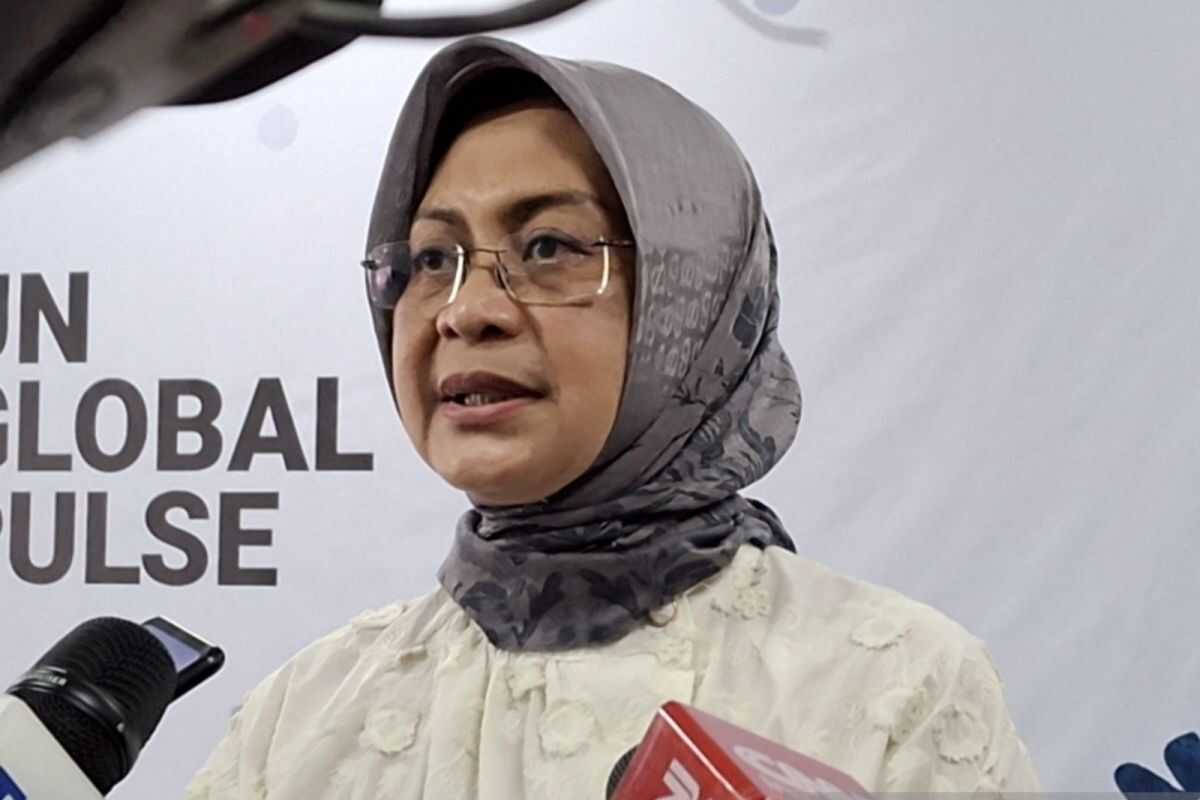
The Ministry of Women’s Empowerment and Child Protection (KPPPA) has highlighted the importance of legal equality in realising gender equality in the run-up to International Women’s Day (IWD) 2026.
“So, beyond the economic and development aspects, there is one pillar that is the lifeblood of gender equality, namely equality before the law,” said Dr. Amurwani Dwi Lestariningsih, Deputy for Gender Equality at the Ministry, at the IWD 2026 celebration at UN Global Pulse in Jakarta on Wednesday.
“Regarding legal equality, she emphasised that the enforcement of law must be easily accessible to women and integrated from upstream (prevention) to downstream (recovery).”
“To ensure that this enforcement is not merely rhetoric, the Government has been striving to build an institutionalised and gender-responsive judiciary across all lines of the law-enforcement machinery,” she added.
“Moreover, the Attorney General’s Office of the Republic of Indonesia (Kejaksaan Agung or Kejagung RI) has issued Guideline Number 1 of 2021 on Access to Justice for Women and Children in Handling Criminal Cases. The guideline is binding and serves as the absolute reference for prosecutors in guaranteeing access to justice for women and children facing the law.”
“To further strengthen these efforts, the Supreme Court of the Republic of Indonesia (MA) has also issued Supreme Court Regulation (Perma) Number 3 of 2017 on Guidelines for Adjudicating Cases Involving Women in Contact with the Justice System, to ensure that judges apply principles that free women from discrimination and guarantee equal access in the courtroom.”
“Amurwani added that the cornerstone of legal equality is the enactment of Law Number 12 of 2022 on Sexual Violence (TPKS).”
“The TPKS Act, she said, is not merely a punitive instrument but a mechanism that radially shifts Indonesia’s justice paradigm to be centred on the victim, by focusing on prevention, protection, and restoration, while also realising a violence-free environment.”
“This pillar is tangible proof that the state acts systematically to realise gender equality in the eyes of the law,” Amurwani said.