
KPK's Objectivity Tested in the Hajj Governance Case
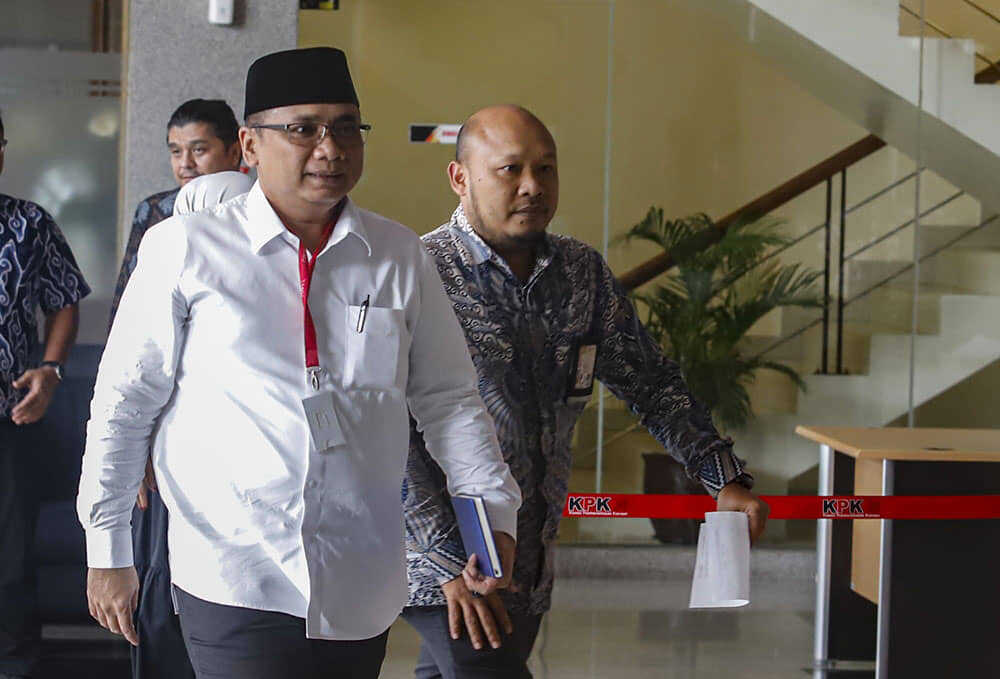
Lawyer Heru Krisbianto regards the handling of the alleged corruption case involving former Religious Affairs Minister Yaqut Cholil Qoumas as a serious test of the objectivity of the Corruption Eradication Commission (KPK). He warned that the enforcement of law in hajj governance should not shift toward criminalising public policy.
Heru, of HK Law Firm, asserted that although eradicating corruption is a constitutional mandate, the extraordinary powers vested in the KPK must be accompanied by a high degree of prudence. “When extraordinary authority is not matched by extraordinary caution, what emerges is not justice but a dangerous precedent,” he said in a written statement, Wednesday, 4 March 2026.
He highlighted the complexities of managing the Hajj pilgrimage, including quota diplomacy, service distribution, financing, and risk management. In practice, he said, decisions in the sector are often discretionary and collective.
According to Heru, in administrative law doctrine, policy error cannot automatically be classified as a criminal act. If every policy that provokes public debate were criminalised, he argued, that could transform the law into an instrument of fear within the bureaucracy.
Officials would opt not to make any decision at all rather than risk being criminalised, he asserted.
Heru questioned several fundamental aspects, including whether there was mens rea, personal gain, and proof of real and lawful state losses. Without clarity and strong evidence, he assessed the legal process could lose its moral legitimacy.
He also reminded that the burden of proof lies entirely with the authorities, not public opinion, political pressure, or media framing. Two legally admissible pieces of evidence should not merely be administrative formalities but must be able to establish the full construction of the criminal act.
“Designation as a suspect is indeed not a verdict. Yet in social-political practice, the label of suspect often constitutes reputational punishment. At this point, caution is not merely ethics but a legal obligation,” said Heru.
Regarding the element of state loss, Heru stressed that in corruption offences, the loss must be real, measurable, and have a direct causal link to the contested action. If policy was conducted within the remit of official authority, without personal gain, and through institutional mechanisms, then personal criminalisation would be problematic.
He also warned of a chilling effect if public policy is easily criminalised. This, he said, could cause public officials to become defensive and avoid discretion, resulting in administrative stagnation.
“Criminal law is the ultimate remedy, not the first tool to correct policy. If there is suspected maladministration, audit and administrative oversight should be prioritised,” said Heru.
Heru emphasised that the case is an integrity test for the KPK. As an institution established to strengthen the rule of law, the KPK is expected not to widen its criminal interpretation recklessly.
“Law enforcement must proceed firmly while protecting the principles of legality and the presumption of innocence. A rule-of-law state must not bow to sensationalism but to evidence,” said Heru.