
KPK Urged to Investigate Import of Operational Vehicles for KDMP
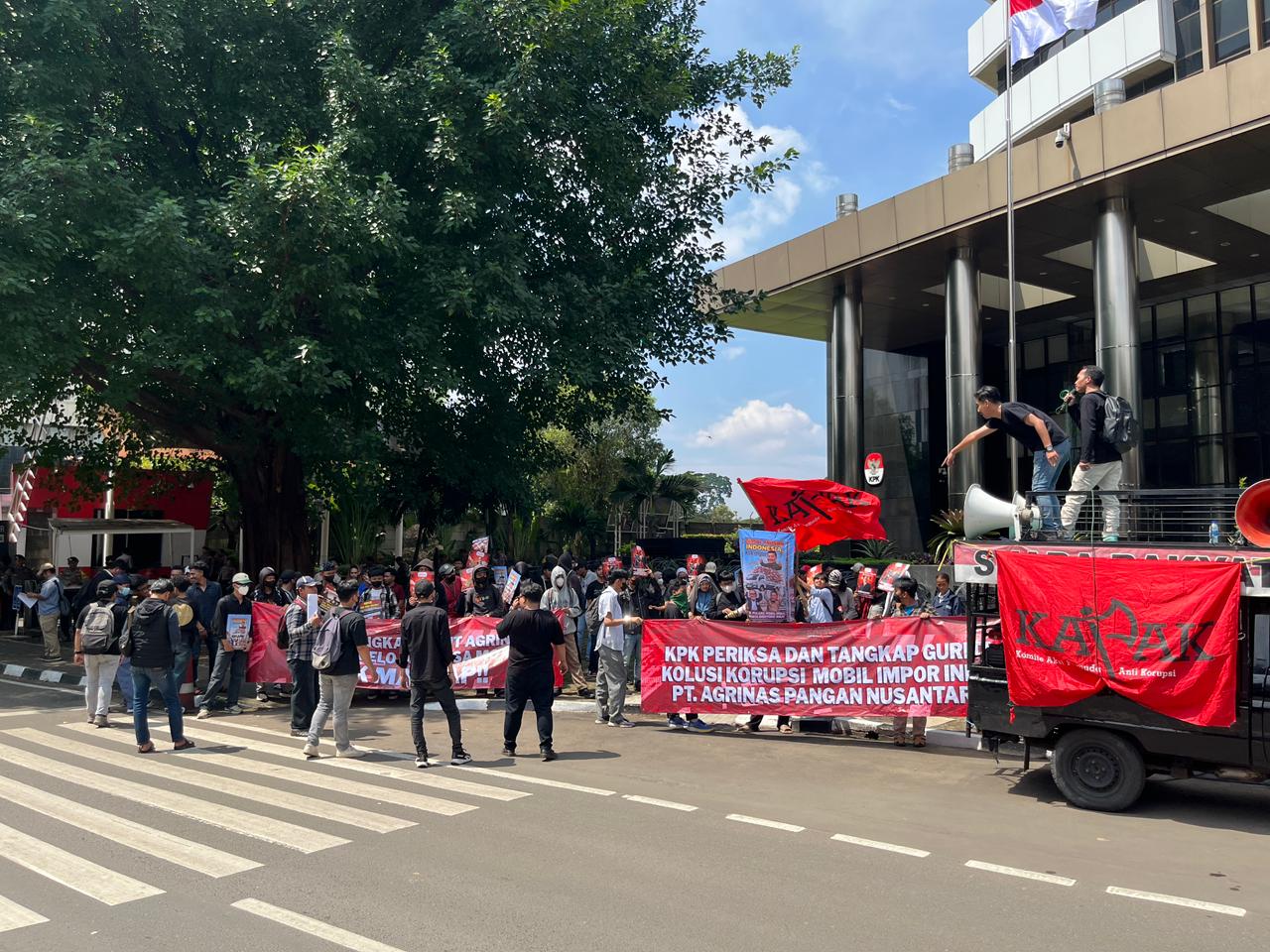
The Anti-Corruption Youth Action Committee (KAPAK) has demanded that the Corruption Eradication Commission (KPK) summon and examine the Director of PT Agrinas Pangan Nusantara, Joao Angelo de Sousa Mota, and conduct an investigation and prosecution regarding the project to procure 105,000 pickup trucks and lorries from India. They suspect corruption in the hundreds of thousands of vehicles intended for the operational use of the Merah Putih Village/Urban Ward Cooperative (KDMP).
“Komite Aksi Pemuda Anti Korupsi (KAPAK) firmly conveys the following demands: first, urging the Corruption Eradication Commission to immediately summon and examine the Director of PT Agrinas Pangan Nusantara, Joao Angelo de Sousa Mota, and to conduct an investigation and prosecution of the said project,” stated KAPAK spokesperson Adib Alwi on Wednesday (1/4/2026).
Adib Alwi said that they also urge the Financial Audit Board (BPK) to conduct a comprehensive investigative audit of the case. During the investigation, KAPAK requests that the government impose a moratorium on the pickup truck procurement project from India.
Furthermore, Adib Alwi stated that they demand examinations of all involved parties without discrimination.
“We also demand a total evaluation of import policies that ignore the national industry and the TKDN principle, demand transparency of public documents (feasibility studies, contracts, vendor mechanisms), and demand the determination of suspects if sufficient evidence is found,” Adib Alwi emphasised.
Adib Alwi stressed that KAPAK’s demands to the KPK are not without reason. This is because they strongly suspect structured collusion and corruption practices in the project worth trillions of rupiah. Although the Director of PT Pangan Nusantara, Joao Angelo de Sousa Mota, stated that the import of 105,000 pickup trucks aims to strengthen village logistics distribution, the public still questions various aspects from planning to implementation.
“To date, there is no open explanation regarding, first, the basis for the procurement needs reaching over 100,000 units; second, there is no feasibility study that can be independently tested; and third, there is no calculation of vehicle needs distribution per village. Fundamental questions arise: do all village cooperatives truly need these vehicles? Is the supporting infrastructure available? And will these vehicles be optimally utilised?” explained Adib Alwi.
In addition, Adib Alwi said that they question the involvement of foreign vendors, particularly from India, selected without clarity on the open tender mechanism. According to him, in modern procurement practices, transparency is an absolute obligation. Without a competitive and open process, the risk of deviations increases significantly.
“The limitation of vendors also raises serious suspicions: were the vehicle specifications drafted based on real needs, or were they tailored to the interests of certain vendors? If conditioning is indeed occurring, then this is no longer procurement of goods, but a form of market manipulation laden with interests,” explained Adib Alwi.
Moreover, Adib Alwi noted that the domestic automotive industry is not optimally involved in the project to import thousands of pickups from India. In fact, he said, domestic production capacity is still capable of meeting part of the needs.
“The decision to import on a large scale without collaboration schemes, joint production, or technology transfer reflects a lack of support for the national industry and potentially contradicts the TKDN principle,” he stated.
KAPAK, according to Adib Alwi, is also concerned about information regarding large down payments. According to him, without strong guarantees such as bank guarantees or performance bonds, this scheme could lead to massive state losses.
“Serious questions that must be answered: what happens if the project fails? What if the goods do not meet specifications? Who is responsible if losses occur? These questions should be answered before the contract runs, not after problems arise,” he revealed.
According to him, the project managers could claim savings of up to tens of trillions of rupiah. However, this claim is not accompanied by independent verification. He assesses that without market price benchmarks and lifecycle cost calculations, efficiency claims could be illusory or even justifications for unreasonable prices.
“Reflecting on various procurement cases in Indonesia, many major scandals began with projects that proceeded quickly but with minimal transparency. This case is not just about village logistics vehicle procurement. It is a real test of the state’s commitment to safeguarding public financial management integrity,” Adib Alwi concluded.