
KPK: High Political Costs Create Dependency on Donors
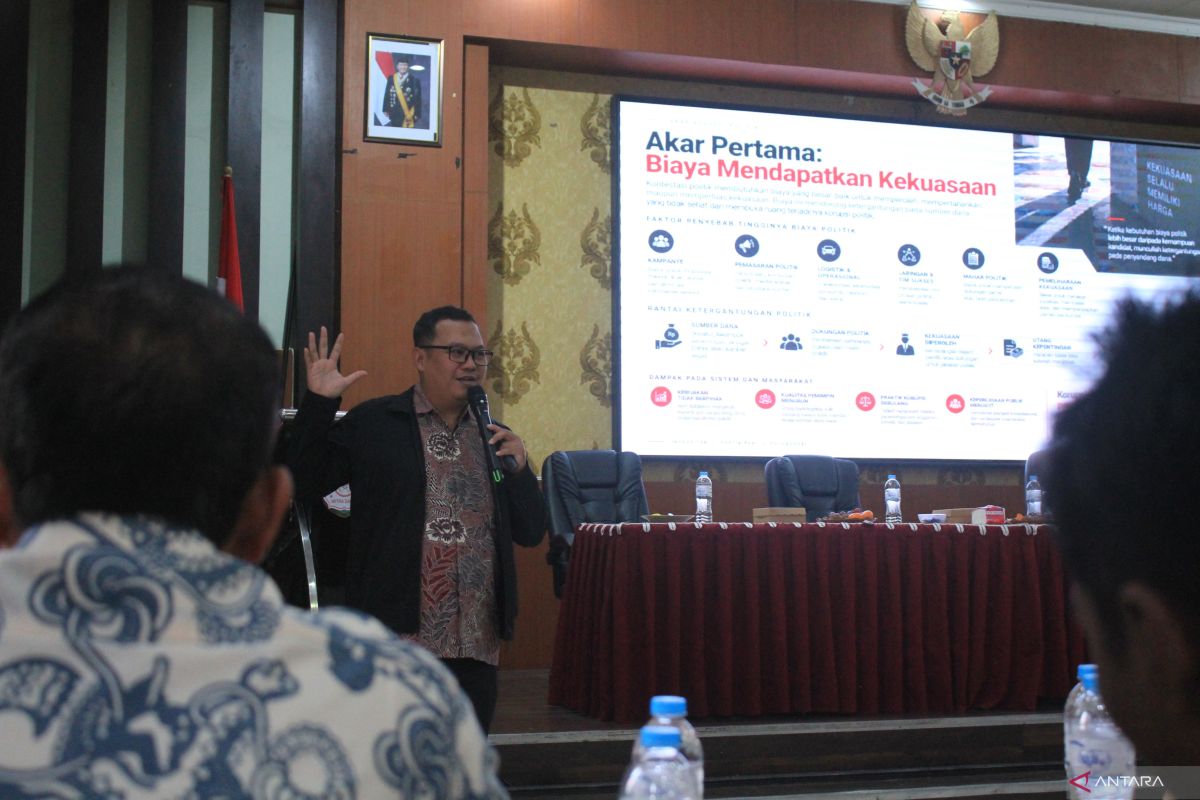
Situbondo (ANTARA) - The Corruption Eradication Commission (KPK) of the Republic of Indonesia has outlined how high political costs create a dependency on donors, opening the door to transactional relationships and conflicts of interest, which subsequently lead to acts of corruption.
KPK Anti-Corruption Analyst Dion Hardika Sumarto revealed that, based on the 2025 Integrity Assessment Survey (SPI), the impact of conflicts of interest arising from political transactions involves more than just money; it also affects public decisions and budget usage.
“This includes the determination of aid distribution, the selection of tender winners, the issuance of permits or recommendations, as well as human resource interventions regarding the promotion of civil servants (ASN),” said Dion while serving as a speaker at a seminar organised by LBH Mitra Santube in Situbondo on Friday.
According to him, research by the KPK team shows that the lower the transparency of political funding or costs, the higher the risk of corruption.
Therefore, Dion continued, transparency in political funding is not merely an issue of election governance, but also a key to preventing corruption and strengthening the integrity of the political system.
He emphasised that to sever the roots of political corruption, it is not enough to merely pursue individual perpetrators; governance must also be transformed. This includes addressing political costs to ensure healthier political competition, reforming campaign financing, and enforcing mandatory reporting limits.
“Furthermore, reporting on specific donations, strengthening the oversight of campaign funds by independent institutions, and disclosing who is funding whom are essential to achieving political funding transparency. This also includes managing conflicts of interest to prevent the abuse of office for personal gain,” said Dion.
He added that according to KPK studies in 2020, the political costs for regency/city mayoral elections could reach approximately Rp20 billion to Rp30 billion, while gubernatorial elections could reach around Rp100 billion.
“From our study, approximately 47 per cent of sponsors/donors certainly expect something in return, while 65 per cent of regional head candidates stated they are prepared to provide facilities to sponsors after taking office,” he said.