
KPK: Hajj Quota Corruption by Yaqut Harms State Finances and Prospective Pilgrims' Rights
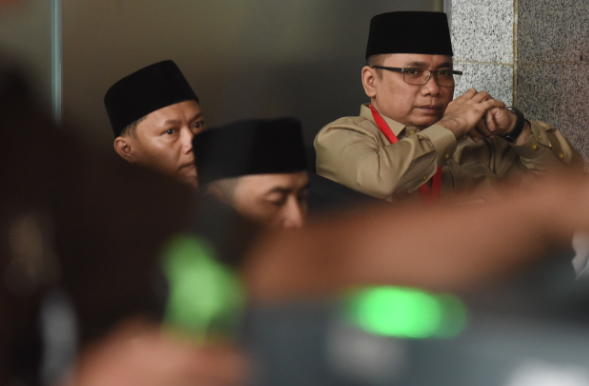
The Corruption Eradication Commission (KPK) has revealed that the case of alleged bribery in the organisation and distribution of hajj quotas involving former Religious Affairs Minister (Menag), Yaqut Cholil Qoumas (YCQ), has caused harm beyond state finances. The bribery is deemed to have produced widespread social impact on society, particularly among prospective hajj pilgrims.
“We view the case structure not only as a matter of state financial loss, but also as social impact felt by society, especially prospective hajj pilgrims,” said KPK Spokesperson Budi Prasetyo, at the KPK Red and White Building in South Jakarta, Tuesday (10 March).
Budi explained that the discretion exercised by Yaqut disrupted the hajj queue. This occurred despite the Saudi Arabian Government providing additional quotas to accelerate the departure of Indonesian pilgrims who had already been waiting for years.
“With the discretionary hajj quota distribution that did not comply with applicable laws and regulations related to hajj management, including non-compliance with the history of additional hajj quotas provided by the Saudi Arabian Government to the Indonesian Government,” Budi stated.
The KPK affirmed it would pursue the case thoroughly through trial. It is suspected that several officials at the Religious Affairs Ministry received funds from travel service providers to manipulate the departure schedules of prospective pilgrims.
“Then in the case structure, it is suspected that there were funds flowing from these travel parties to parties within the Ministry of Religious Affairs,” Budi explained.
To date, the KPK has named Yaqut and former Religious Affairs Minister Special Staff, Isfan Abidal Aziz (IAA) alias Gus Alex, as suspects. Several witnesses from Religious Affairs Ministry officials to travel service providers, including Ustaz Khalid Basalamah, have been questioned by investigators.
The core of this corruption case is the distribution of additional quotas in violation of regulations. Indonesia had actually received 20,000 additional hajj quotas projected to reduce the queue.
According to regulations, these quotas should have been distributed at a ratio of 92 per cent for regular hajj and 8 per cent for special hajj. However, in practice, individuals at the Religious Affairs Ministry allegedly distributed the quotas equally at 50 per cent each, benefiting certain parties whilst harming regular pilgrims.