
KPK Emphasises Corruption Prevention in Public Services Sector
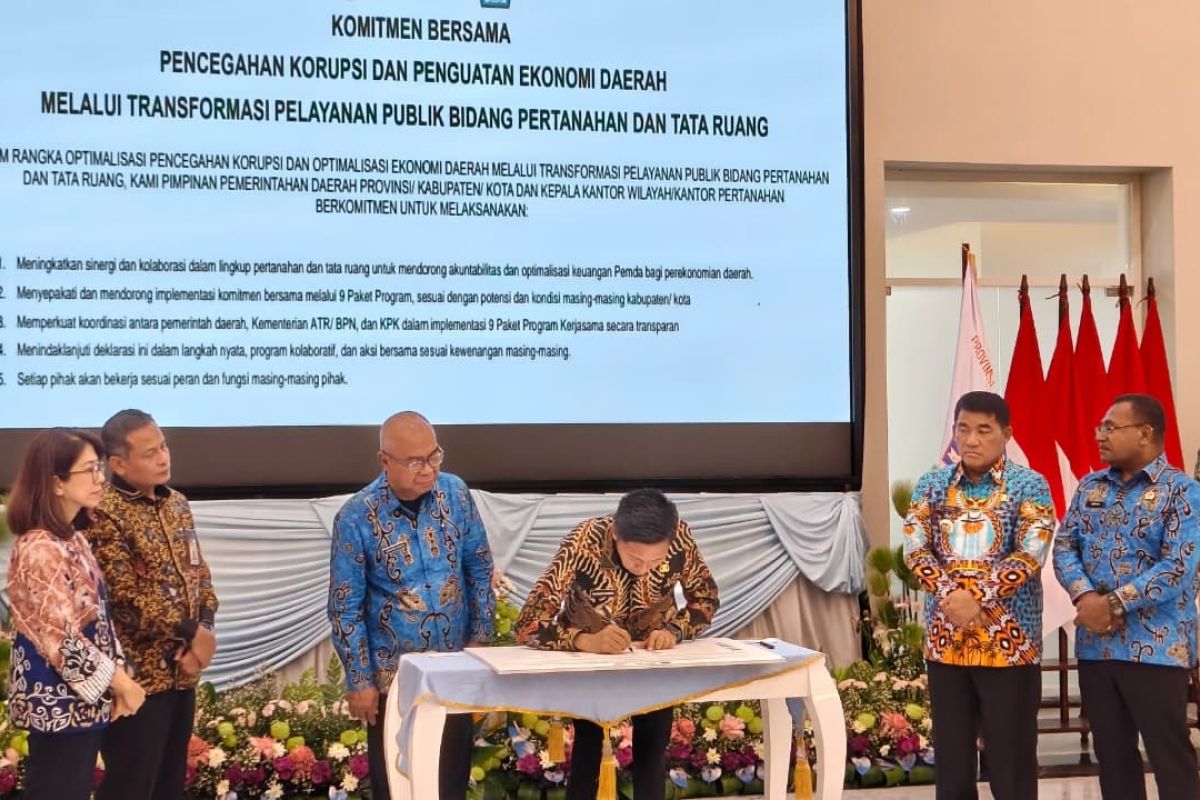
Manado (ANTARA) - The Corruption Eradication Commission (KPK) has emphasised its commitment to preventing corrupt practices in the public services sector, asset management, and regional revenues across all local governments.
“Our hope is that there is no corruption; that is our primary goal. We will certainly remain focused on this, as it is indeed our duty regarding corruption issues,” said Edi Suryanto, Director of Coordination and Supervision for Region IV of the KPK, after the ‘Coordination Meeting on Optimising Cooperation between the Ministry of ATR/BPN and the KPK with Local Governments in North Sulawesi’ in Manado on Tuesday.
He explained that there are three main focuses being implemented by the KPK in collaboration with the Ministry of ATR/BPN and local governments in North Sulawesi.
First, improving public services, particularly in the land sector, so that the public does not become victims of illegal levies. Second, safeguarding government-owned assets so they can be utilised for the public’s benefit. Third, optimising regional revenues.
“Do not let regional revenues fail to enter the local government treasury and instead be misused by certain individuals. Therefore, we, together with local governments and the Ministry of ATR/BPN, are striving to ensure that revenues are deposited in accordance with regulations,” he stated.
“We have already met and coordinated with the Ministry of ATR/BPN and agreed on nine programmes out of around 25 that were discussed,” he added.
These nine programmes were selected based on realistic considerations, relevance to corruption prevention, and their implementability in the regions.
Similar activities have previously been conducted in South Sulawesi and Southeast Sulawesi, receiving positive responses from local governments.
“In South Sulawesi, Southeast Sulawesi, and North Sulawesi, we see that the majority of regional heads have a strong commitment to saving regional assets, increasing revenues, and improving public services,” he said.