
KPK Alleges Former Religion Minister Yaqut Received Fees for Expedited Hajj Departures Without Queue
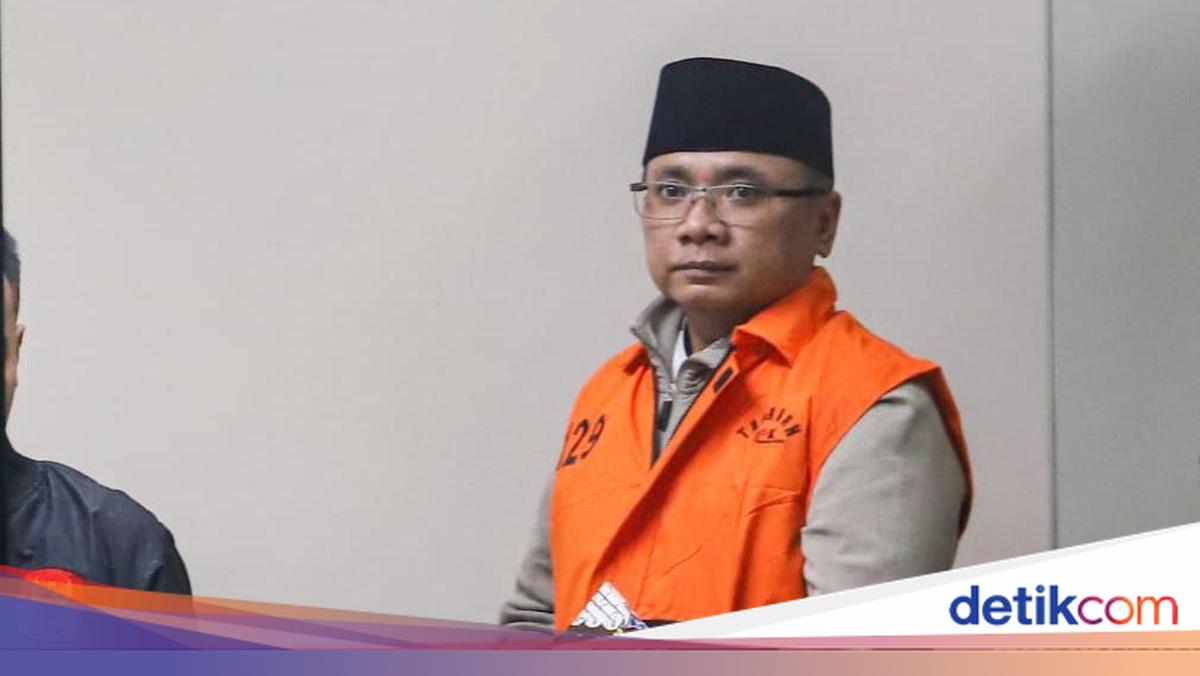
The Corruption Eradication Commission (KPK) has revealed that former Religion Minister Yaqut Cholil Qoumas (YCQ) received fees from a hajj quota corruption case spanning 2023-2024. The KPK states that the fees were received by Yaqut after he approved a proposal for distributing additional hajj quotas in 2023.
Asep Guntur Rahayu, Deputy of Prosecution and Execution at the KPK, explained that the 2023 additional hajj quota should have been allocated entirely as 8,000 quotas for hajj. However, Yaqut agreed to a distribution of 92 per cent for regular quota and 8 per cent for special quota after receiving a letter from travel agency boss Maktour, Fuad Hasan Masyhur, who also served as Patron of the Forum Silaturahmi Association of Hajj and Umrah Travel Operators (SATHU), to maximise the absorption of additional quotas.
“YCQ subsequently approved the proposal by issuing Ministerial Decision (KMA) number 467 of 2023 on 19 May 2023 regarding the Determination of 2023 Additional Hajj Quota with a composition of 7,360 quotas for regular hajj and 640 quotas for special hajj,” Asep explained during a press conference at KPK headquarters in South Jakarta on Thursday (12 March 2026).
Subsequently, according to Asep, the Directorate General of Hajj and Umrah issued a decision letter drafted by Rizky Fisa Abadi (RFA), former Head of Licensing, Accreditation, and Development Sub-Directorate of Special Hajj at the Religion Ministry. Asep stated that the issuance of this decision letter was under the direction of Ishfah Abidal Aziz (IAA), also known as Gus Alex, who was then Yaqut’s special staff, to relax policies regarding newly registered pilgrims who could depart directly for hajj.
RFA, according to Asep, also held meetings with the Special Hajj Operator (PIHK) associations regarding the absorption of an additional 640 special hajj quota pilgrims. RFA also determined the quota allocation for 54 PIHKs so they could depart directly without waiting in queue.
Beyond this, RFA granted special treatment to certain PIHKs to fill the additional special hajj quota. RFA also instructed his staff to collect acceleration fees from PIHKs for filling the additional special hajj quota valued at USD 5,000 or approximately 27.1 million rupiah per pilgrim, one method being by converting mujamalah visa hajj pilgrims into special hajj pilgrims.
“Based on the KPK investigation team’s findings, RFA also provided acceleration fees to YCQ, IAA, and several officials at the Religion Ministry,” Asep stated.
Subsequently, in 2024, Yaqut again received fees from accelerating the dispatch of special quota hajj pilgrims from additional quotas obtained by Indonesia from Saudi Arabia. In 2024, Indonesia received an additional hajj quota of 20,000.
Asep explained that in that year, initially Yaqut maintained the same distribution of the additional hajj quota as the previous year, namely 98 per cent regular quota and 8 per cent special quota. However, in November 2023, communication occurred between the Technical Staff of the Indonesian Hajj Affairs Office in Jeddah and Gus Alex.
The discussion covered the e-hajj application being active and Indonesia’s 2024 hajj quota of 221,000 pilgrims already entered into e-hajj (this remained the basic hajj quota and did not yet include additional quota).
After receiving this information, Gus Alex conveyed that the additional 20,000 quota should be divided equally or 50:50, based on direction or instructions from Yaqut. Gus Alex then intensively discussed and provided technical guidance regarding the additional quota distribution scheme from an administrative perspective with Saudi Arabian authorities so that the 50:50 additional quota division decision appeared not to violate the law.
“In that communication, IAA mentioned that the person in question held discussions and received guidance from YCQ as Religion Minister,” Asep explained.
Subsequently, according to Asep, Yaqut sent a letter to the Minister of Hajj and Umrah of the Kingdom of Saudi Arabia emphasising that the total number of Indonesian hajj pilgrims was 241,000, divided into two portions, namely a regular quota of 213,320 pilgrims and a special hajj quota of 27,680 pilgrims, already divided into a 50:50 ratio.
Ultimately, in early January 2024, Gus Alex called staff at the Directorate of Umrah and Special Hajj Development and as Head of Licensing, Accreditation, and Development Sub-Directorate of Special Hajj to his office. Gus Alex directed them to collect acceleration fees and designated a person to coordinate the fee money from associations and Special Hajj Operators.
“The fee value was agreed at USD 2,000 or approximately 10.2 million rupiah per pilgrim,” Asep stated.
Gus Alex then instructed M Agus Syafi (MAS), Head of Licensing, Accreditation, and Development Sub-Directorate of Special Hajj, to demand a sum of money from the PIHKs which ultimately was charged to prospective special hajj pilgrims, at least USD 2,500 (approximately 12.7 million rupiah) per pilgrim as a fee or commitment fee or other charges, so as to obtain additional special hajj quota.
“The provision and collection of this money was carried out over a period from February to June 2024,” he added.