
Koster Targets Illegal Villas to Balinese Script, Rp 995 Billion Cultural Centre Fast-Tracked
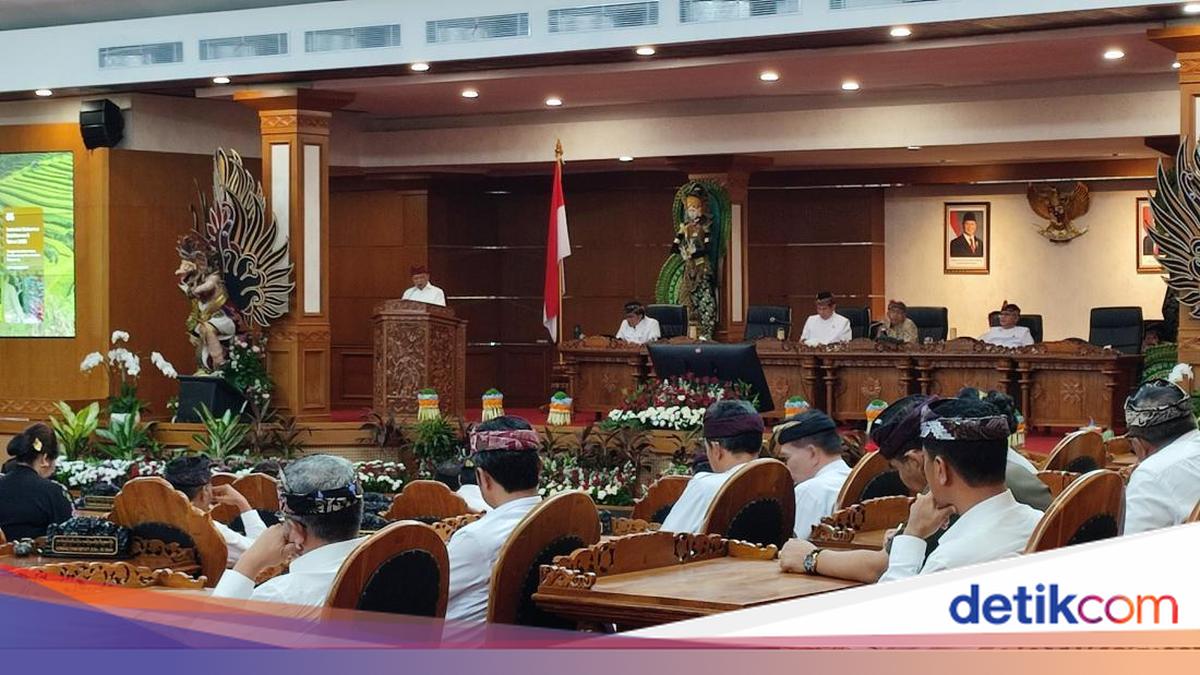
Bali Governor Wayan Koster has emphasised the regulation of illegal villas and the strengthening of cultural identity as priorities for the Bali Provincial Government. He conveyed this during the 28th Plenary Session of the Bali DPRD on Wednesday (25/3/2026).
The Bali Provincial Government is promoting the use of Balinese script in public spaces, reinforcing traditions such as Rahina Tumpek, and improving the quality of the Balinese Language Month.
To support this, the Provincial Government is building the Bali Cultural Centre with a budget of Rp 995 billion, targeted for completion in 2027. Several regulations are also being prepared, ranging from controlling modern chain stores, app-based tourism transport, to incentives for names like Nyoman and Ketut.
“If this is not maintained, the name Ketut could disappear. This is part of preserving local wisdom,” said Koster.
In the education sector, the one family one graduate programme is being expanded with a target of 2,000 participants this year. The Provincial Government is also taking over Dharma Yadnya Hospital in East Denpasar for development, due to low patient numbers.
Illegal Villas, Waste, and Organic Targets
Koster targets Bali to become an organic farming area by 2028. Currently, the agricultural land area is around 68,000 hectares, with 65 percent already implementing organic systems.
The Provincial Government will also regulate illegal homestays and villas, including digital-based rentals like Airbnb that have not paid taxes. According to Koster, this step has the potential to increase regional income.
Supervision of foreign tourists will also be tightened, particularly regarding legal and cultural norm violations.
“Waste management: The Provincial Government targets the complete closure of the Suwung Landfill in August 2026. From April 2026, organic waste must not be disposed of at the landfill, only residue is allowed until July,” he added.
Spotlight on Coasts and Fisheries
In addition to agriculture, Koster called for strengthening the marine and fisheries sector through cultivation and downstream processing.
“We have tasked the Head of Marine and Fisheries, starting to increase cultivation efforts and fisheries downstream processing. In the bleeding along the coast from east to west, the fisheries yield is extraordinary,” he said.
He assessed that this sector is important in areas like Buleleng, Karangasem, Klungkung, Gianyar, Denpasar, Tabanan, to Jembrana.
“This must be promoted so that it becomes more productive as a source of community economy, improving welfare by increasing income,” he explained.
“This must be handled seriously. Then protecting the coast and coastal strips as places for traditional ceremonies, social and economic activities of the community,” he continued.
Koster also asked the TRAP Special Committee to go to the coasts, including traditional salt production centres, to prevent community land from being eroded by development.
“Building hotels, building villas, building restaurants that gradually consume community land. Previously used for processing traditional Balinese salt, this must be protected,” he stressed.
Chairman of the TRAP Special Committee of the Bali DPRD, Made Supartha, stated readiness to follow up, including paying attention to seaweed farmers.
“Yes, of course this will be followed up, so we can see how the community on the coastal areas is,” explained Made Supartha.
“Now, seaweed farmers must also be considered. Don’t let them be forgotten, we must find out the locations and their current fate,” he added.
“If there are seaweed farmers, they can convey it to us so that we, the TRAP Special Committee, can also inspect the current situation,” he concluded.