
Koster Claims Arak Outselling Red Label, Urges Faster Coconut Tree Planting
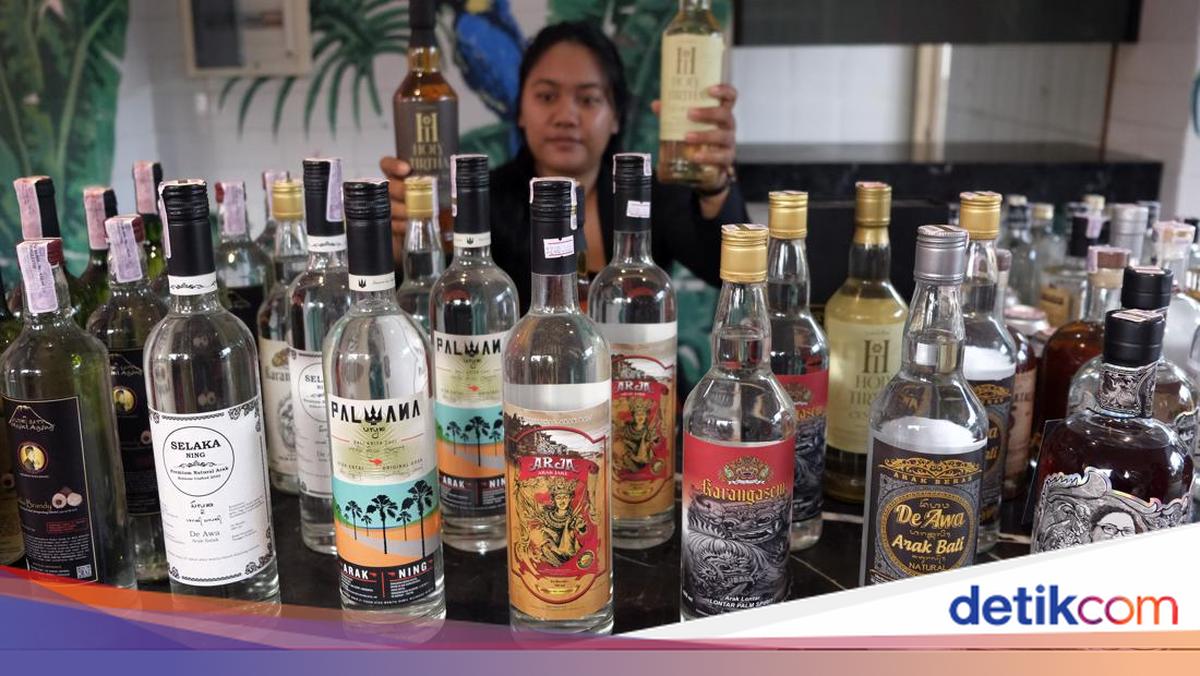
Bali Governor Wayan Koster has claimed that sales of Balinese arak surpass imported alcoholic beverages such as whisky. Koster cited sales of Balinese arak at the arrival and departure outlets of I Gusti Ngurah Rai International Airport as outselling the Johnnie Walker Red Label brand.
According to Koster, Balinese arak production now competes with world-class alcoholic drinks. He urged the acceleration of coconut tree planting, which serves as the raw material for arak production.
“It’s selling like hot cakes, the bestseller beating Red Label. Applause for Balinese arak. It’s extraordinary,” said Koster during the 28th plenary session of the Bali Provincial DPRD on Wednesday (25/3/2026).
In addition to being a raw material for arak, Koster stated that coconut trees also serve as a medium for Balinese traditional ceremonies. Koster mentioned that 17,000 coconut trees have been planted in Bali. He noted that arak consumption in Bali can reach 400-600 litres per month.
“So, coconut tree planting must be accelerated so that there are coconuts ready for harvest in four years. In this way, arak production will continue to increase because it is increasingly favoured by our tourists in Bali, and we can fulfil export demands,” added the two-term Bali governor.
Koster explained his strong promotion of arak has led many parties to accuse him of owning an arak business. However, Koster firmly denied being a businessman. He claimed this is done to increase the income of Balinese people living as arak farmers.
“Regarding Balinese arak, because I’ve been pushing hard on it, people think I have a business. No, I don’t have a business. I can’t do business,” said Koster.
Koster expressed gratitude that the central government, through the Minister of Industry, has welcomed Balinese arak production. He continued that the Minister of Industry has granted permission to the Bali Provincial Government through Perumda to develop Balinese arak production.
“So, no need to pay hundreds of millions anymore to increase production for these arak industry players. There are around 30 arak cooperatives in Bali that have been struggling but faced obstacles with permits and capital. Now, they have received quite good services,” said Koster.
The PDIP politician hopes that the Balinese arak industry will develop further and improve in quality. Koster reiterated his desire for Balinese arak to compete with other global drinks such as Korean soju, Japanese sake, and European whisky.
“We ensure that Balinese arak is no less than soju, sake, or whisky,” added Koster.