
Korlantas Uses Digital Technology to Determine 2026 Mudik Traffic Flow Policy
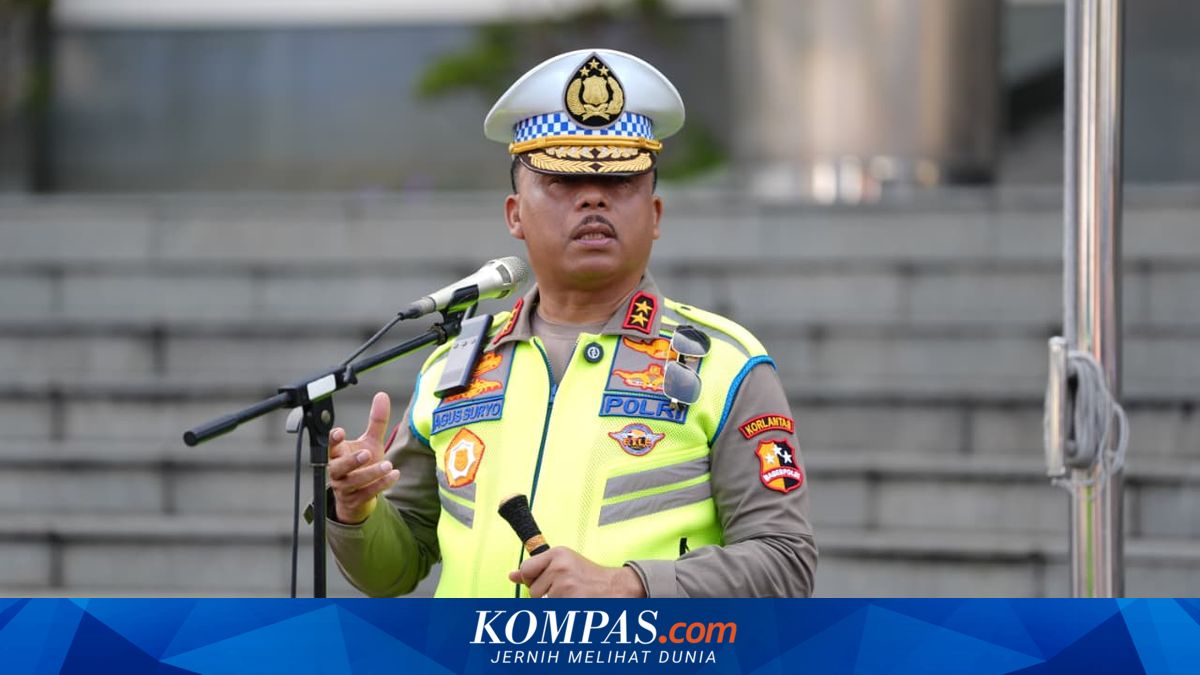
Jakarta — Indonesia’s Korps Lalu Lintas (Korlantas) Police will rely on digital technology to manage the flow of vehicles during the 2026 Lebaran exodus and return journey.
The technology will be used to monitor vehicle movements in real-time, enabling traffic engineering policies to be determined based on accurate data rather than estimates.
Korlantas Police Head Irjen Agus Suryonugroho stated that the use of this digital technology represents an improvement in managing mudik traffic flow compared to previous years.
“For 2026, to build on the success of 2025, we are already using digital technology to monitor how traffic flow and vehicle counting can be executed,” said Agus on Thursday (12 March 2026).
Under this system, traffic management policies are no longer based on predictions but on parameters of vehicle numbers directly monitored in the field. For example, if approximately 3.5 million vehicles pass through toll gates leaving Java and Sumatra, that figure becomes the basis for officers to apply specific traffic engineering measures.
“For instance, if 3.5 million vehicles pass through toll gates leaving Java and Sumatra, that is no longer an estimate or prediction but the vehicle count parameter will determine whether we implement traffic engineering measures,” he explained.
Suryonugroho noted that data on vehicles passing at specific points will determine the actions taken by field officers. “For example, if for one consecutive hour at kilometre 47, radar from Jasa Marga and Korlantas’ early warning technology shows 5,500 vehicles, we must implement single-lane contraflow,” he said.
If vehicle numbers increase to approximately 6,400 units over two consecutive hours, contraflow will be expanded to two lanes.
However, if traffic congestion persists despite one to two-lane contraflow being implemented, Korlantas will apply advanced traffic engineering measures in the form of one-way systems.
Additionally, Korlantas conducted an evaluation of traffic engineering measures applied during last year’s Lebaran mudik. The one-way system was implemented from kilometre 70 to kilometre 188. For the 2026 Lebaran exodus, the policy coverage has been extended to kilometre 236.
This step is expected to accelerate vehicle distribution and reduce traffic congestion on toll roads during the mudik and return journey periods.
“Last year, it was from kilometre 70 to 188. After evaluation, we are now extending it from 70 to 236. This will accelerate the smooth flow of traffic in relation to the vehicle surge on toll roads heading towards Java and Sumatra,” said Agus.