
Korlantas Prepares Strategy to Anticipate Post-Lebaran Traffic
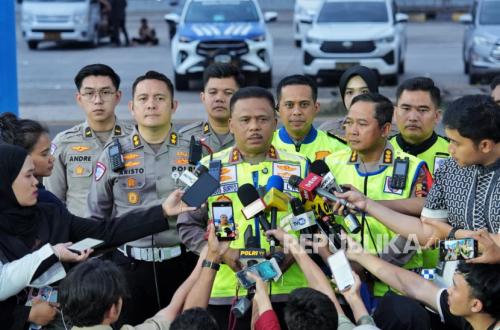
The Head of Korlantas Polri, Inspector General of Police Agus Suryonugroho, has outlined traffic anticipation measures following Lebaran, particularly to address the surge in return flows and movements in various urban agglomerations. He noted that potential congestion stems not only from long-distance return traffic but also from local inter-regional mobility in areas such as Jabodetabek, Solo Raya, Semarang Raya, Malang Raya, and Bali. All police units have been mobilised through security posts, service posts, and integrated posts. “Regarding anticipation after H+1 Lebaran, agglomerations from Solo Raya, Semarang Raya, including Jabodetabek, Bali, and Malang Raya, have been anticipated through security posts, service posts, and integrated posts in each Polda,” Agus said at the Korlantas Polri Command Centre in Cikampek on Saturday (21/3/2026). He explained that the return flow strategy was formulated based on traffic counting data during the mudik period. Vehicle movements towards Trans Java dominate at around 66 per cent, while those towards West Java account for about 33 per cent. This distribution, Agus clarified, forms the basis for traffic engineering arrangements during the peak return flow. Traffic management is focused on critical points prone to high congestion. “From the traffic counting percentage, those heading to Trans Java are approximately 66 per cent, while to West Java around 33 per cent. This will be managed during the return flow,” he stated. To ease congestion from West Java, Korlantas has prepared the utilisation of the Japek II South Toll Road. This route has been tested and will be fully operational during the peak return flow. Agus conveyed that the presence of this alternative route is expected to reduce the burden on main roads, especially at narrowing points that have previously been congestion bottlenecks. “Alhamdulillah, for vehicles from West Java, the solution is quite strategic because Japek II South has already been tested. During the peak return flow, it will be fully opened from Sadang to Setu,” said the two-star general. Security is also focused on tourist areas and ports expected to see increased activity. Arrangements for entry flows, parking pockets, and vehicle movements have been prepared involving various parties. Agus assessed that managing tourist sites is a crucial part of maintaining traffic smoothness. Experiences from previous years serve as the basis for refining security schemes. “Illegal parking has actually been anticipated from the start through coordination meetings. Even the Governor of West Java has paid attention to this,” he said. He added that agglomeration movements are a primary concern on H+1 Lebaran and subsequent days. Short-distance inter-regional mobility is expected to increase with community silaturahmi activities. All personnel are urged to remain vigilant in monitoring these dynamics, both on toll roads and arterial routes. “That’s what is called agglomeration, from Jabodetabek, Solo Raya, to Malang Raya and Bali. This has been anticipated and is expected to be congested starting tomorrow,” Agus said. The evaluation of the mudik flow serves as the basis for the return flow strategy. Vehicle volume at the peak of the mudik reached an increase from 258,000 to 270,000, so traffic engineering scenarios have been prepared more thoroughly. Korlantas has designed the implementation of local one-way systems up to contraflow in stages following field developments. This step aims to maintain the smooth flow of vehicles returning to Jakarta. The return flow will be managed through traffic counting and gradual engineering according to on-site conditions. This scheme is expected to alleviate congestion while ensuring the safety of road users.