
Korlantas Polri Relies on Digital Technology to Manage Lebaran Holiday Traffic Flow in 2026
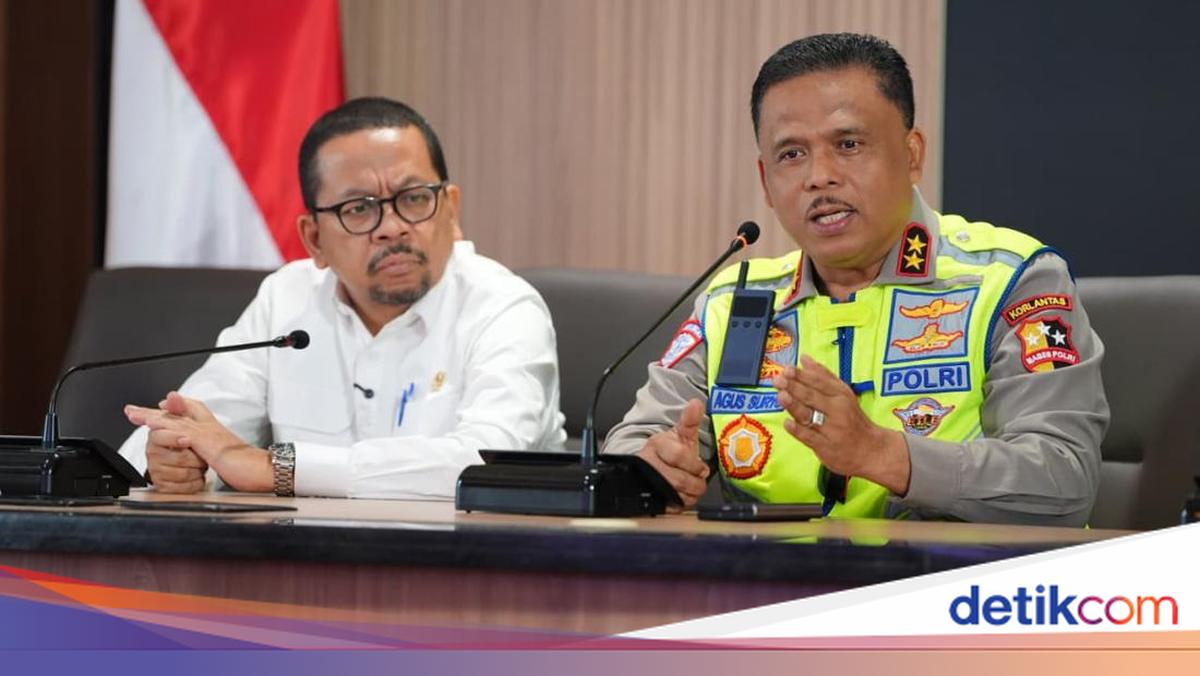
The Head of the Traffic Corps (Korlantas) of the Indonesian National Police, Inspector General Agus Suryonugroho, stated that Korlantas Polri will rely on digital technology to manage the Lebaran holiday exodus and return traffic in 2026. The technology will be used to monitor vehicle movement in real-time so that traffic engineering decisions are made based on accurate data.
“And in 2026, to improve upon last year’s success, we are already using digital technology to monitor how traffic flow and traffic counting can be executed,” Irjen Agus told journalists at the Bina Graha building in Central Jakarta, Wednesday (11 March 2026).
Irjen Agus stated that Korlantas Polri is working in synergy with stakeholders to monitor traffic counting, or the number of vehicles passing through several strategic points, particularly on toll roads. In this way, traffic management policies are no longer based on estimates or predictions, but on the parameter of the number of vehicles directly observed in the field.
“For example, 3.5 million vehicles pass through the toll gate leaving Java and Sumatra – that is no longer something we estimate or predict, but the vehicle count parameter will determine whether we implement traffic engineering,” he said.
Irjen Agus gave an example: if within one hour the number of vehicles passing at kilometre 47 reaches around 5,500 units, officers will immediately implement traffic engineering in the form of contraflow on one lane.
“For example, if continuously for one hour at kilometre 47 there is radar data from Jasa Marga and early warning technology from Korlantas, and it reaches 5,500, we must implement contraflow on one lane,” he said.
If within two consecutive hours the number of vehicles increases to around 6,400 units, traffic engineering will be escalated by opening contraflow on up to two lanes. If vehicle congestion continues to increase despite contraflow of one to two lanes being implemented, Korlantas will take further action by implementing a one-way scheme.
“Is there still a surge in traffic? Definitely there will be. If in two consecutive hours at kilometre 47 the radar shows 6,400, we must implement contraflow on two lanes. When will it be implemented? It depends on traffic counting,” said Irjen Agus.
“If contraflow on one and two lanes has been implemented but it is still congested, we will open the spillway – we will open one-way at kilometre 70 for a segment because initially it is in the national one-way contraflow area. So we open it,” he continued.
Korlantas Polri also evaluated the implementation of traffic engineering measures during the previous Lebaran exodus season. Last year, the one-way scheme was implemented from kilometre 70 to kilometre 188.
For the 2026 Lebaran exodus, the scope of this policy will be extended to kilometre 236. This measure is expected to accelerate vehicle distribution and reduce traffic congestion on toll roads during the Lebaran exodus and return period.
“Last year, from kilometre 70 to 188. We evaluated it, and now we are extending it directly from 70 to 236. This will accelerate traffic flow in relation to the surge in traffic on toll roads heading towards Java as well as towards Sumatra. This is what we can prepare,” he said.