
Korea Customs Week 2026 Serves as Reference for Customs to Strengthen Digital Services
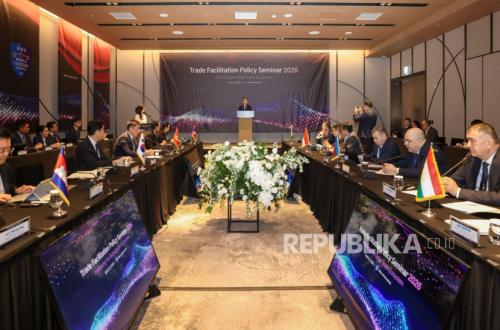
Digital transformation is the primary direction of global customs reform. This was evident at the Korea Customs Week 2026, an international forum organised by the Korea Customs Service (KCS) on 1-2 April 2026 in Seoul, South Korea.
The forum brought together leaders from customs administrations of various countries, including South Korea, Indonesia, Kazakhstan, Hong Kong, Cambodia, Azerbaijan, Uzbekistan, Kyrgyzstan, Laos, and Tajikistan. It discussed strengthening the global trade ecosystem through the utilisation of technology and data.
Indonesia was represented by a delegation from the Directorate General of Customs and Excise, led by Director General Lt. Gen. (Ret.) Djaka Budhi Utama as the Head of Delegation. At the forum, Indonesia shared national experiences in managing cross-border trade, particularly in the e-commerce sector.
Several policies presented included the implementation of simplified declarations, de minimis policies, paperless processing, and the use of data-based risk engines for import goods supervision. For the public, the outcomes of this forum are important as they directly relate to faster, more accurate, and transparent customs services.
Here are some key points to know:
- Customs Services Become Faster and More Efficient
The direction of global reform indicates that customs administrations are moving towards digital customs administration. Processes that previously required physical documents are now shifting to electronic systems or paperless trade, making export-import services faster and reducing bureaucratic barriers.
- Utilisation of Big Data and AI for Supervision
The forum highlighted the importance of interoperability between systems and electronic data exchange between countries. Additionally, the use of artificial intelligence (AI) in risk management helps customs officers conduct more targeted supervision of high-risk goods, while facilitating the flow of compliant goods.
- Cross-Border E-commerce Management Becomes More Organised
The rapid growth of online shopping from abroad was a primary concern at the forum. Challenges such as surges in shipment volumes, data limitations, and potential trade deviations need to be addressed with more modern systems to maintain consumer protection and state revenues.
- Customs Policies Align with Global Practices
Policies already implemented by Customs, such as paperless processing, simplified declarations, and data-based supervision, demonstrate that Indonesia is moving in line with global customs reform trends. This is crucial for maintaining national trade competitiveness while increasing public trust in the institution.