
KontraS Warns of the Dangers of Politicising the Police
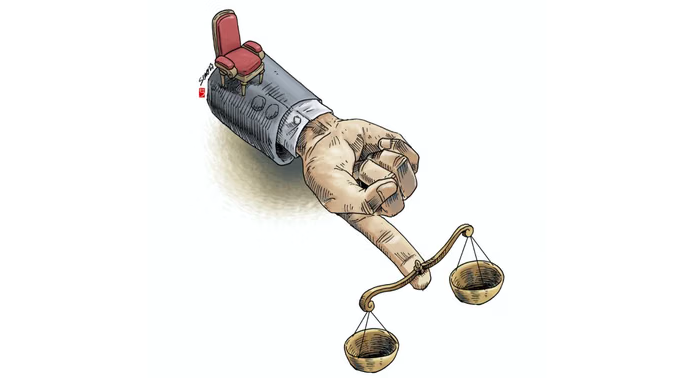
The Head of the Research and Documentation Division at KontraS, Hans Giovanny Yosua, warned that the Indonesian National Police (Polri) should not be misused for practical political interests. He believes that using police authority to target the ideologies or political activities of citizens is a serious threat to democracy.
He highlighted the phenomenon of the politicisation of the police, which he alleges emerged during the handling of mass protests some time ago, particularly during the August 2025 demonstrations. One example is the use of ideological labels as a basis for arrests.
“The police arrest people and accuse them of being ‘anarchists’. However, anarchism is a political ideology. If the target is their political ideology, then that becomes the politicisation of the police,” said Hans in Jakarta, Thursday (26/2/2026).
Hans reminded that Indonesia should not return to the old patterns of the New Order era, where the police were used as a tool to carry out political repression. He cited the dark history when labour activists such as Muchtar Pakpahan were arrested on charges of subversion in order to silence their political activities.
He emphasised that Polri’s authority to carry out coercive measures in the criminal justice system should not be abused for the interests of those in power.
Furthermore, Hans said that Polri reform must run in parallel. On the one hand, internal improvements such as curriculum reform, a meritocratic system, and strict sanctions for members who violate the rules must be carried out. However, on the other hand, political intervention from outside the institution must also be stopped.
Hans emphasised the importance of having national leaders who have a strong commitment not to involve Polri in the vortex of specific political interests.
“It must not happen again. The police have the authority to carry out coercive measures, but it should not be used to criminalise the political activities of citizens. The government must realise that the police are a state apparatus, not a political tool of the government,” said Hans. (Faj/P-3)
The Deputy Minister of Human Rights, Mugiyanto, supports the use of bodycams for Polri members. This is part of the supervision following the increase in violence by police officers.
CSIS researcher Nicky Fahrizal said that the culture of violence in Polri stems from a still militaristic education curriculum. A total deconstruction is needed in the Police Training Centres and the meritocratic system.
Indonesia Corruption Watch criticised the Corruption Eradication Commission (KPK) for referring the report of alleged extortion of 43 Polri members to the Deputy for Supervision.
The provisions of the KPK Law, which are considered to open up opportunities for active TNI and Polri members to hold leadership positions in the KPK, have been challenged in the Constitutional Court because they are considered open to multiple interpretations.
Usman Hamid said that the case of Brimob violence in Tual reflects the weak accountability and supervision within Polri.
Copyright @ 2026 Media Group - mediaindonesia. All Rights Reserved