
Kongo Gumi: The World's Oldest Company, Founded in the Era of Prophet Muhammad
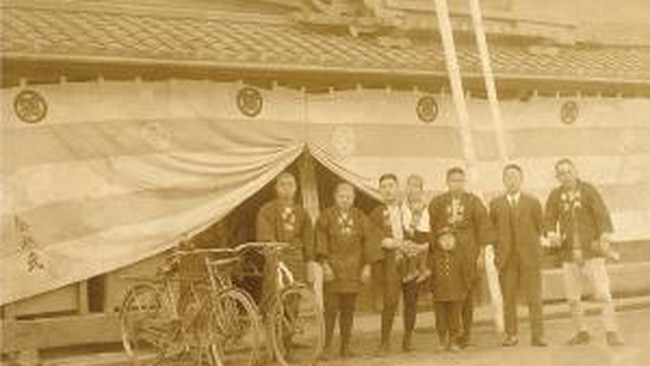
Jakarta, CNBC Indonesia - Japan is known as home to many centuries-old companies. Yet among them, the name Kongo Gumi always captures attention. This Osaka-based construction company is cited as one of the oldest businesses in the world, with a history spanning more than 14 centuries. For more than 1,400 years, Kongō Gumi has weathered storms, navigated shifting tides, and remained a beacon and proof of the enduring strength of tradition and innovation. Originally established as a construction firm specialising in Buddhist temple buildings, Kongō Gumi began to expand into broader construction work. A number of magnificent temples have been built, including the temple complexes at Hōryū-ji (607 CE) and Koyasan (816 CE), as well as Osaka Castle (1583 CE). Kongo Gumi: Operating From the Prophet Muhammad’s Era to the Present. Kongō Gumi was founded by a family of carpenters from Korea who came to Japan to assist in the building of Shitenno-ji, one of the oldest Buddhist temples in Japan. The company was established in 578 CE, more than 1,448 years ago. The origins of Kongō Gumi can be traced to 578 CE when Shōtoku Taishi, an Imperial Japanese prince, lived. Its founding coincided with Buddhism becoming the dominant religion in Japan during the Asuka period (592-710 CE). This period heightened demand for temple construction. During this period, in Mecca, Saudi Arabia, a prospective Prophet named Muhammad is estimated to be eight years old. It is estimated that Kongo Gumi had begun operations when the Prophet Muhammad was seven or eight years old. In other words, Kongo Gumi began business alongside the Prophet’s childhood. It should be noted that Kongo Gumi framed itself as a specialist in religious building construction. This business model endured for centuries, until Prophet Muhammad received revelation, migrated to Medina, and died, and Islam became one of the world’s largest faiths. The business also witnessed the feudal era, the Meiji Restoration, world wars, and the modern economy. What has kept Kongo Gumi going? The continuance of Kongo Gumi for more than 14 centuries is no accident. It rests on a mix of cultural, business, and institutional factors that have allowed this temple-building company to weather changing times. The cornerstone of the business’s sustainability lies in heritage values, faith, and a maintained reputation. The sector in which this business operates has high spiritual value and a strong historical identity in Japan. Demand for the upkeep of religious buildings remains fairly stable because of tradition and the cultural identity of society. Moreover, Kongo Gumi has managed to maintain quality and credibility in its execution. It preserves its woodworking techniques generation after generation, using joinery methods and not using nails. Like many other long-standing businesses in Japan, Kongo Gumi also relies on family business. The company is passed down with a long-term orientation and tends to make cautious business decisions. Although run by a family, leaders are chosen on merit to maintain leadership quality. In addition to internal factors, Kongo Gumi’s resilience is supported by external backing and adaptability. The Japanese government is known for actively preserving cultural buildings such as temples and historic sites, which indirectly sustain demand for traditional construction. On the other hand, facing financial pressures in the early 2000s, Kongo Gumi received support from Takamatsu Corp., an Osaka-based construction conglomerate, which stepped in to help safeguard the historic company’s continuity. In 2006, Kongo Gumi officially became a wholly owned subsidiary of Takamatsu, but it continued to retain its name, craft traditions, and temple-construction specialisation. Today, the company employs around 100 miyadaiku (traditional temple carpenters) and still involves one member of the Kongo family as a symbol of inherited family heritage.