
Komnas HAM urges improvements and regulation of SPPG to strengthen MBG programme quality
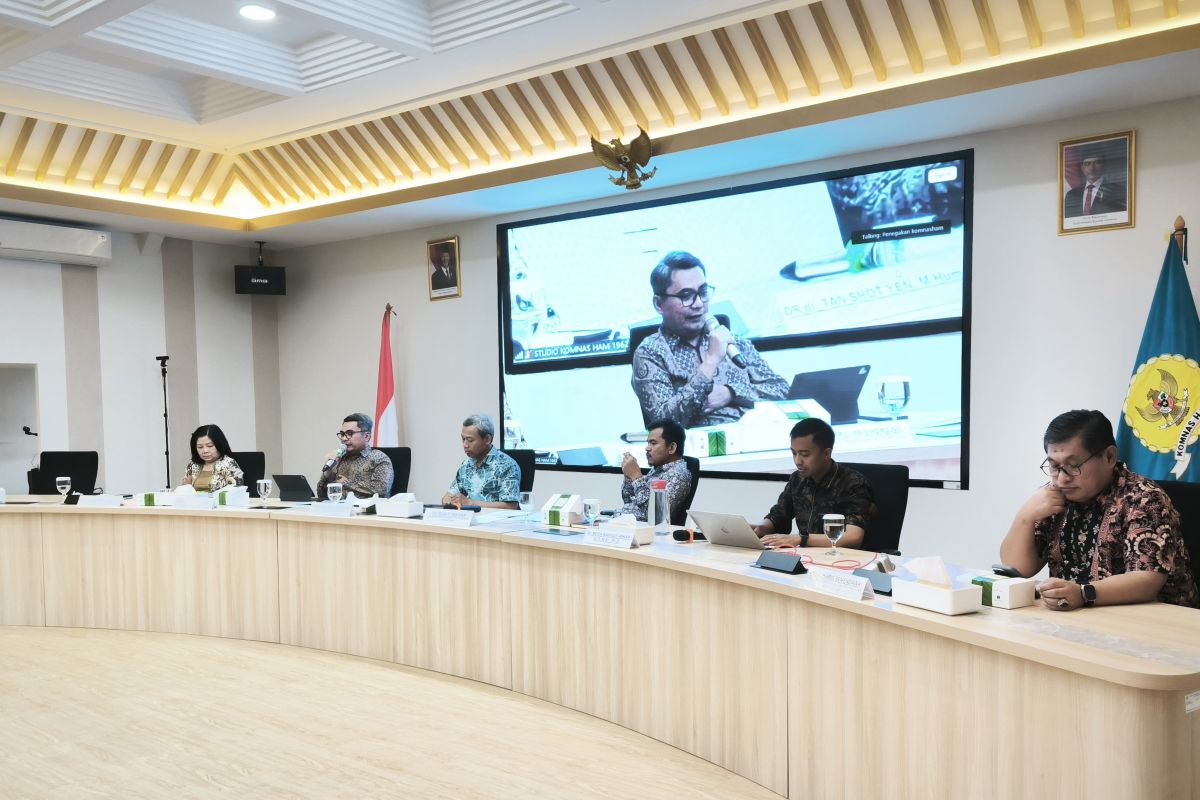
Jakarta (ANTARA) - The National Human Rights Commission (Komnas HAM) is urging the government to strengthen improvements and regulation of the Nutrition Fulfilment Service Units (SPPG) as part of enhancing the quality of the Free Nutritious Meals (MBG) programme implementation to ensure optimal benefits for children.
Coordinator of the Komnas HAM Subcommission on Human Rights Enforcement, Pramono Ubaid Tanthowi, stressed that such reforms are crucial to maintain food safety standards amid the programme’s large scale.
“SPPG certainly would not intentionally poison children’s food. But if cooking procedures are incorrect, ingredients are unsuitable, or hygiene is not maintained, leading to bacteria or viruses, that constitutes negligence causing harm,” he said after a Focus Group Discussion (FGD) on child rights, right to food, right to health, and right to safety in the governance and serving of the MBG programme in Jakarta on Wednesday.
He emphasised that potential negligence must be prevented through strengthened systems and operational standards, so as not to disrupt the programme’s primary goal of improving child nutrition.
“Human rights violations are not only intentional acts but also due to negligence. So not just by commission (violations from active/intentional acts), but also by omission (violations from negligence or failure to fulfil obligations),” he stated.
According to him, improvements should not only cover technical kitchen aspects but also comprehensive governance from upstream to downstream, including ingredient quality, processing, and food distribution.
“So we want to examine the governance of the MBG programme from upstream to downstream,” he said.
Komnas HAM also assessed that strengthening SPPG must be accompanied by multi-layered supervision and cross-institutional support to ensure the programme remains accountable and sustainable.
On the other hand, he affirmed that the MBG programme remains a strategic government intervention that needs to be sustained through ongoing improvements.
“This programme is unlikely to be cancelled or stopped. What can be done is improvements in various aspects,” he said.
Komnas HAM stated it will provide recommendations based on studies to support the refinement of MBG implementation, including strengthening SPPG standards, to ensure the programme runs effectively, safely, and delivers real impacts for child nutrition fulfilment.
The discussion featured Dr dr Tan Shot Yen MHum, a public nutrition expert and graduate of the Faculty of Medicine, University of Indonesia (FKUI), as well as Media Wahyudi Askar, PhD, Director of Public Policy and Founder of the Center of Economic and Law Studies (CELIOS).