
Komnas HAM emphasises the term 'strong acid chemical substance' in the pouring case
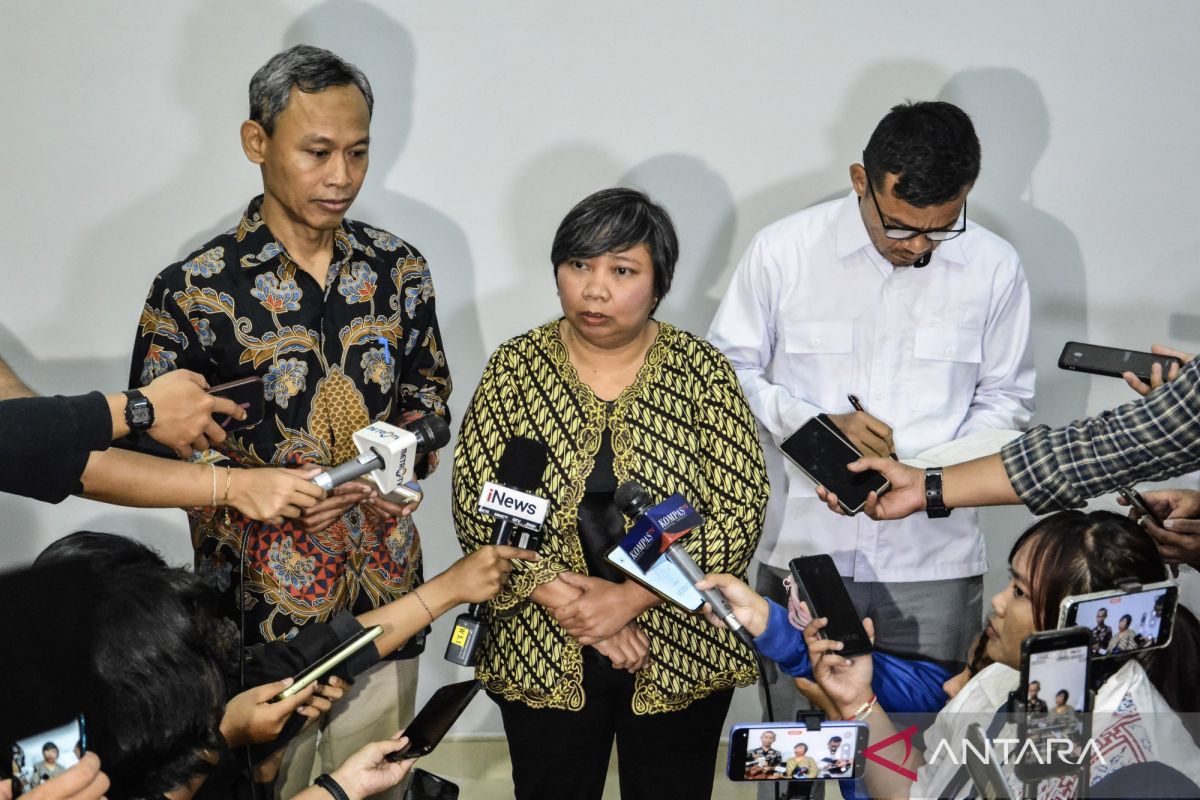
The National Human Rights Commission (Komnas HAM) has emphasised the
use of the medical term “burns due to being doused with strong acid
chemicals” in the case of the pouring incident against KontraS activist
Andrie Yunus, to correct public understanding that has commonly used the
term “air keras.”
Komnas HAM Monitoring and Investigation
Commissioner Saurlin P Siagian stated that the term was obtained from
statements by the medical team at Cipto Mangunkusumo Hospital (RSCM)
following direct in-depth investigation.
“First, burns due to
being doused with strong acid chemicals. So this might be the term we
can officially use together for the public,” he said in Jakarta on
Thursday.
He assessed that the use of medically based terminology
is important to ensure accuracy in understanding the nature of the
injuries, while also serving as a basis for appropriate legal and
medical handling processes.
After clarifying the terminology
aspect, Komnas HAM also highlighted the victim’s recovery process, which
requires a long time due to the complexity of the burns
experienced.
“Surgeries are still ongoing and will continue for
the next six months to two years for recovery from 20 percent burns,”
said Saurlin.
Komnas HAM also confirmed that the funding for the
victim’s treatment is supported by the Witness and Victim Protection
Agency (LPSK), which is an important part in ensuring the continuity of
care.
“Then we received confirmation that the funding,
alhamdulillah, is covered by LPSK,” said Saurlin.
Coordinator of
the Komnas HAM Subcommission on Human Rights Enforcement Pramono Ubaid
Tanthowi added that they have gathered direct statements from specialist
doctors and hospital management regarding the handling of the
victim.
“We had the opportunity to speak with the specialist
doctors handling it and also the RSCM management,” he said.
He
assessed that the medical steps taken so far have been intensive to keep
the victim’s condition stable during the recovery
period.
According to Komnas HAM, such support is crucial given
that the victim’s recovery process requires long-term and
multidisciplinary handling, while also being part of efforts to fulfil
the victim’s rights in cases of chemical-based violence.