
Komdigi Restricts Magdalene Content on Activist Case, KKJ: Violation of Law
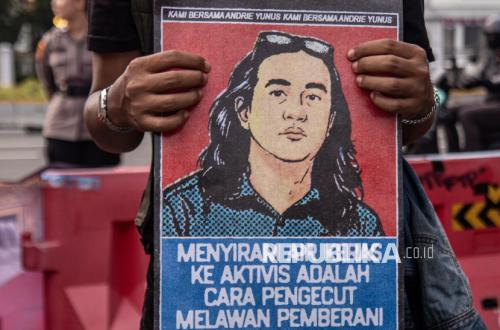
The Ministry of Communication and Digital Affairs (Komdigi) has imposed restrictions on Magdalene’s Instagram content regarding the reporting of the acid attack on Deputy Coordinator of KontraS, Andrie Yunus. This action is deemed a violation of the law for limiting news dissemination.
Coordinator of the Journalist Safety Committee (KKJ), Erick Tanjung, stated that the issue began when Magdalene’s editorial team received information that their Instagram account was restricted and inaccessible on Friday (3 April 2026). Upon investigation, the access restriction was found to have been requested by Komdigi.
“We view this restriction as a serious form of muzzling press freedom,” he said in a statement confirmed by Republika on Wednesday (8 April 2026).
He explained that Magdalene is a legally established press company operating under Law No. 40 of 1999 on the Press. According to him, every national press outlet has the right to seek, process, and disseminate ideas and information through all available channels.
“All forms of censorship, shutdowns, or broadcasting bans constitute violations of the law as stipulated in Article 4 paragraph (2) of the Press Law,” Erick stated.
He assessed that Magdalene has constitutional and legal rights to disseminate all produced content without restrictions through all available channels, including social media. Furthermore, any objections or disputes related to the publication of journalistic products must be resolved through press mechanisms, including rights of reply, corrections, or complaints to the Press Council.
On the other hand, Komdigi or other parties lack the authority to judge and take actions that hinder the fulfilment of press rights. Moreover, this was done without going through the Press Council complaint mechanism.
“Restricting access to journalistic content without following press mechanisms is a disregard for the applicable press legal system and potentially violates the principle of due process of law in resolving reporting disputes,” he said.
Erick assessed that Magdalene, as a press company, has the right to publish ideas and information through its channels such as websites and Instagram social media. Moreover, this publication is journalistic work resulting from journalists’ efforts.
Thus, Erick continued, the restriction on this content essentially limits the distribution of legitimate public information that has undergone journalistic processes. Meanwhile, any form of restriction against it violates Article 4 paragraph (2) in conjunction with Article 18 paragraph (1) of the Press Law.
“Therefore, Komdigi’s action in requesting restrictions on access to Magdalene.co’s news content has violated the Press Law and hindered the public’s right to know and right to information. Instead of imposing restrictions, Komdigi should support the dissemination of information important to the public to promote transparency in law enforcement processes,” he said.
Erick added that KKJ urges the Press Council to immediately take a stance on this case as a form of protection for press independence. Interventions in the distribution of journalistic content in the digital space without going through the Press Council mechanism set a bad and dangerous precedent, which, if left unchecked, could weaken the established press protection system.
“We see it as important for the Press Council to reaffirm that every dispute or objection to journalistic products must be resolved through mechanisms stipulated in the Press Law, and to reject any form of bypassing that authority,” he said.
In addition, KKJ also calls on Komdigi to immediately cease the actions and revoke regulations that could limit, censor, and hinder news publications in the digital realm. Furthermore, to openly clarify the reasons for the restriction, legal basis, procedures, and decision-making process.
“Without transparency, this action could raise suspicions of abuse of authority in regulating the digital space,” Erick stated.