
Komdigi Acknowledges Irregularities in Steam Game Age Ratings, Investigation Launched
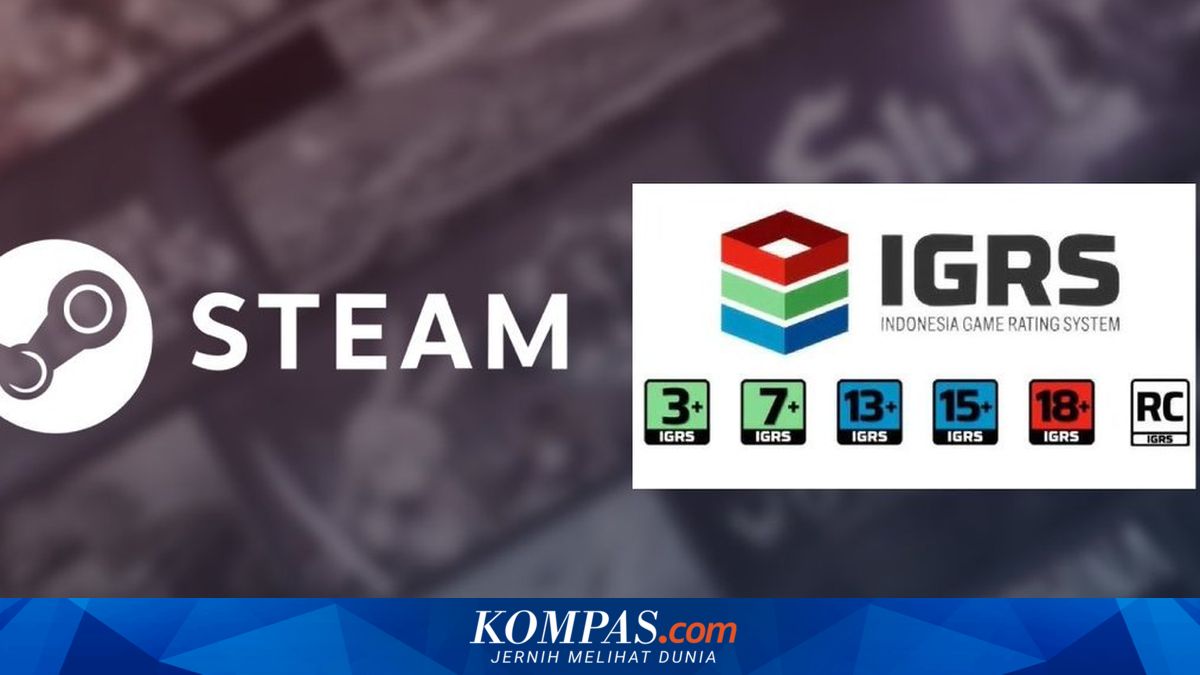
The Ministry of Communication and Digital (Komdigi) has acknowledged irregularities in the display of the Indonesia Game Rating System (IGRS) classifications for several games on the Steam distribution platform in Indonesia.
“We agree with our friends, especially netizens; in our view, this incident is very odd, extremely odd, and perhaps very extreme,” stated Sonny Hendra Sudaryana, Director of Digital Ecosystem Development at Komdigi, during a press conference at the Komdigi office in Jakarta on Tuesday (7/4/2026), as reported by Kompas.com.
Currently, Komdigi has coordinated with Steam to delve deeper into these findings.
“That’s why we are conducting this investigation to determine what the actual problem is, both internally at Komdigi and externally with Steam,” Sonny continued.
Several users have shared screenshots showing games with adult content, including sexual elements, being labelled as safe for children aged 3 and above (3+).
On the other hand, several popular AAA games such as Clair Obscure: Expedition 33 and Metal Gear Solid Delta: Snake Eater have been labelled “not suitable for distribution in Indonesia”.
Komdigi stated that it is conducting a comprehensive investigation to identify the source of the problem, both from the Steam platform side and the game developers.
This approach is being taken to ensure that the root of the issue can be fully identified, encompassing the production process, assessment, and content distribution.
In addition, both parties are also tracing content that is deemed inconsistent between the rating and the game’s content.
As a quick mitigation step, Steam is said to have taken down the ratings on problematic games.
“The main goal of implementing the Indonesia Game Rating System (IGRS) is to provide clear guidance for parents so that children play games appropriate to their age,” said Sonny in an official statement received by KompasTekno on Tuesday (7/4/2026).
He added that the regulation on game age classification is a breakthrough that has finally been realised after a long process since 2014.
“After a long wait of 10 years, we have finally succeeded in introducing a regulation that provides protection and certainty for consumers and the gaming industry. Indonesia now has a citizen protection standard that is on par with other countries,” Sonny emphasised.
He further noted that the implementation of IGRS aligns with the mandate of Government Regulation Number 17 of 2025 on the Governance of Electronic Systems in Child Protection (PP TUNAS).
“All of this we do for the protection of consumers and families in Indonesia. Parents now have guidance to ensure their children play age-appropriate games,” Sonny concluded.