
Kodam XXI: Pioneer Garuda Bridge in Pringsewu now operational
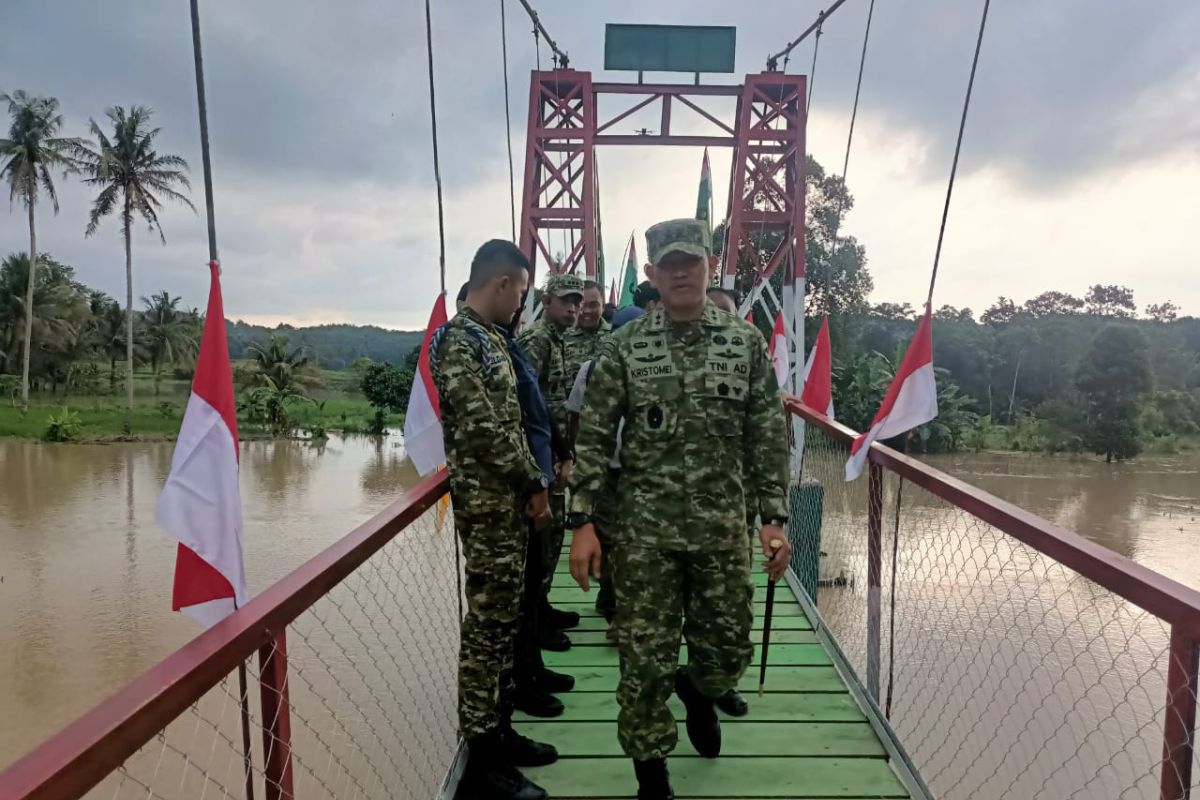
Bandarlampung — Kodam XXI/Raden Inten announced that the Pioneer Garuda Bridge connecting Sukoharjo IV village with Jogjakarta village in Pringsewu Regency is now operational and ready for use by the community for daily activities.
“This Pringsewu bridge is the second Pioneer Garuda Bridge inaugurated in the Kodam XXI/Raden Inten operational area. Previously, a similar bridge was built in Way Umbar village, Kelumbayan District, Tanggamus Regency,” said Pangdam XXI/Raden Inten, Major General TNI Kristomei Sianturi, in a statement issued in Lampung Province on Monday.
He explained that the bridge construction is part of the Indonesian Army’s programme, under which 200 bridges were simultaneously inaugurated across Indonesia on this day.
“Today we are conducting a bridge inauguration ceremony led directly by the Army Chief of Staff, simultaneously for the construction of 200 bridges throughout Indonesia,” said Kristomei.
According to Kristomei, the bridge is expected to facilitate public access, particularly for economic activities and student mobility.
“The hope is that residents of the village can utilise this bridge for economic activities, especially schoolchildren so that their access is faster and easier,” he said.
Meanwhile, Pringsewu Regent Riyanto Pamungkas expressed appreciation to the Army for collaborating with the local government in realising the bridge construction project.
“Previously, crossing access at that location was frequently cut off when river discharge increased. When flooding occurred, residents were almost unable to conduct activities because the river overflowed. When water levels subsided, residents typically crossed using bamboo rafts,” said Riyanto.
He stated that with the bridge in place, public access will be considerably easier, particularly in support of agriculture, fisheries, animal husbandry, and education sectors.
“Schoolchildren also have easier access. Similarly, residents’ economic activities, such as transporting fertiliser or agricultural produce, no longer require taking a long detour,” he said.